

If you are a true "Bangkok Native," you are familiar with the morning fatigue—not just work exhaustion but travel fatigue. Count how many transfers you make before reaching your office: taking a motorcycle taxi to connect to the BTS, switching to the MRT, or sometimes ending the trip on the Chao Phraya Express Boat.
The problem is not the transfers themselves but the "complexity of payment." According to statistics Samsung revealed, over 4.5 million people use Bangkok's public transport daily, with more than 70,000 using ferry services. This massive number of people face hassles carrying multiple cards, topping up balances, inserting coins, and queuing to buy new tickets whenever they switch transport modes, while the government’s "common ticket" system remains awaited.

This overall situation makes us envy when traveling abroad, despite having some tap-and-go systems locally. Recently, developments have appeared: MRT and suburban trains accept credit cards at gates; gadgets like Garmin and Fitbit watches have partnered with Rabbit cards to tap into BTS for some time; smartphone users are getting used to scanning QR codes. However, these experiences are still limited and not fully seamless.
Sometimes scanning QR codes requires unlocking the phone and loading an app, causing delays and impatient looks from people behind you. Even major global digital wallets like Apple Wallet on iPhone or Google Wallet on Android have yet to embed Thai transit cards as native cards for instant tap access, unlike Japan’s Suica/Pasmo, Hong Kong’s Octopus, or transit cards in the U.S. and Europe.

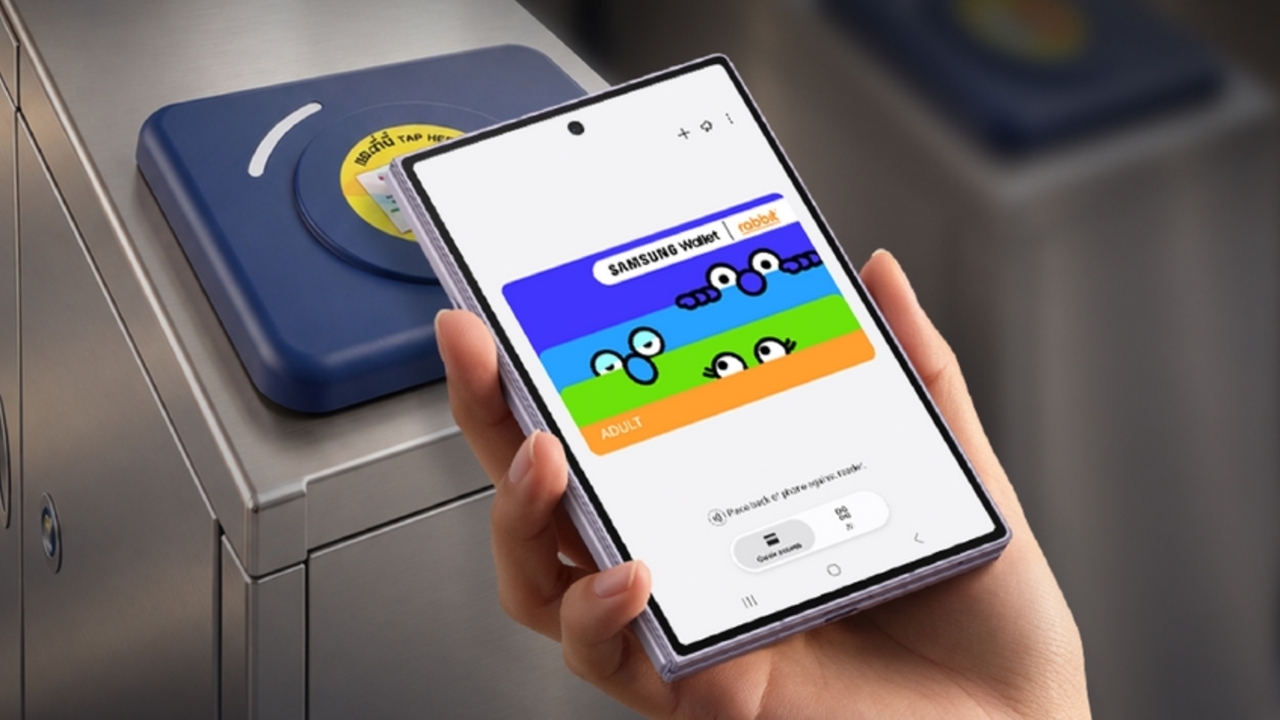
Since a national common ticket system will take time, applying existing technology is a promising solution. Recently, Samsung launched a solution directly addressing Thai users' pain points by integrating a new feature in Samsung Wallet with the Rabbit card system, targeting Bangkok’s transport infrastructure to turn smartphones into "transit cards" for seamless tap-and-go travel.
The appeal of this move lies in the "user experience" tailored to urban lifestyles. Passive NFC technology allows users to tap Samsung Galaxy phones on BTS gates, BRT buses, or Chao Phraya Express boat ticket machines without unlocking the screen. Importantly, it even works when the phone battery is dead, letting users tap their blacked-out phones to enter stations smoothly, applicable to supported Samsung Galaxy models.

What are the milestones and schedules? When does it start and who can use it?
For those eager to try this smooth tap experience, Samsung has set a clear timeline: from 20 to 26 October 2026, Samsung Wallet will gradually update to allow linking the Rabbit Virtual Card to tap onto BTS lines (Sukhumvit, Silom, Gold), BRT buses, and Chao Phraya Express boats (8 main piers). From 26 October 2026 onward, the system will be fully updated and ready for supported Galaxy devices. By the end of 2026, Samsung plans to extend coverage to all Bangkok public transport, including all MRT lines, Airport Rail Link, and BMTA buses.
Looking ahead to 2027, Samsung plans to expand the ecosystem by fully reinstating credit card linking via Samsung Pay, supporting tap payments through smartwatches (Galaxy Watch), and introducing Digital Key features for building and vehicle access.

Samsung’s recent move opens a compelling new chapter for Thailand’s technology sector. This development may prompt major competitors like Apple and Google to accelerate partnerships in Thailand, an exciting prospect for the future of the country’s travel ecosystem.
Ultimately, whenever competition arises to offer the most convenient technology, the real winners are the "people of Bangkok" who commute daily. The future direction of Thailand’s Smart City initiatives remains a topic to follow closely.