

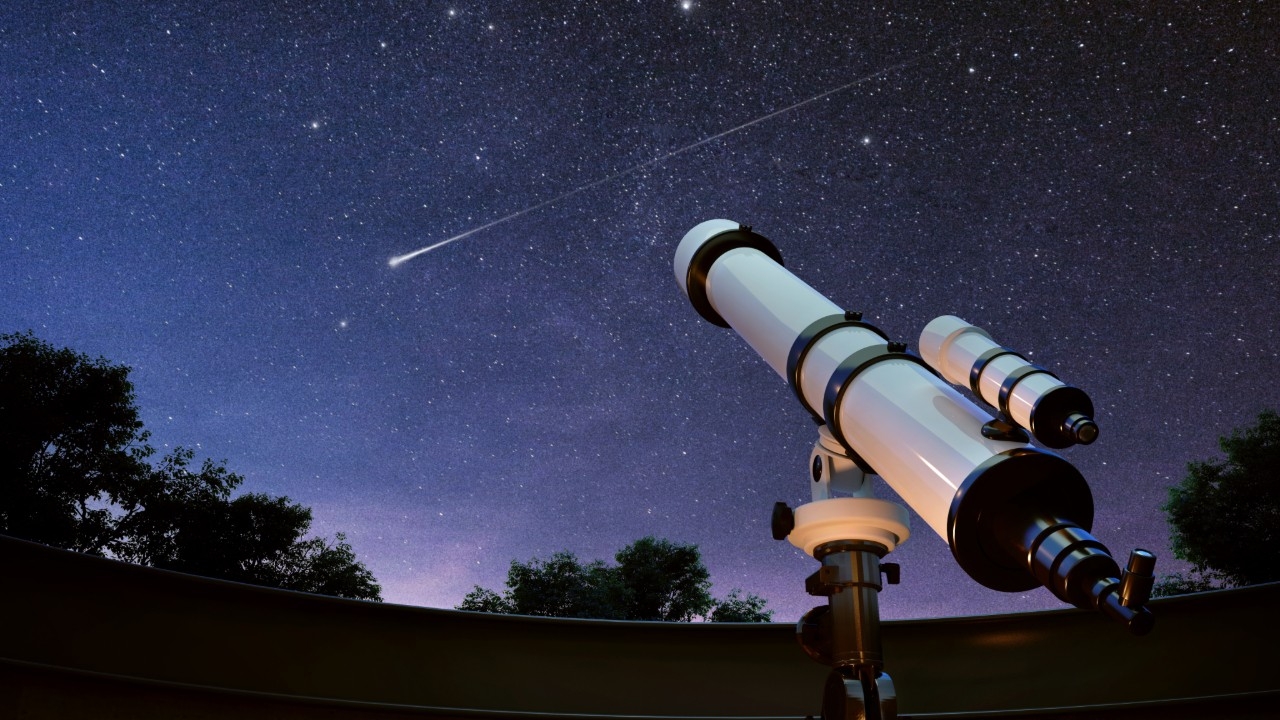
Orionids Meteor Shower 2026 21-22 Oct The Orionids meteor shower is set to appear in the sky on the night of 21 October into the early morning of 22 October 2026, with an expected peak rate averaging about 20 meteors per hour. For those curious about what causes the Orionids, which direction to face, and tips on how to best observe them, Thairath Online has compiled the details for you.
The Orionids meteor shower (Orionids), also known as“the Hunter Constellation Meteor Shower,”is an astronomical event caused by dust and small debris left along the orbital path of Halley's Comet (1P/Halley).
When Earth passes through this debris, particles enter the atmosphere and burn up, creating bright streaks across the sky. The meteors appear to radiate from the Orion constellation, hence the name.“ Orionids Meteor Shower ”

The National Astronomical Research Institute of Thailand (NARIT) reports that the Orionids will peak on the night of 21 October into the early morning of 22 October 2026, with the following observation times:
However, this year, moonlight will interfere with observations until about 2:30 a.m., so it is advised to watch after that time for a better chance of seeing meteors, provided the sky is clear and cloud-free.

If you want to catch the Orionids meteor shower, here’s how to prepare:
Choose a dark, open location away from city lights, street lamps, and building illumination.
Watch between 3:00 and 5:00 a.m., when moonlight interference is minimal.
Look broadly across the sky; you don’t need to focus solely on the Orion constellation.
Allow your eyes to adjust to the dark for about 20–30 minutes and avoid looking at phone screens.
Check the weather forecast beforehand; pick a clear night with no clouds and ensure your viewing spot is safe.

For those who don't want to miss the Orionids on 21 October 2026, you can start watching from 10:30 p.m. onwards, but to maximize your chances, the best time is between 3:00 and 5:00 a.m. on 22 October. Choose a dark, open area with an unobstructed view of the sky.
Source of information : National Astronomical Research Institute of Thailand (NARIT)