

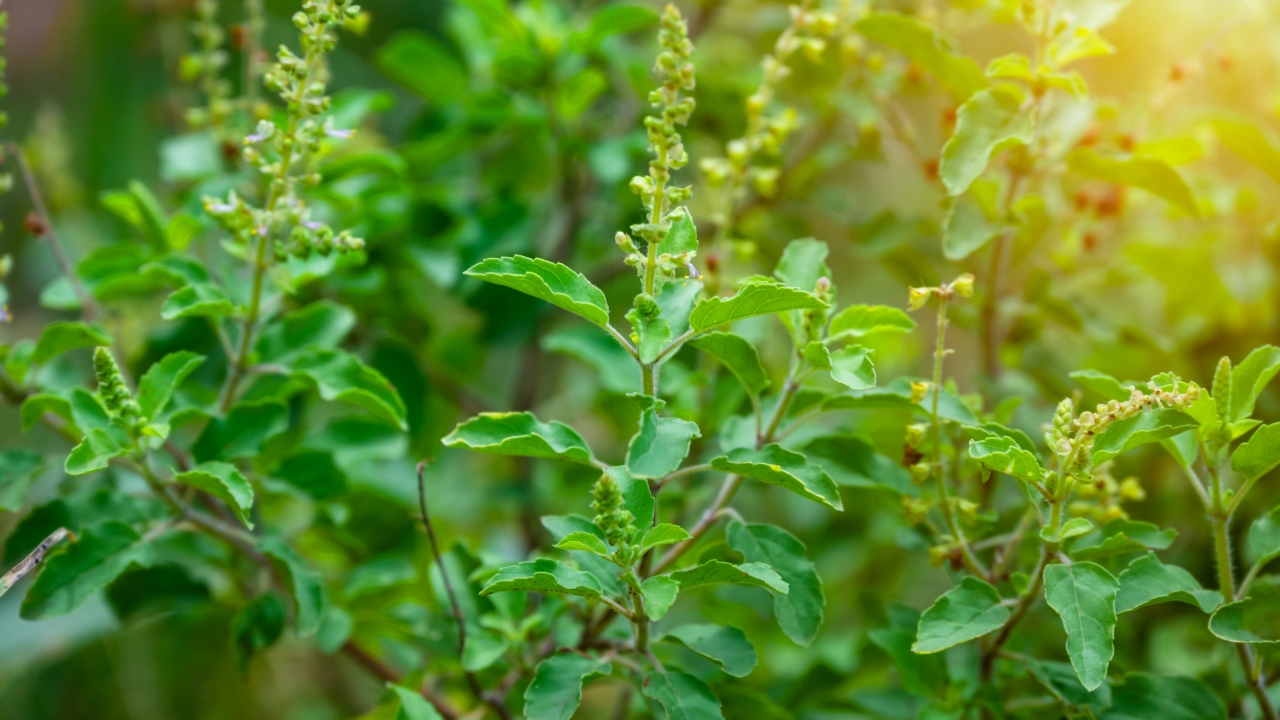
"Holy Basil" (กะเพรา) This herbal staple of Thai kitchens has recently drawn attention after news that a company under the Charoen Pokphand (CP) Group obtained protection rights for new plant varieties of holy basil. Four holy basil varieties This raised questions about whether the holy basil we grow and cook with is affected, and exactly how many holy basil varieties exist in Thailand.
Thairath Online Let's get to know the four protected holy basil varieties and explore the differences among popular holy basil types familiar in Thai kitchens—many of which people consume daily without realizing there are multiple kinds.
Holy basil scientifically named Ocimum tenuiflorum L. and known in English as Holy Basil, is a fragrant herbal plant essential to Thai cooking. The exact number of holy basil varieties in Thailand remains unclear due to the presence of both native and cultivated types, with estimates reaching into the hundreds.
However, based on common Thai names, holy basil can be grouped into three main categories: red holy basil, white holy basil, and wild holy basil These groups differ in leaf shape, stem color, and pungent aroma. This classification is informal, based on general appearance rather than formal botanical taxonomy.

What exactly are these four holy basil varieties? A hot topic. The four holy basil varieties have attracted attention after BioThai Foundation revealed that CPRAM, a private company under CP Group, secured plant variety protection under the Plant Variety Protection Act B.E. 2542, with a 12-year protection term from 2024 to 2036 CE. The four new holy basil varieties are:
Kaewjuree 01 holy basil
Kaewjuree 02 holy basil
Kaewjuree 03 holy basil
Kaewjuree 04 holy basil
All four varieties were developed from the native CPR1 holy basil using techniques that induced increased chromosome sets combined with tissue culture to improve plant traits suitable for practical use.
However, obtaining protection rights for these four varieties does not mean the company owns all holy basil types in Thailand, as the rights cover only newly registered varieties under the law.
Farmers and the public can still grow, propagate, and trade native or common holy basil varieties not under protection freely. Use of the Kaewjuree 01-04 varieties must comply with conditions and exceptions specified in the plant variety protection law.

Though holy basil has many varieties, the three most commonly known by Thais are: red holy basil, white holy basil, and wild holy basil. Each group has distinctive features, especially their aroma, which enhances Thai dishes. Many may not realize that these three types are used in popular dishes we often eat, including:
Red holy basil is recognizable by stems and petioles often reddish-purple, with some leaves showing purple hues. The leaf edges are serrated and covered with fine hairs. Leaf shape and size vary by variety and growing conditions.
White holy basil is commonly found in fresh markets, characterized by green stems and petioles and bright green leaves with serrated edges. Leaf size varies depending on variety and cultivation.
Wild holy basil is a local market term usually for holy basil with a strong pungent aroma. Some plants have small leaves and stems or petioles that are brownish-purple, though appearance varies by growing area.

Holy basil is not only a vegetable that adds fragrance to Thai food but also a medicinal herb containing natural compounds like essential oils and phenolic substances. Its benefits include:

Holy basil is more than just a kitchen herb; each type—red, white, or wild—has unique aroma and flavor profiles that enhance beloved dishes in their own way. Next time you order stir-fried holy basil, observe which variety is on your plate.