

Long-haul flights, especially in economy class, often end with neck pain, stiffness, and waking up feeling exhausted. However, these discomforts can be eliminated if you know how to transform a standard economy seat into a comfortable resting spot.
Thairath Online shares useful tips on organizing your body and affordable lifesaving items that will help you sleep deeply throughout the flight and wake up ready to continue your trip without feeling wrecked.
Start by booking a window seat (the best spot). This is a prime location for sleeping soundly because you can rest your head against the wall, control the window shade, and avoid being disturbed when neighbors get up to use the restroom.
Once seated, adjust your posture by supporting your lower back using a rolled-up sweater or blanket placed at your waist to straighten your spine, reduce pressure, and prevent lower back pain even during long sitting periods.
Next, create a DIY footrest by placing a small backpack under the seat in front of you and using it to elevate your feet slightly, which helps improve blood flow back to the heart. This prevents swollen, stiff legs and cramps. Also, a small trick is to fasten your seatbelt over the blanket so flight attendants can see it and won’t wake you to check during turbulence.
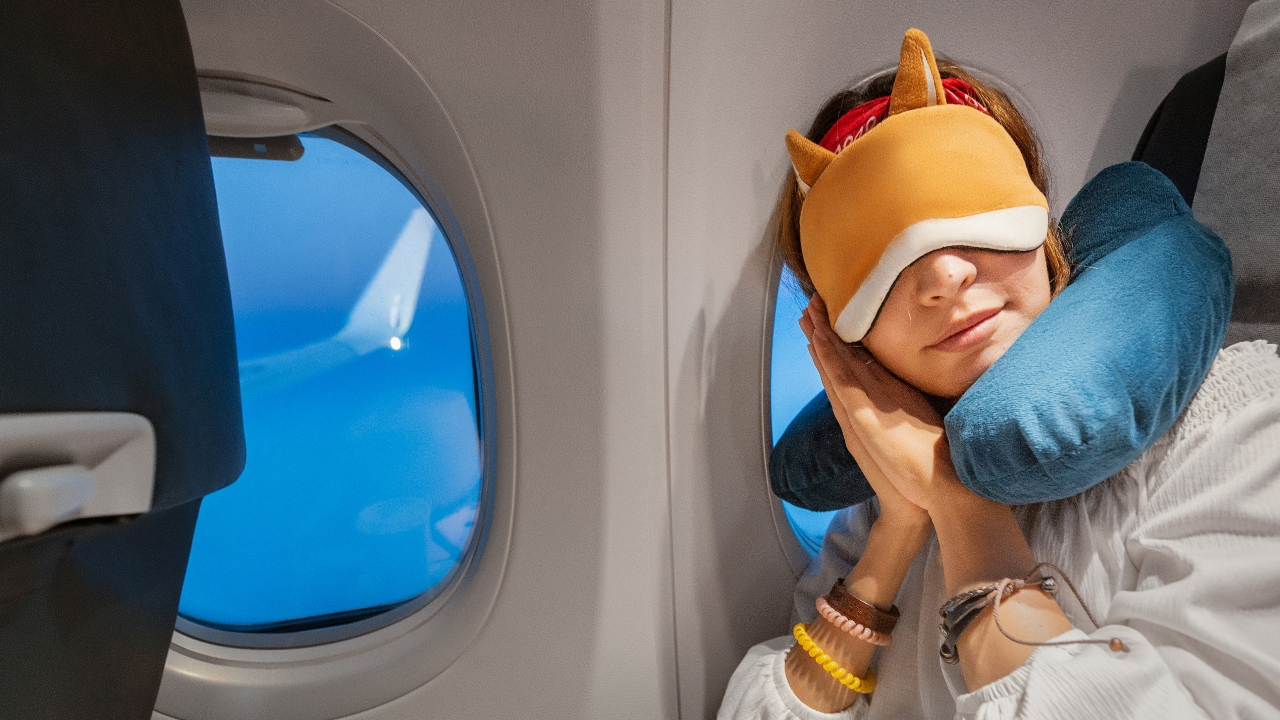
Bright lights and engine noise reaching up to 80 decibels are major obstacles to deep sleep. Essential items include a 3D eye mask that contours without pressing on eyelashes and foam earplugs. Using these together tricks your brain into feeling like you are in a dark, quiet bedroom, prompting melatonin release and making it easier to enter deep sleep mode.
Also, dress in layered clothing like a t-shirt, cardigan, and hoodie, and swap tight jeans for soft sweatpants to allow good blood circulation and comfort when sitting and moving.
Importantly, cabin air is drier than a desert, so you should apply a thin layer of petroleum jelly (Vaseline) on your lips, around your eyes, and inside your nostrils to prevent nasal lining dryness and nosebleeds without the hassle of wearing a face mask.
If possible, bring an old tennis ball onboard as a therapy tool to roll under your feet or place under your thigh and apply pressure to relieve trigger points, protecting against varicose veins. Also, move every two hours by tracing the letters A-Z in the air with your toes and rotating and stretching your shoulders to prevent muscle stiffness from waste buildup.
Regarding drinks, avoid the temptation of free wine. Although alcohol may help you fall asleep, it disrupts deep sleep cycles and causes headaches and dry eyes upon waking. Instead, ask for warm water, or chamomile tea, which you can also bring yourself.
Finally, practice fasting to help your brain rest. For overnight flights, finish your main meal at the airport and skip late-night meals served onboard. An empty stomach allows your body to save energy from digestion and lets your brain rest more deeply right away.