

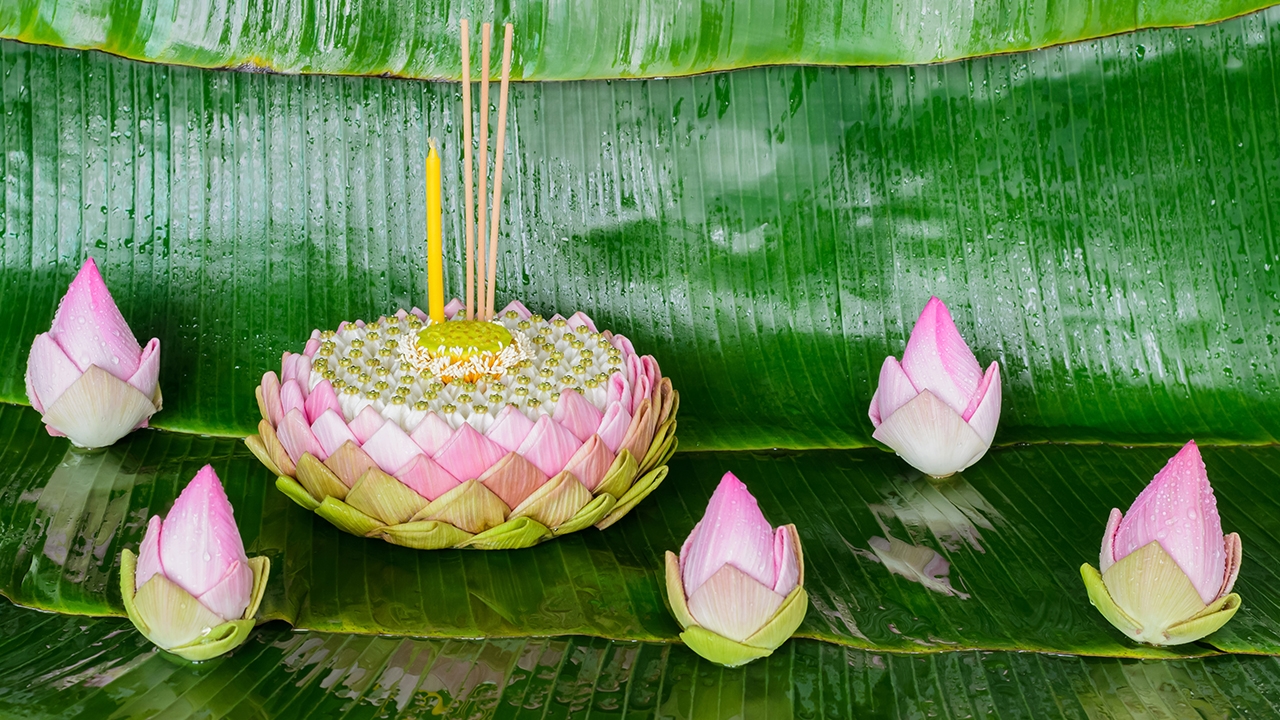
Loy Krathong Day 2026 GMT+7, falls on Tuesday, 24 November 2026 GMT+7, inviting everyone to care for the planet by choosing six natural materials for making krathongs that are biodegradable and environmentally friendly, helping to reduce water pollution and accumulated waste in rivers and canals.
The Loy Krathong festival is a long-standing tradition to pay respect to the River Goddess. However, nowadays, the volume of krathong waste has become a major problem impacting aquatic ecosystems. In recent years, hundreds of thousands of krathongs have been collected. Although the proportion made from natural materials has risen to nearly 100%, choosing materials that decompose quickly and do not burden water sources remains key to an "Eco-Friendly Loy Krathong".
"Banana stalks and banana leaves" are popular materials for krathongs because they are easily found, float well, and are natural biodegradable materials.
When it comes to popular eco-friendly ideas, "ice krathongs" are a top choice since they can be easily made at home by placing flowers in a bowl, filling it with water, and freezing it. The resulting krathong is beautiful and ready to float. Once placed in the river, the krathong gradually melts back into water without leaving any debris.
Discarded corn husks can be dried, dyed with natural colors, and folded into petals. This material is lightweight and floats excellently. Importantly, corn husk krathongs naturally decompose on their own.
"Betel nut sheath" has regained popularity as a natural material for krathongs. Its naturally curved shape resembles a boat, allowing it to float well and look beautiful. It can also decompose naturally into fertilizer.

"Sai krathong" or coconut shell krathongs are a local wisdom innovation that adds value to leftovers. Coconut shells are strong and float well. Although this material takes longer to decompose than leaves, its advantage is that the shell does not break into small pieces, making it easier for officials to collect from water sources.
Using large lotus flowers with petals opened wide, and the flower or leaves as the krathong base, is an option for making krathongs. Since lotus is an aquatic plant, it is friendly to the ecosystem and easily biodegradable.
Loy Krathong 2026 invites everyone to care for the planet by using six natural biodegradable materials to reduce accumulated waste and water pollution: banana stalks and banana leaves, ice, corn husks, betel nut sheath, coconut shells, and lotus flowers. These materials are eco-friendly, easy to collect, and help preserve Thai traditions while sustainably protecting the waterways.