

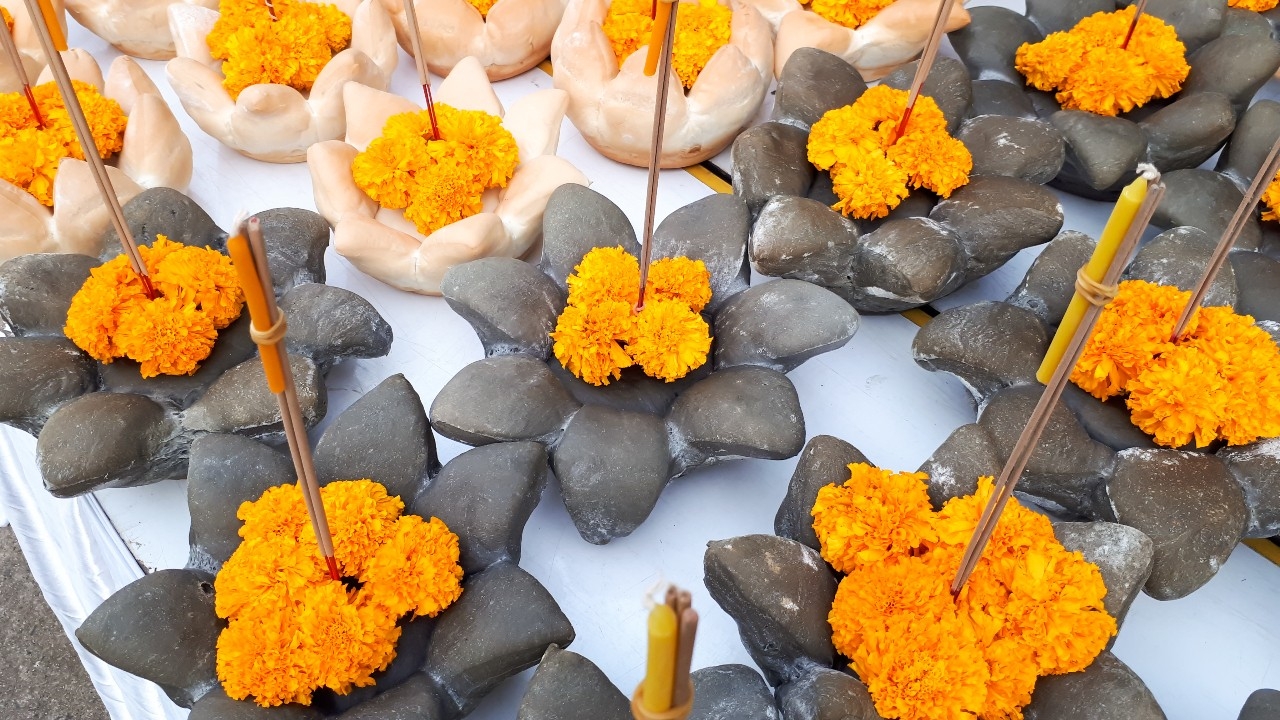
When shopping for krathong, many people often pick "bread krathong" because they think it decomposes naturally and also merits feeding the fish. But did you know this good intention is why government agencies and Bangkok authorities ask people to stop using it? When tens of thousands of bread pieces pile up in ponds, they turn clear water foul and kill fish overnight.
In park ponds or closed water bodies, fish numbers are limited and cannot eat all the bread people float in one night. Excess bread soaks, swells, and softens, sinking to the bottom.
The major problem is officials cannot scoop up the soggy dough scraps like they do with banana leaf krathongs. When flour, sugar, and yeast ferment underwater, decay occurs, consuming dissolved oxygen, quickly causing foul odors and suffocating fish to death.
The core of the Loi Krathong tradition is to apologize and thank Mae Khongkha (the River Goddess) who nurtures life. Many spiritual followers like bread krathong because it feels like double merit—both asking forgiveness from the river and feeding aquatic animals simultaneously.
In reality, dumping too much food causing water pollution destroys aquatic habitats and life unknowingly. For modern merit-makers, the best respect to Mae Khongkha is not feeding fish on full moon night, but protecting clean, safe waterways for all living beings.
From an urban lifestyle perspective, bread krathong was once a popular choice because it’s easy to find, designed with cute colorful cartoon shapes, and contains no nails or pins that might hurt hands when carrying.

This convenience masks misconceptions about being eco-friendly because fancy bread krathongs mostly include food coloring, butter, milk, and preservatives, which speed up water pollution much faster than plain bread.
Avoiding bread krathong doesn’t lessen the festival’s fun; it only means adjusting krathong selection to better suit current water conditions.
Ultimately, the value of the Loi Krathong festival is not measured by krathong novelty or price, but by sincere intentions to apologize to nature and share happiness with others. After placing bread krathongs down, it's time to choose ways that truly protect our waterways.