

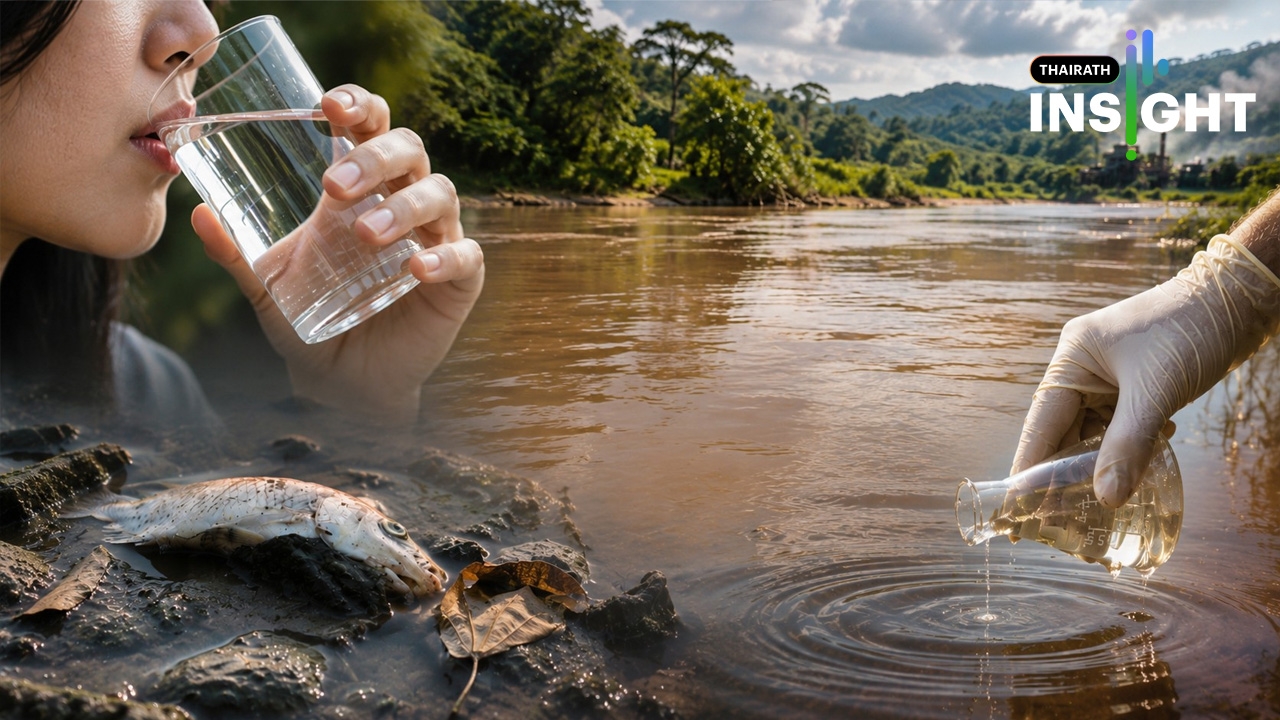
Toxic contamination problem in northern rivers Particularly the Kok, Sai, and Ruak rivers, linked to pollution from cross-border mining activities, are becoming an environmental crisis causing nationwide concern in Thailand. The impact could spread widely, affecting public health, food safety, lifestyles, and the economies of riverside communities.
Thairath Poll (Thairath Poll) reveals the results of a public opinion survey on the topic " How concerned are you about toxic contamination in northern rivers? " The survey uncovered several interesting aspects, including awareness of news, health concerns, changes in consumption behavior, and expectations for government solutions.

The problem of toxic contamination in northern rivers has attracted significant attention from survey respondents, with 95.24% having been aware of news about the situation, and only 4.76% never having heard about it.

When asked what aspect of river toxins concerns them most, most respondents prioritized health risks, along with food and water safety.
Notably, concerns focus not only on immediate dangers but also on the risks of accumulating toxins over time, effects that may not be immediately visible in daily life.

The Thairath Poll survey indicates public concern over northern river toxins is beginning to affect daily life. Most continue to follow water quality news and seek to verify food sources, reflecting worries about food safety that may undermine consumer trust, as follows:

Amid concerns about contamination, trustworthy information sources are crucial for consumer decisions. The survey found respondents trust safety information on water and food as follows:
The survey reflects that building trust requires more than assurances of safety; it demands verifiable evidence. Regular, transparent disclosure of water and food quality test results not only reduces consumer anxiety but also protects local producers from being unfairly labeled as unsafe.
Another notable point is public expectations for the government's role amid ongoing toxic contamination. When asked which measures the government should prioritize, the survey found:
Respondents largely emphasize managing pollution at its origin, reflecting expectations that the government should not only monitor or mitigate effects but urgently tackle pollution sources to prevent repeated risks to the public.
Summary of Thairath Poll survey results on " How concerned are you about toxic contamination in northern rivers? " reflects that the toxic crisis is expanding from an environmental issue to one affecting quality of life, including water and food safety and consumer confidence, with potential impacts on local economies.
While water quality testing, food toxin analysis, and health monitoring are necessary, these measures address effects downstream. If the government cannot effectively control pollution sources, the burden of self-protection may fall indefinitely on the public.
The government's challenge is not just reducing toxin levels in rivers but ensuring the public has safe water and food without bearing health and economic costs from pollution they did not cause.
Read related articles