

Thairath Online
Thairath Online

Walking Lunges: Exercise for Women 50+ to Walk Steadily, Prevent Falls, and Strengthen Leg Muscles

Lifestyle45plus13 Jan 2026 17:39 GMT+7

Share article

Walking Lunges: Exercise for Women 50+ to Walk Steadily, Prevent Falls, and Strengthen Leg Muscles

An exercise suitable for women aged 50 and above, Walking Lunges train balance, help prevent falls, and strengthen joints and bones, along with safe practice instructions to perform it.

As women enter their 50s and beyond, major concerns include "balance" and "bone strength." Appropriate exercise isn't just about appearance but also building protection against daily accidents. "Walking Lunges" is one of the most effective exercises for seniors, as it trains balance and strengthens muscles supporting joints for greater stability.

Introducing Walking Lunges: an exercise that is more than just walking.

In the world of bodyweight exercises, Walking Lunges—stepping forward with a squat—are a fundamental and highly effective move. They are popular because they require no equipment and can be done anywhere. However, many may not realize their benefits extend to long-term care of bones and joints.

Why should people over 50 practice Walking Lunges?

With age, muscle mass and bone density begin to decline, especially in postmenopausal women. Performing Walking Lunges not only strengthens legs and glutes but also has long-term health benefits, including the following:

1. Reducing the risk of falls.

Statistics show most falls in the elderly result from loss of balance. Lunges help train core muscles and joint position sense, making walking on uneven or slippery surfaces more stable.

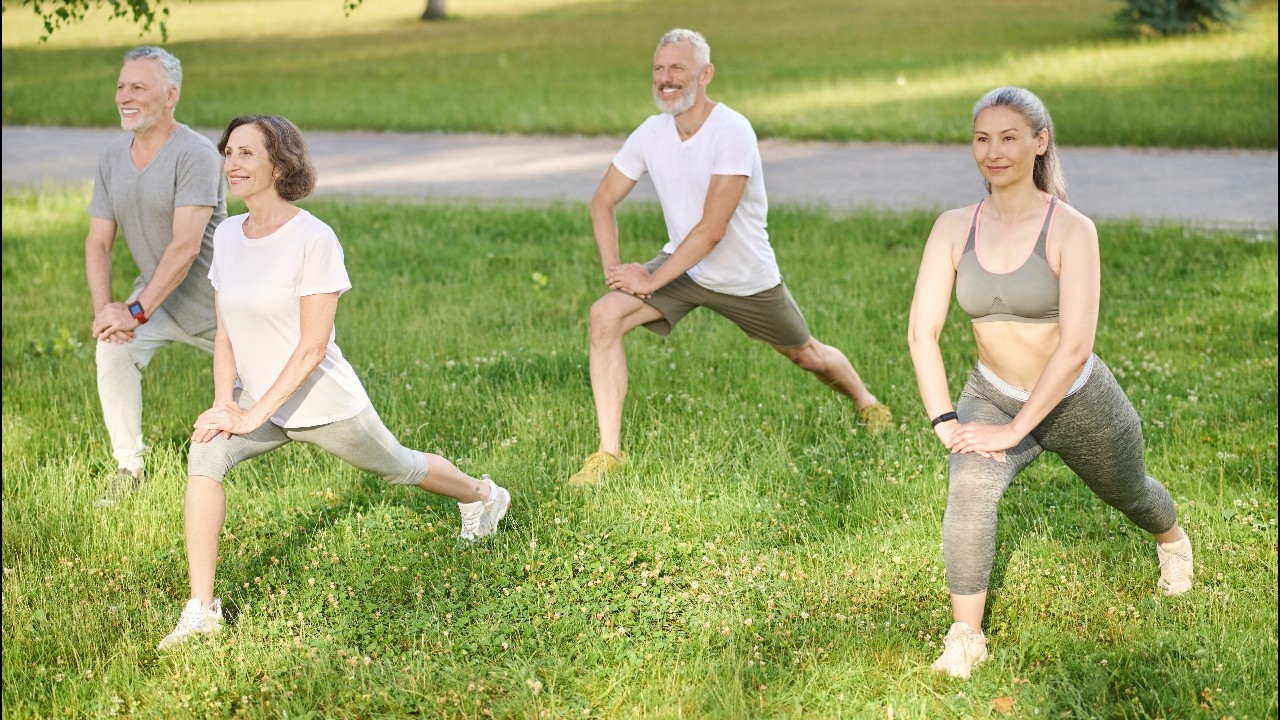
ภาพจาก iStock


2. Strengthening bones and joints.

Dr. Brian Polsky, an orthopedic specialist, points out that weight-bearing exercises like this stimulate bone mass growth in the hips and legs, areas prone to fractures or fragility in women over 50.

3. Alleviating chronic back pain.

Strong front thigh and glute muscles act as "shock absorbers," supporting the spine's weight, enabling seniors to move—such as standing and sitting—without significant back pain.

How to safely and effectively practice Walking Lunges.

Incorrect technique can cause knee injuries, so it is important to follow these principles:

  1. Keep your body upright: Maintain a vertical torso without leaning forward and keep your abdomen engaged at all times.
  2. Take wide enough steps: Step forward wide enough so that when squatting, your front knee forms about a 90-degree angle, and the back knee almost touches the ground.
  3. Weight distribution: Press your weight down on the heel of the front foot to fully engage glute and thigh muscles.
  4. Maintain foot width: Avoid walking in a straight line like on a catwalk; keep feet hip-width apart for better balance.

ภาพจาก iStock

For beginners aged 50+, follow these steps:

  • Find something to hold on to: If new to the exercise, perform near a wall or sturdy chair for support.
  • Take short but stable steps: There is no need for overly long strides; step within a comfortable balance range.
  • Squat as much as comfortable: If knee issues arise, do not squat until the back knee nearly touches the floor; a slight bend that feels muscle tension suffices.
  • Look straight ahead: Focusing forward improves balance better than looking down.

How often should women over 50 do Walking Lunges?

Rehabilitation medicine specialists recommend that those 50+ don't need to do this daily but should focus on quality practice according to this schedule:

  • Beginner level: Perform 2-3 days per week, resting 1-2 days in between to allow muscle recovery.
  • Repetitions: Start with 5-8 repetitions per leg (one set).
  • Sets: Do 2-3 sets per day.
  • Progression: Once balance improves and soreness decreases, gradually increase to 10-12 repetitions per leg.

Warning signs to "take a break"

For those over 50, listening to the body is crucial. Stop or adjust the exercise if you experience:

  • Sharp knee pain: This may indicate steps are too short or weight placement is incorrect. Switch to shallow squats instead.
  • Lower back pain: Often caused by leaning too far forward; try to keep your torso upright.
  • Accumulated fatigue: If you feel sore the next day to the point it affects daily life, rest until recovered, then restart with fewer repetitions.

Walking Lunges are not just an exercise for toned legs but an investment in lasting health. Spending just a few minutes daily strengthens your body from within, helps combat office syndrome, and builds a more confident posture.

Source:Parade