

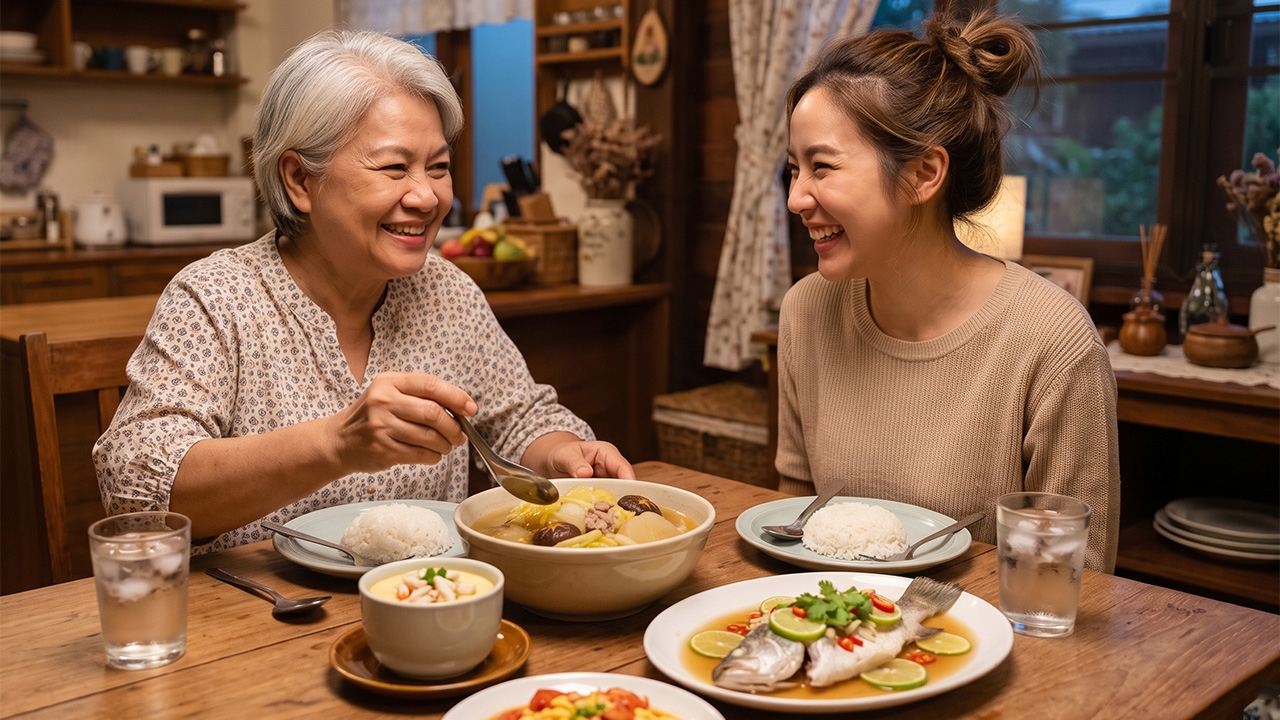
No more bland senior meals—get inspired to cook. 10 delicious meal menus for those aged 60 and over. Reducing the risk of choking. These tasty, easy-to-eat dishes focus on easily digestible ingredients with softened textures to facilitate chewing and swallowing, helping reduce choking risk and making every meal both delicious and senior-friendly.
As people age, digestion slows down, and another common problem is dysphagia (difficulty swallowing). According to the Department of Health, seniors often produce less saliva and have weakened chewing and swallowing muscles, increasing the risk of food entering the lungs, which can lead to life-threatening infectious pneumonia.
Therefore, food preparation for seniors should avoid long, stringy ingredients like enoki mushrooms and glass noodles, dry crumbly foods such as shredded chicken or overcooked dry meat, and items with bones or fishbones. Instead, meals should be soft, moist, easy to swallow, yet still flavorful and not overly bland.
Fish is a soft, easily digestible protein. This dish offers a sweet-sour flavor to stimulate appetite. It is essential to fillet the fish completely free of bones and reduce spiciness to avoid throat irritation that could trigger coughing or choking.
A classic, easy-to-eat, and very safe dish. The egg tofu is smooth and soft, while minced pork should be finely ground and mixed with a bit of broth during shaping to prevent forming tough lumps that are hard to chew.
Steamed egg requires almost no chewing. Preparing it with extra broth to maintain moisture and topping with crab meat adds appeal and high-quality protein.
Pumpkin is rich in vitamin A and fiber. It is boiled and blended into a smooth soup. Seniors prone to choking often have difficulty swallowing clear liquids, "clear liquids" so making pumpkin soup slightly thickened helps them control swallowing better and is safer than drinking clear broth.
Instead of chicken pieces or shredded chicken that may stick in the throat, use finely minced chicken cooked with tender winter melon. Winter melon is a soft vegetable that melts easily in the mouth and has a cooling effect to refresh the body.

Fresh shrimp is a high-quality protein with a natural sweet flavor, enhancing the aroma and taste of the broth to please senior palates. Avoid whole shrimp since cooked shrimp meat can be tough and hard to chew. Instead, finely chop the shrimp before simmering in the broth. The porridge should be slow-cooked over low heat until the rice grains burst and the texture is slightly thickened to ease swallowing and reduce choking risk.
This familiar Thai dish contains fiber-rich vegetables boiled until very soft, with a balanced sweet-salty flavor and a smooth broth. To prevent choking or vegetable fibers sticking in the throat, all vegetables—such as daikon radish, cabbage, and Chinese kale—should be chopped into bite-sized pieces before cooking. Avoid adding long, tough stems. Simmer gently until vegetables are almost melting in the mouth, making it much easier for seniors to eat.
A simple, nutritious Chinese-style dish. Tomatoes are high in lycopene. Score the tomato skin with an X, blanch in hot water, and peel before cooking with eggs until soft and mushy to prevent tomato skin from sticking in the throat.
Grilling may make fish tough and dry, which is problematic for those with swallowing difficulties. Steaming salmon with low-sodium soy sauce locks in moisture, making the fish tender and easy to swallow, served with soft steamed rice.
Use finely chopped shiitake mushrooms or diced carrots cooked until soft, poured over soft white tofu. This dish offers a balanced sweet-salty flavor and is safe to eat.
Preparing dinner for seniors aged 60 and over is not just about taste and nutrition but must also consider "food texture" as a priority. Modifying ingredients into small, soft, tender, and adequately moist pieces helps ease chewing, reduces choking risk, and allows mothers or seniors at home to enjoy safe, delicious meals every day.