

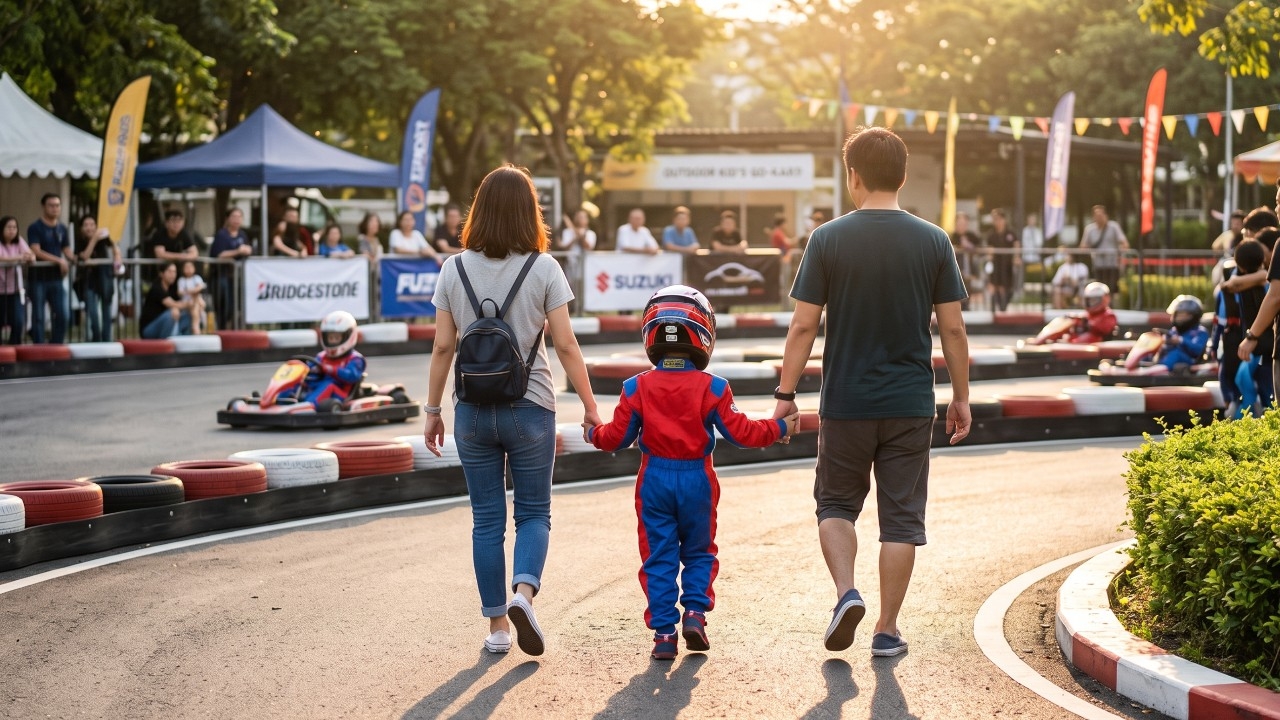
When sports competitions for young children become a hot topic, the key question that follows is not the win-loss record on the scoreboard but the behavior of the adults around the child.
The playing field should nurture life skills and sportsmanship spirit, but recent events show that sometimes parents' desire to win can overshadow these goals.
This is a crucial opportunity for parents to pause and reflect on whether what children should ultimately gain is a trophy or truly valuable life lessons.
The drama around the 8-year-old child's go-kart race sparks a discussion for parents to reconsider the true purpose of sports—whether it is for the child's growth or for victory on the top podium.
In sports psychology, this condition is called Achievement by Proxy Syndrome (ABPS), where parents tie their own dreams and values to their child's performance, shifting from supporter to controller and overlooking the value of sportsmanship.
Observing five behavioral warning signs helps recognize if the determination on the sidelines is becoming pressure that harms the child's mental state.
Have you noticed that after a competition, a child might quickly go play with friends within five minutes, while the parent looks upset, complains nonstop, or openly shows displeasure? This behavior reflects adults tying their emotions to the win-loss outcome, causing the child to feel guilty, scared, and believe parental love depends on competition results.
The first question parents ask after their child leaves the competition reveals their attitude immediately. If the first questions are “Why didn’t you overtake then?” or “Why did you drive so slowly?” instead of “Are you tired?”, “Did you enjoy today?”, or “What did you learn?”, it means the activity's value is confined solely to numerical results.

Shouting instructions over the fence, controlling the child every second, or aggressively intervening with referees’ decisions and coaches’ plans not only confuses and pressures the child but also blocks opportunities to develop decision-making, problem-solving, and coping skills independently.
When the desire to win dominates, parents’ attitudes toward other athletes and their families change—from friendly greetings to scrutinizing mistakes, showing dissatisfaction toward other children, or constantly comparing their child to others. This behavior instills jealousy and a lack of positive relationship skills in the child.
The most dangerous sign is encouraging children to cheat, exploit rules, or disregard others’ safety just to win trophies. When parents praise victory achieved dishonestly, children immediately absorb the distorted value that “results are more important than the means,” which harms their growth into socially responsible adults.
Competition dimension | Supportive parents (Growth Mindset) | Pressure-driven parents (Fixed Mindset) |
Main goal | Learning, health, and friendship | Trophies, podiums, and rankings |
Reaction to defeat | Encouragement and identifying areas to improve | Blaming referees or getting frustrated with the child |
View of opponents | Teammates who help develop skills | Enemies to defeat by any means |
Effect on child's mental state | Confidence, willingness to try, and no fear of failure | Stress, fear of losing, and risk of childhood burnout |
The essence of sports for children aged 7–10 is to enhance physical development and learn social coexistence. Victory on the podium cannot compare to emotional resilience skills that help children get back up after falling, understand rules, and gracefully accept defeat.

While trophies may hold meaning for only a few years, excessive pressure can leave lasting scars on a child's heart. What children truly need is warmth and acceptance from their family regardless of competition results, which becomes a vital source of strength for life.