

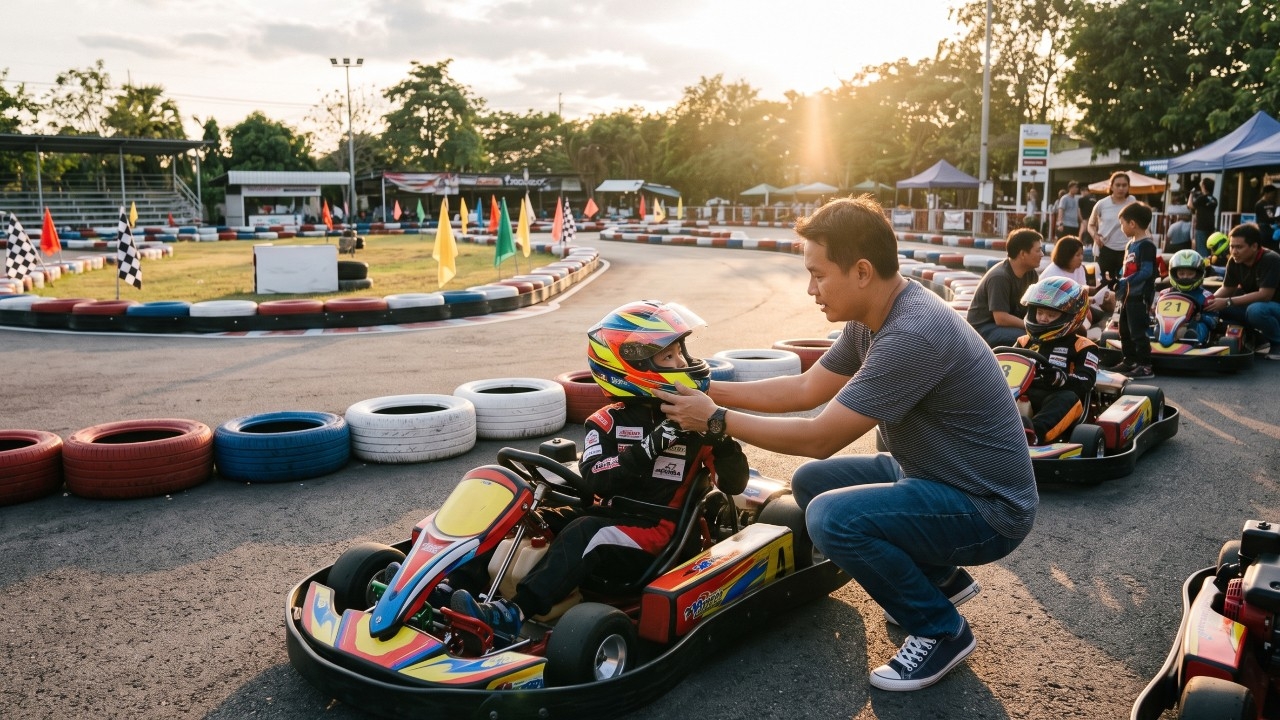
Recently, children's speed competitions have become a hot topic on social media feeds. Amid intense criticism, an important aspect often overlooked is the feelings of the children themselves.
Children facing criticism from adults may suffer deeper psychological effects than just the outcomes of winning or losing. A child psychiatrist invites society to collectively learn from this issue.
The main goal is to build emotional armor for children so they can navigate drama without losing their identity or bearing emotional wounds alone.
What was intended as a go-kart racing track to develop skills and sportsmanship has become a heated online controversy with adults criticizing each other, raising the key question: how should adults support children's mental well-being amid public scrutiny?
At a developmental stage, being caught in conflicts and judgments can slowly erode a child's self-esteem, leaving long-lasting anxiety scars.
When children face criticism, the best emotional shield starts at home. A child psychiatrist recommends four ways to build a strong emotional foundation so children do not carry emotional wounds alone.

Shield children from dramatic comments and dispute videos to protect their still-developing minds from adult biases.
Whether they win, lose, or make mistakes, children often feel confused. Use open-ended questions to hear their concerns and avoid dismissing their feelings.
Teach children that winning isn't everything. Shift focus to effort, and reassure them that family love never decreases based on competition results.
When facing unfairness, parents who calmly and respectfully handle problems demonstrate to children that standing up for oneself can be done without emotional outbursts.
Care dimensions. | Dos (What to do). | Don'ts (What to avoid). |
Listening. | Listen attentively, maintain eye contact, and offer comforting embraces to provide safety. | Dismiss or tell children,"Don't overthink it." |
Communication. | Explain facts in simple, age-appropriate language. | Express anger or gossip about opponents to children. |
Competition. | Praise effort, sportsmanship, and respect for opponents. | Pressure children to always be number one or compare them to others. |
Online world. | Set screen time limits and restrict access to negative comments. | Allow children to read comments hoping they"get used to reality." |
The key to helping children overcome conflicts is reminding them that their self-worth is not diminished by mistakes or criticism.

When parents provide stable emotional support, children not only get through immediate drama but also develop resilience skills to apply in real life.
References.