

This week, we invite readers to enter the realm of the seemingly never-ending ideas of Elon Musk, the man who calls himself the "Alien from Earth," replacing the usual stories we've encountered all month long.
Elon Musk's appearance at the World Economic Forum 2026 in Davos, Switzerland, became this year's most talked-about event, covering topics from the future of human civilization and the role of AI and humanoid robots to energy, space, and the meaning of life.
Musk's vision extends beyond his companies like SpaceX and Tesla. He captivated the conference audience with world-shaking predictions: by 2026, AI will be smarter than a single human, and by 2030, it will surpass the intelligence of all humans combined.
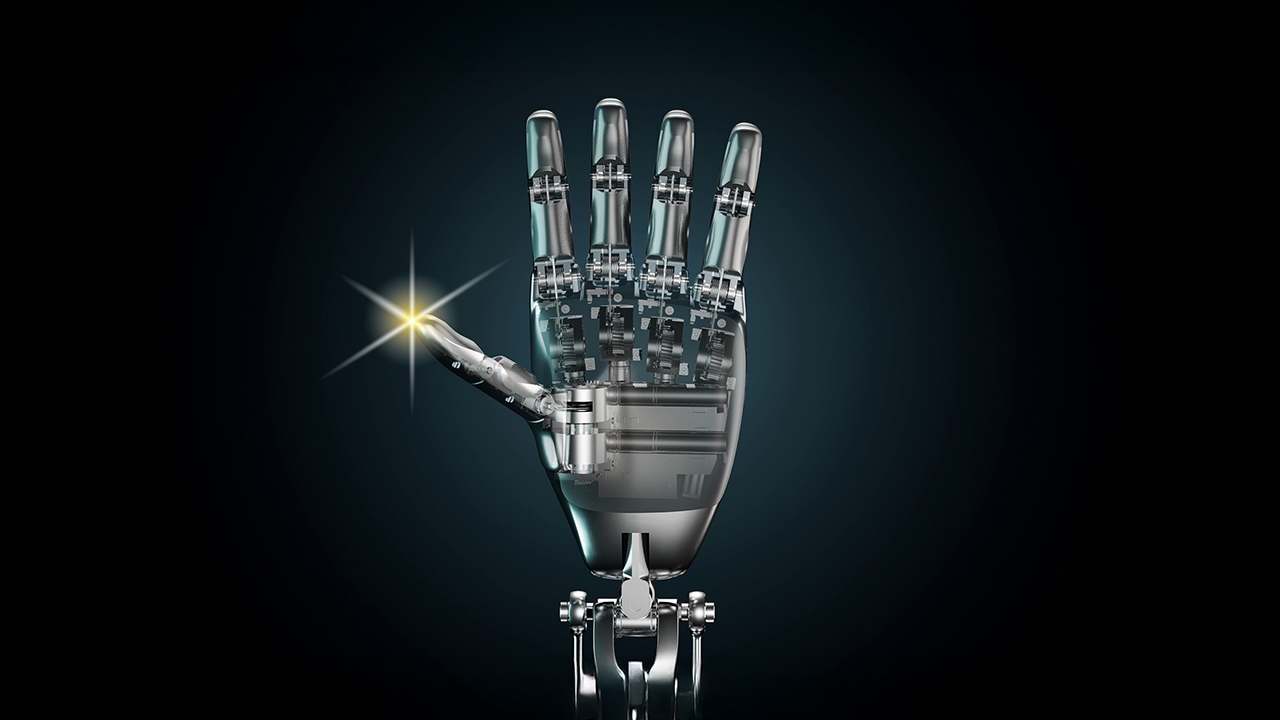
Musk announced that Tesla's Optimus robot will be capable of performing complex tasks by the end of 2026, with mass production starting by the end of 2027. This leads to the key idea that AI and robots will be the keys to the world's sustainable wealth, as the future economy will be powered by robots and cheap energy, transforming the world from an era of scarcity to one of abundance.
Musk suggests we redefine the concept of wealth. He views "money" merely as a medium, while the true importance lies in society's ability to produce essential goods and services at extremely low costs accessible to everyone. If food, housing, transportation, and healthcare can be produced massively at near-zero cost, humanity will become wealthier collectively, even if monetary income does not increase.
In the future world, Musk envisions GDP no longer tied to the number of workers or human work hours but based on a simple equation: Economic potential = Number of robots × Robot capability.
Robots and AI can operate 24/7, continuously improve their abilities, and have no health limitations like humans. If the world has a vast number of high-performance robots, global production capacity will increase exponentially like never before.
Musk believes poverty stems from excessively high production costs. When AI and robots replace labor in manufacturing, construction, logistics, and even childcare and eldercare, the cost of basic goods and services will drastically fall. Structural poverty will be eliminated not by handing out money but by ensuring the fundamental necessities of life are abundantly available and accessible to all.
Musk candidly admits that in this new economic system, many humans may have to "lose their jobs." But he believes this is not a tragedy. If the world truly creates abundance, the economy will shift from working to "survive" to choosing work that "matters." Humans will have the freedom to create art, science, and relationships rather than spending all their energy exchanging sweat for basic necessities.
The key to enabling this economy is massive amounts of cheap energy. Musk places the highest importance on solar energy—the largest energy source in the solar system—and battery energy storage systems, as AI and robots require enormous power, especially humanoid robots being developed to work with human-like precision. By 2030, these robots will widely replace human labor, while humans will remain controllers and directors to ensure safety.
According to Musk, the future economy is not a world where only a few groups become richer but one where the cost of a good quality of life drops nearly to zero. Humanity will be wealthier not because of more money in their pockets, but because they no longer need large amounts of money to afford a good quality of life.
This vision seems to contrast with the current views of Thai politicians and government, who often propose solutions focused on lowering oil prices rather than structural reforms toward cheap electric power from solar and new clean energy sources, as many countries are rapidly adapting.
So, dear readers, do you share this belief?