

Epson highlights success in its Business Inkjet product line with a remarkable 40% growth, emphasizing a Customer Value First strategy that integrates AI technology and green trends, targeting 5% growth in 2026.
Epson Thailand reported its 2025 operational performance amid a volatile economic climate. The overall IT and electronics market in Thailand faced severe economic challenges, with GfK data showing a 9% decline in total technology product sales. The IT product segment shrank by 10%, while the entry-level projector market plunged 20%, amid a 4% drop in consumer purchasing power. This led to a polarized market where consumers chose only essential, cost-effective products or premium items that clearly deliver value.
However, Epson Thailand's business results defied the crisis, especially in the Business-to-Business (B2B) segment, which showed remarkable growth. Business Inkjet printer sales soared by 40%, driven by large organizations shifting from laser to inkjet systems that save up to 85% energy. Additionally, scanner sales grew 25%, and industrial robots expanded by 20%, boosted by the relocation of manufacturing bases from China to Thailand and Vietnam amid global geopolitical developments. This encouraged businesses to continue investing in technology to enhance long-term production efficiency.
For its 2026 strategy, Mr. Yanyong Muneemongkol, Managing Director of Epson (Thailand) Co., Ltd., stated that Epson plans an aggressive push under the Customer Value First strategy by making AI technology central to elevating service and operations. A key highlight is the AI Service CRM system, which can analyze and dispatch repair tasks in real time, reducing average repair completion time to just 1.82 days—faster than the standard two days. Epson also plans to upgrade over 175 service centers nationwide to support onsite service, meeting the needs of corporate clients requiring work continuity.
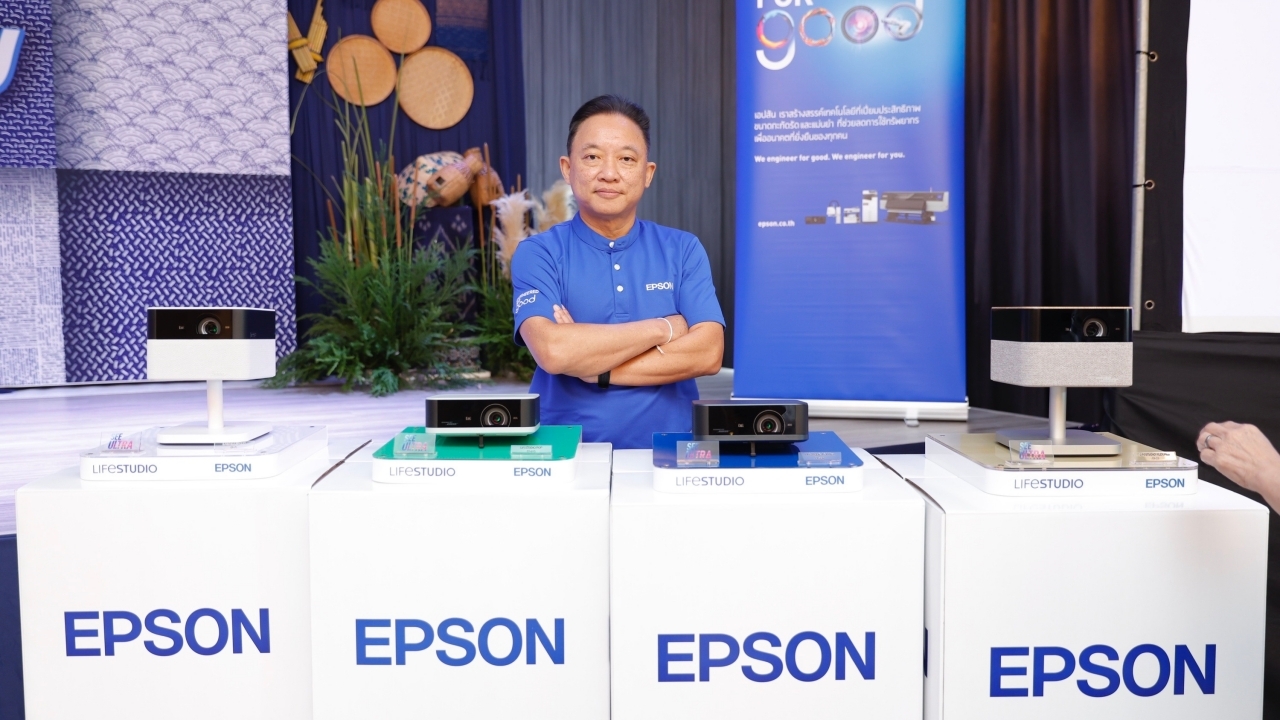
In the consumer market (Business-to-Consumer: B2C), Mr. Yanyong said Epson focuses on building trust and differentiation through a four-year warranty campaign on ink tank printers, reinforcing durability amid cautious consumer spending. Epson also launched the Lifestyle Projector Light Studio series developed in partnership with audio brand Bose, emphasizing ease of use with Plug & Play, Android OS support, and portability with a backup battery (Power Bank). Moreover, Epson is expanding into creative markets such as Digital Art and Projection Mapping at key locations, a new segment with high growth potential.
Beyond business, Mr. Yanyong concluded that Epson continues its sustainability mission aiming to become a Carbon Negative organization by 2050 through tangible innovations and social responsibility projects. Examples include PaperLab technology that recycles used paper onsite, and the EPP Refill project, which collects over 50,000 used ink bottles nationwide for recycling into student desks and chairs donated to underprivileged schools such as Ban Khuan Chong School in Songkhla Province and Wat Decha Nusorn School in Nakhon Pathom Province. These efforts aim to provide educational opportunities while protecting the environment and fulfilling sustainable social responsibility.