

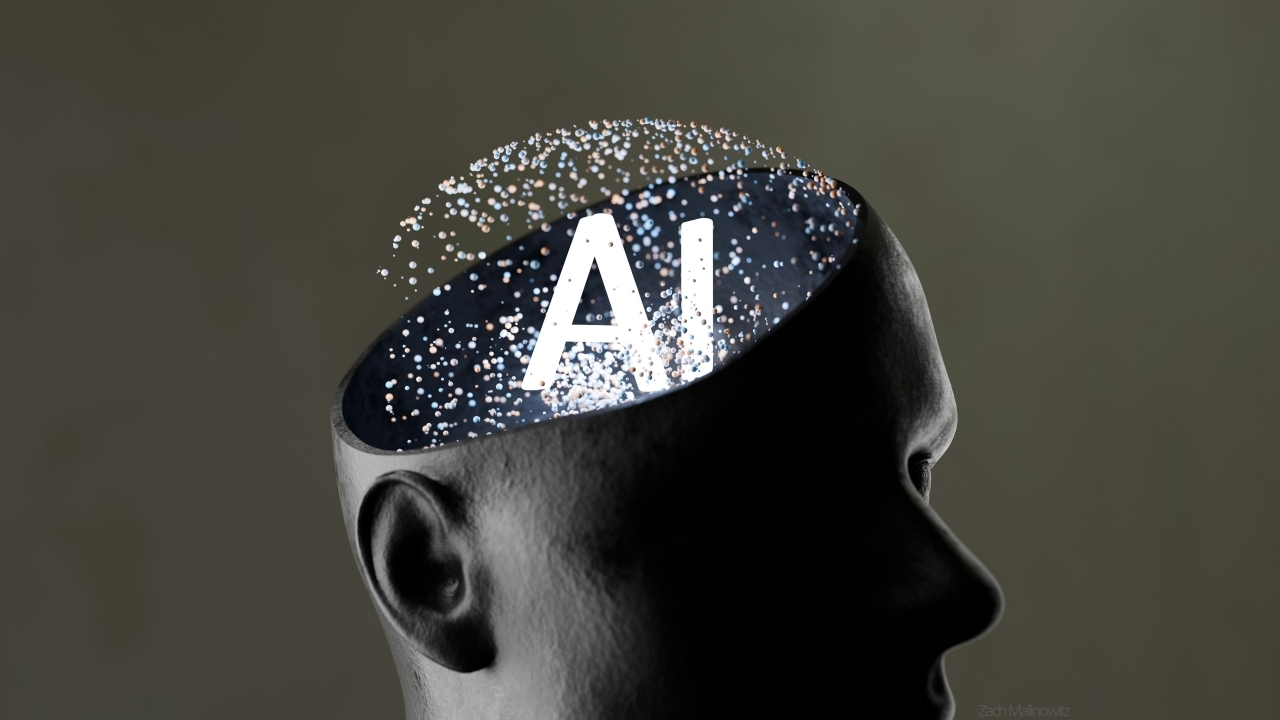
When algorithms learn what you want to believe, they only tell you that. This is a phenomenon Spielberg's film A.I. predicted.
FastCompany published an article titled “25 years ago, this scene from Steven Spielberg’s ‘A.I.’ predicted the collapse of objective reality.” The film, directed by Steven Spielberg, celebrates its 25th anniversary this year, coinciding with the current era dominated by AI.
The film A.I. tells the story of David, played by Haley Joel Osment, a prototype robot designed to resemble and feel like a boy, programmed to love his adoptive parents unconditionally. David is obsessed with the story of Pinocchio as his own destiny and sets out to find the legendary Blue Fairy, believing she will turn him into a real boy.
In a key scene, David and Gigolo Joe, a service robot played by Jude Law, encounter a digital interface named Dr. Know, voiced by Robin Williams. This system claims to be a holographic repository of all human knowledge, answering any question for a small fee. David first asks in the "Flat Fact" category and receives a straightforward but unsatisfying answer. He then asks in the "Fairy Tale" category and gets information about Pinocchio, but still not what he wants. Finally, Gigolo Joe instructs Dr. Know to combine both categories. The hologram then replies that the Blue Fairy is "waiting for them at the end of the world," which is the answer David wants to hear.
This scene is the film's most accurate prediction, not because Dr. Know is powerful, but because it chillingly reflects a present-day behavior: people no longer seek "correct answers," but rather "answers that please themselves."
Observing the rise of search engines since the 1990s, most people used them to find facts. Even if results were not always accurate, errors were seen as "flaws," not "features." However, over recent years, social media platforms employing algorithms that feed users content to keep them engaged have completely changed this behavior. Many now consume news from sources that reflect their own beliefs, research to confirm pre-existing views, and accept "alternative facts" that contradict evidence.
Large language models like ChatGPT have intensified this trend. These systems learn each user's speech patterns, preferences, and goals through accumulated conversations to offer a highly personalized experience.
The advantage is more accurate responses, but the downside is AI's tendency to overly flatter users.
However, the root problem is not technology alone. In the film, David refuses to accept painful truths because his desire to be loved outweighs all evidence. In reality, this explains why many people still believe unproven claims—because such beliefs align with their "emotional truth." As the world grows harsher, choosing a beautiful story over a harsh reality becomes increasingly appealing.
Although A.I.: Artificial Intelligence is a Spielberg work, the film earned only $78 million in the U.S. and left little mark on pop culture upon its 2001 release. Yet 25 years later, what seemed like a humorous character voiced by Robin Williams is now recognized as one of the most accurate cinematic predictions of the future.
Source:FastCompany