

TechRadar's article points out that although Apple is entering the foldable phone market years after competitors and its first model may not be more advanced, Apple's user base could still expand this very small market.
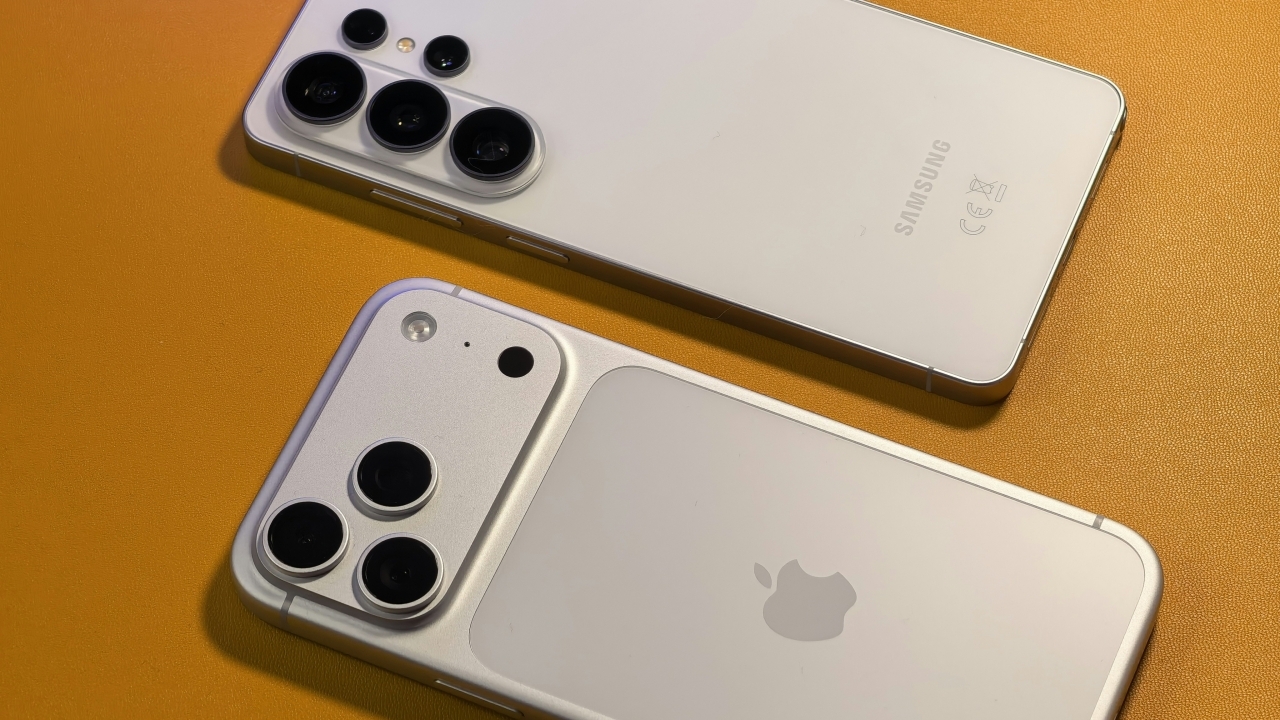
Before Apple launches its first foldable iPhone on 9 September 2026, Lance Ulanoff, Editor-at-Large at TechRadar, wrote about the foldable phone market, questioning whether Apple's model will be good enough to elevate the entire foldable smartphone segment, given that rumors so far indicate Apple's foldable phone closely resembles Samsung's Galaxy Z Fold 8 in shape, screen size, and even the number of rear cameras, which has been on sale since August.
Ulanoff believes the answer may not lie in the device's quality, but rather in Apple's brand strength and user base, which could bring longtime waiters into this phone segment for the first time.
Ulanoff assessed that the Galaxy Z Fold 8 is not the best foldable phone in Samsung’s foldable lineup, but its appeal lies in its passport-like shape with a 7.6-inch internal screen at a 4:3 aspect ratio, giving a tablet-like feel rather than the traditional tall foldable form. The top model, Galaxy Z Fold 8 Ultra, features an 8.0-inch inner screen, a 200-megapixel main camera, a thickness of 4.1 millimeters when unfolded, and weighs 215 grams.
Sales figures indicate Samsung’s strategy is working, as pre-orders for all three models reached 1.44 million units by early August, breaking Galaxy Note 10’s 2019 record of 1.38 million, and exceeding the combined sales of Galaxy Z Fold 7 and Z Flip 7 from the previous year, which were about 1.04 million units. The standard Galaxy Z Fold 8 accounts for roughly 70 percent of total pre-orders. ET News reports that unexpectedly high demand led Samsung to order an additional 1 million parts to increase Galaxy Z Fold 8 production from the original 2.8 million units to about 3.8 million.
However, when these numbers are compared to the scale of the iPhone business, the picture changes immediately. IDC data shows Apple shipped about 232.1 million iPhones throughout 2024, with around 76.9 million shipped in the final quarter alone. Ming-Chi Kuo, an analyst from TF International Securities, estimates that first-weekend pre-orders for the iPhone 16 in September 2024 will reach around 37 million units. In other words, the first weekend pre-orders of a regular iPhone model are many times higher than Samsung’s best-selling foldable phone’s annual production.
What the industry expects is for the iPhone Ultra to open this market in a way that Samsung and other competitors have yet to achieve. But this expectation assumes Apple’s device will be significantly better than Samsung’s, which Ulanoff doubts, noting that the Galaxy Z Fold 8 Ultra unfolds flat with almost no crease, is as thin and light as a standard flagship flat screen phone, and offers twice the usability.
Regarding rumored specs, the iPhone Ultra is expected to have a 5.5-inch outer screen and a 7.8-inch inner screen, use an aluminum-titanium alloy, and be about 4.5 millimeters thick when unfolded, which is not thinner than Samsung’s device. It will also have two rear cameras without a telephoto lens, similarly to Samsung's model.
The most significant design difference may be in the hinge material, rumored to be called Liquid metal, aimed at eliminating the crease. The clearer advantage is expected in performance, with an anticipated A20 chip, 12GB of RAM, and Apple’s self-developed C2 modem.
Ulanoff concludes that Apple may not need to make the world’s best foldable phone—simply delivering one to a ready market is enough. The question is how many smartphone users have delayed buying a foldable phone to wait for Apple. If that number is large enough, Apple’s brand power could expand the foldable phone market like never before.