

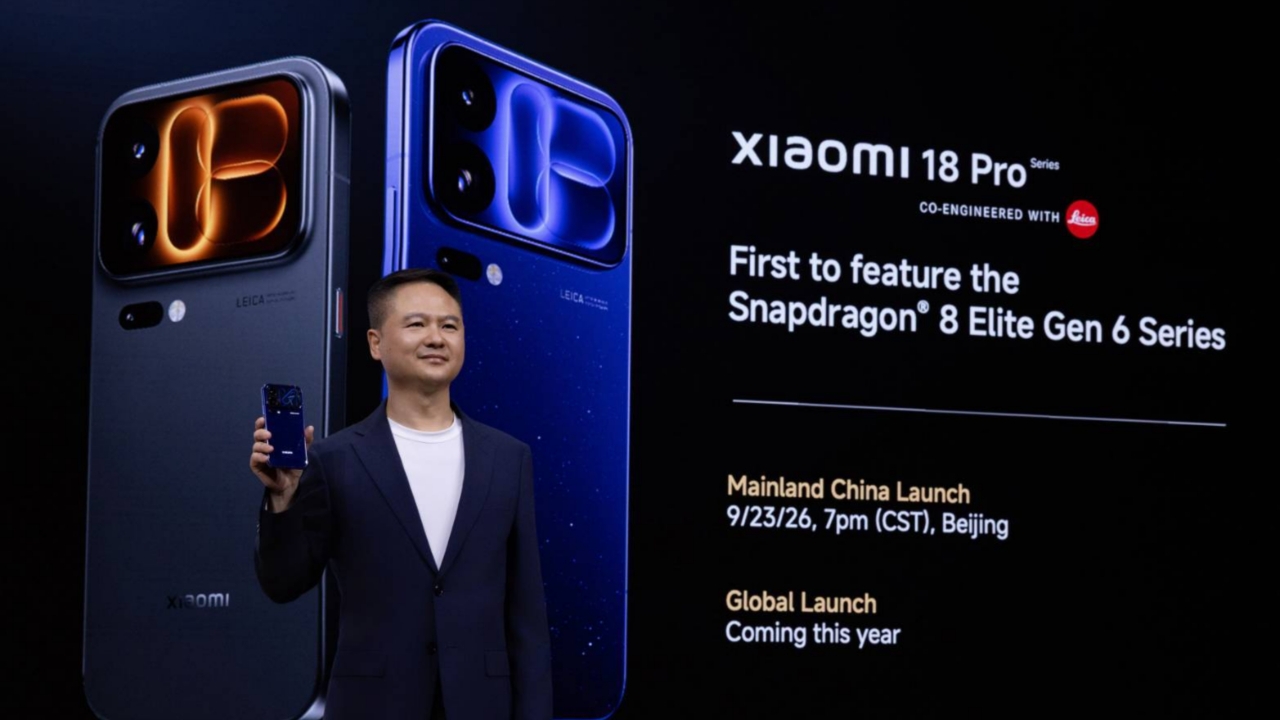
Xiaomi has launched the Xiaomi 18 Pro and Xiaomi 18 Pro Max, featuring a rear display for viewing notifications, taking selfies with Leica cameras, and AI-customized usage, while advancing research and development investment and preparing to expand into overseas markets.
Xiaomi introduced its flagship smartphones, the Xiaomi 18 Pro and Xiaomi 18 Pro Max, on 23 Sep 2026 in Beijing, China, enhancing performance, displays, camera systems, and AI functionality. A standout feature is the interactive rear display, developed further from the Xiaomi 17 Series, with plans to bring the products to international markets in the future.
The company stated that the new smartphones use Qualcomm’s latest flagship Snapdragon chip, manufactured with 2-nanometer technology, integrating hardware, software, camera systems, and AI to enrich everyday user experiences.

What can the rear display do? View notifications and take selfies using the main camera.
Xiaomi first introduced rear displays on the Pro and Pro Max models of the Xiaomi 17 Series, then further developed them in the Xiaomi 18 Pro Series, designing the screen as a space for displaying information, photography, and user customization.
In daily use, the rear display functions similarly to a smartwatch screen, allowing quick access to important information even when the phone is placed face down on a table, reducing the need to pick up the phone or unlock the main screen every time.
Another use is showing a preview from the rear camera, enabling users to take selfies and frame shots more easily. Those being photographed can see themselves during the shoot, helping them adjust poses and angles as desired.
The rear display supports selfie photography with Leica cameras, group photos, vlog videos, dynamic and AI-generated wallpapers, viewing notifications, activity status, widgets, and pinned information. Additionally, users can create AI-powered apps to design further usage modes.
Xiaomi positions AI as the core of smartphone development.
Lu Weibing, Xiaomi Group Partner and President, revealed that the development of the Xiaomi 18 Pro Series covers system software, chip hardware, imaging technology, and the application of large AI models.
He added that this series marks the beginning of a comprehensive AI-driven transformation of Xiaomi smartphones and represents the most significant upgrade in the history of Xiaomi’s Number Series smartphones.
This direction emphasizes integrating various technologies to deliver benefits from chip performance, camera systems, and AI through practical use, with the rear display clearly reflecting this approach.

The Pro Max model highlights Leica cameras with two 200-megapixel sensors.
For photography, the Xiaomi 18 Pro Max features a Leica triple-lens optical system using two large 200-megapixel sensors, combined with a comprehensive image processing model.
The main camera focuses on capturing fine details, supporting image cropping and recomposition afterward. The telephoto lens captures both small object details and distant images, with an Essential mode to convey classic camera tones and moods during shooting.
The integration between the camera system and rear display allows users to take selfies with the rear camera while previewing and composing shots directly, also enabling subjects to see themselves during shooting.
Regarding performance, the company stated the Xiaomi 18 Pro Max uses the Snapdragon® 8 Elite Extreme Gen 6 chipset, supporting daily use, multitasking, and on-device AI capabilities.
Additionally, it features Xiaomi Privacy Display to offer more options for controlling data privacy on the screen, with functionality details depending on model and version sold.
Planning over 200 billion yuan investment in research over five years.
Xiaomi disclosed that from 2021 to 2025, it invested over 105.5 billion yuan in research and development. In 2025, it employed 25,457 R&D staff and held more than 47,000 approved patents worldwide.
Looking ahead, the company plans to invest over 200 billion yuan in R&D between 2026 and 2030, including more than 60 billion yuan in AI over the next three years.
This investment spans technologies for multiple product groups, from smartphones and automobiles to home appliances. The Xiaomi 18 Pro Series exemplifies applying these technologies through its camera system, AI chipset, and rear display, offering new smartphone usage options.