

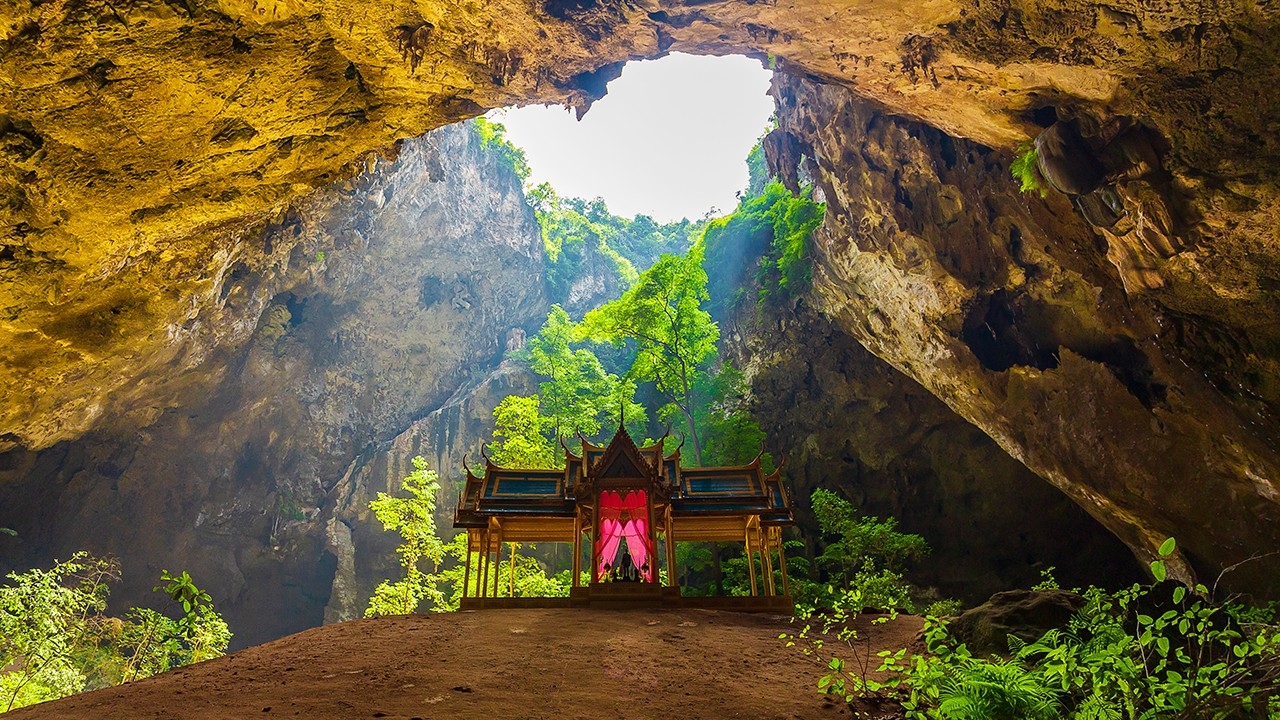
"Phraya Nakhon Cave" , It is not only an unseen tourist attraction in Prachuap Khiri Khan Province but also a precious historical site favored by King Chulalongkorn (Rama V), who visited the cave four times, leading to the creation of the "Kuha Karuhas Pavilion". Kuha Karuhas Pavilion " a golden royal pavilion that has become a striking symbol amid the wondrous natural light that filters through, revealing its secrets.Five things to know before conquering "Phraya Nakhon Cave" in 2026: Check the best times for the "sunlight illumination".
The name "Phraya Nakhon Cave" is believed to derive from "Phraya Nakhon" (the governor of Nakhon Si Thammarat), who accidentally discovered the cave while sheltering his boat from a storm at Laem Sala Beach during the Ayutthaya period. The cave's large opening lets in sunlight and offers a tranquil, cool atmosphere, making it well-known ever since.
The importance of Phraya Nakhon Cave grew during the Rattanakosin era, especially under King Chulalongkorn (Rama V), who had a strong connection to this cave. Records show he visited it four times:
First visit: 1863 CE (while still young)
When he was still the Crown Prince Chulalongkorn, he accompanied his father, King Rama IV, on a tour of western coastal towns. This was his first time witnessing the cave's marvels during his youth. The cave left a lasting impression on him for its peace and quiet, marking the beginning of his fond memories and prompting later royal visits as king.
Second visit: 1886 CE (visit for inscribing royal cypher)
During this visit, he graciously ordered his royal cypher "จปร." (Jor Por Ror) to be engraved on the cave’s north wall as a memorial. He took time to explore the cave’s natural beauty and study its physical features carefully, judging the suitability for the inscription. This act showed his official recognition and deep regard for the site.

Third visit: 1889 CE (preparatory visit for major plans)
He came again to examine the site closely in order to plan the construction of the "Kuha Karuhas Pavilion," a four-faced royal pavilion he personally designed. He considered the position where sunlight would enter the cave’s opening to ensure the pavilion would look its most beautiful when illuminated by natural light in the late morning. This visit demonstrated his dedication and meticulous attention to architectural detail in this mountain setting.
Fourth visit: 1890 CE (grand ceremony celebrating Kuha Karuhas Pavilion)
This historic occasion marked his presence as the chief guest at the roof-raising and celebration of the newly completed Kuha Karuhas Pavilion. He graciously ordered a grand ceremony and stayed overnight near Phraya Nakhon Cave amid an atmosphere full of reverence. The pavilion became a symbol of loyalty and one of the most beautiful legacies of Thai art passed down to this day.
Other monarchs, including King Rama VII and King Rama IX, also visited this cave, making Phraya Nakhon Cave a place rich in merit and history connected to the Chakri dynasty.
The key highlight is the Kuha Karuhas Pavilion, a four-faced royal pavilion built during King Rama V’s reign. It was constructed in Bangkok and then reassembled inside the cave. Its unique design allows sunlight to shine perfectly through the cave opening, especially at certain times when the sun’s rays illuminate the pavilion, making it glow like gold. Today, it is recognized as the emblem of Prachuap Khiri Khan Province.