

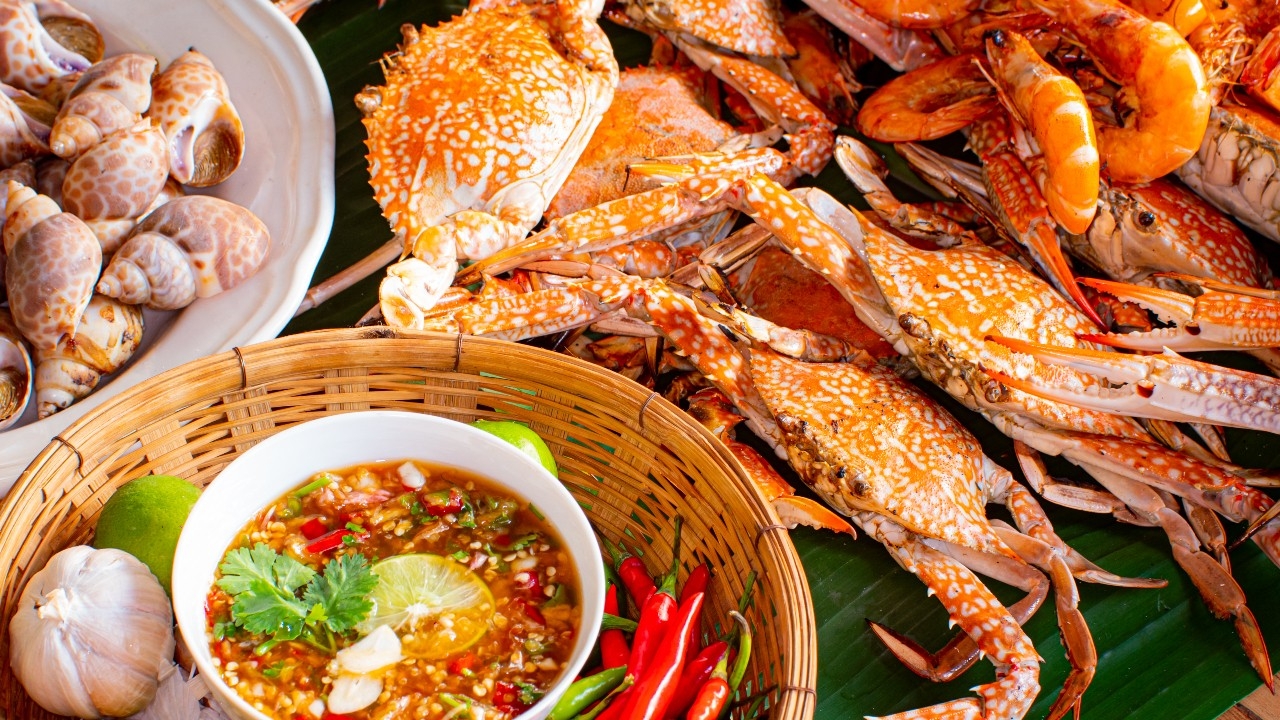
Seafood lovers traveling to popular main cities often face soaring food prices during peak tourist seasons. Sometimes, the cost of blue crabs or giant freshwater prawns skyrockets, stretching budgets thin.
The secret for true foodies is to set their sights on "secondary coastal cities," where local fishing boats bring fresh daily catches straight from the sea. The seafood is sweet and firm, and importantly, prices are wallet-friendly—2 to 3 times cheaper than in major tourist hubs.
Thairath Online has compiled five must-visit secondary seafood cities guaranteed to serve fresh shrimp, shellfish, crab, and fish at comfortable prices.
1. Trat
At Thailand’s easternmost point, Trat Province is known for its rich natural seafood resources, especially around "Laem Ngop" and "Khlong Yai District," where fish markets and local fishing communities line the coast.
Trat’s specialties are blue crabs and mud crabs with firm, sweet meat, freshly caught and sold at affordable prices. Large blue crabs or egg-filled mud crabs cost nearly half the price compared to big tourist cities. There’s also clear-shelled squid, fresh sea prawns, and scallops, all available for home-style dishes like tom yum, spicy stir-fry, or steamed with lime, offering incredible value for a full meal.
2. Chanthaburi
A bit further along is Chanthaburi, a secondary city famous for its "seafood homestay" concept, especially in Laem Sing and Khlung Districts, surrounded by lush mangrove forests.
The highlight here is the value: most accommodations offer all-inclusive packages starting at a few thousand baht, including rooms, boat tours, and the star attraction—an all-you-can-eat seafood buffet dinner featuring large steamed crabs, grilled river prawns, fried sea bass with fish sauce, and endless spicy seafood dipping sauces. It’s perfect for groups or families wanting seafood without worrying about the per-dish price.
3. Chumphon
Heading south to Chumphon, a coastal city with a long shoreline that still preserves traditional local fishing lifestyles. Key spots include "Paknam Chumphon" and "Hat Sai Ri."
Beachside restaurants here serve fresh daily catches from fishing boats just returned to shore. Must-try dishes include sweet stewed squid, fresh squid sashimi, large juicy giant river prawns, and spicy southern-style sour curry with grouper or large sea bass chunks—all at prices that surprise for their affordability given the quality and freshness.
4. Trang
For those wanting Andaman Sea seafood without the tourist prices of major destinations, consider Trang Province, especially around "Pak Meng Beach" and "Kantang District."
Here, seaside restaurants offer fresh Andaman seafood like steamed razor clams with flavorful seafood sauce, seven-colored lobsters, large blue crabs, and rich southern-style fish kidney curry, all with bold authentic flavors at prices much lower than Phuket or Krabi. Diners can enjoy ocean sunset views while savoring delicious food.
5. Nakhon Si Thammarat
Lastly, Nakhon Si Thammarat, especially the Pak Phanang and Khanom areas, lies at the junction of the Gulf of Thailand and mangrove ecosystems, resulting in abundant and unusually large seafood.
Don’t miss the giant fresh oysters, about palm-sized, sweet and juicy without any fishy smell, served with accompaniments like acacia shoots, chili paste, and cockles. Besides oysters, large giant river prawns in tamarind sauce and garlic fried mantis shrimp are must-try local dishes at wallet-friendly prices found easily in roadside local eateries.
First, buy directly from fish markets. If staying in rental homes or resorts with grilling facilities, get up early to visit local fish markets and purchase fresh seafood straight from locals, then grill it yourself for the freshest seafood at about half the usual price.
Also, eat seasonally by asking locals what seafood is in season during your visit—whether it’s crab eggs or squid—ensuring you get the freshest ingredients at the best prices of the year.
For those who loveseafood dining,try turning off the main roads and exploring these secondary coastal cities. Not only will you support local fishing communities, but you’ll also enjoy fresh, flavorful seafood at incredibly affordable prices.
Photo credit: istock