

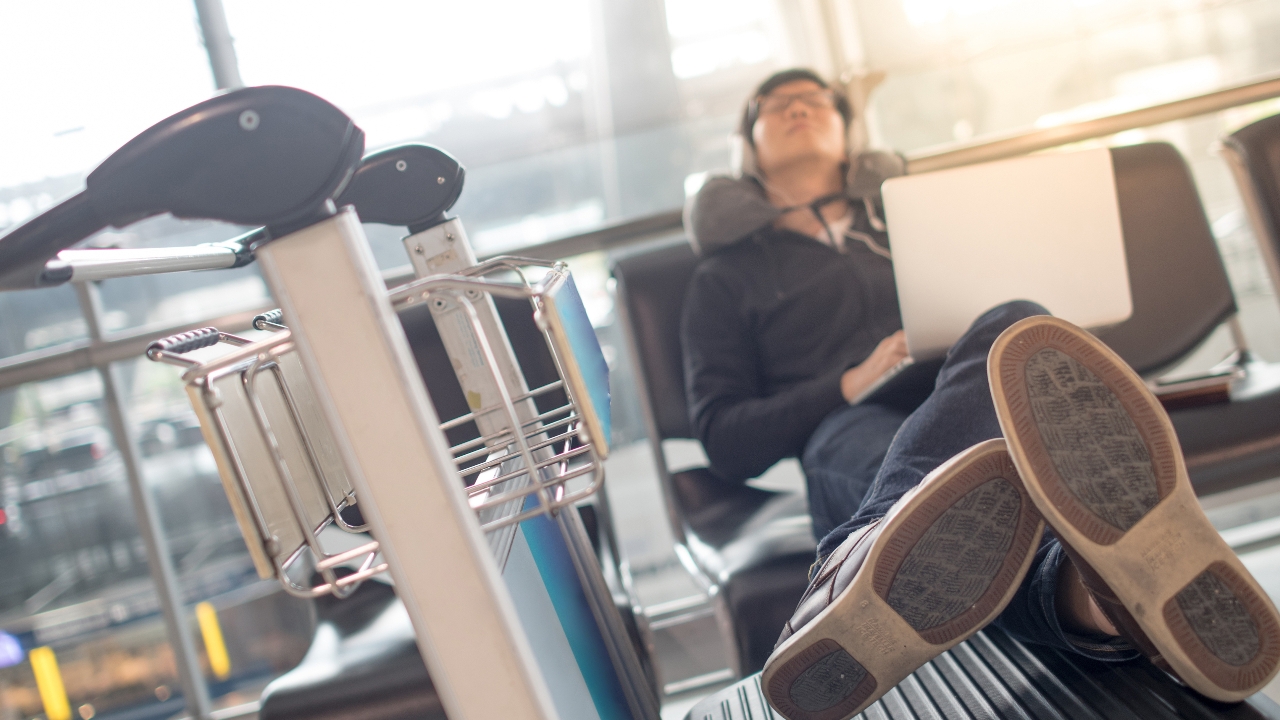
Backpackers and budget-conscious office workers facing overnight transit flights find that sleeping at the airport saves thousands on hotel costs and spares them the hassle of dragging luggage in and out of the city late at night.
Thairath Online presents a survival guide for sleeping at the airport, turning long nights into safe and comfortable rest periods.
The biggest challenges when sleeping at the airport are the cold and bright lights. Proper preparation is crucial, starting with carrying a thick jacket or blanket because airport air conditioning is often very cold at night. The thick jacket not only provides warmth but can also be rolled into a pillow. Next, an eye mask and earplugs are lifesavers to block out bright lights and noise.Bright lights and soundsfrom announcements that may disturb you throughout the night. Safety is equally important: always keep your passport, credit cards, and cash in an anti-theft crossbody bag close to your chest for full peace of mind. Finish with a mini hygiene kit such as wet wipes and a toothbrush to refresh yourself in the morning before your flight.
Not every chair is suitable for sleeping. You need to observe and research beforehand to find the most comfortable place. When searching, look for signs indicating a Rest Zone, as major airports often have reclining chairs or Snooze Lounges specifically for free passenger rest. If no dedicated zone is found, use the rule of choosing chairs without armrests in the middle, so you can lie down fully stretched out.
Another great resource is the website SleepinginAirports.net, a secret bible compiling reviews and maps of free sleeping spots at airports worldwide, which you can check before traveling.
If you need a stopover spot, several popular airports allow budget travelers to rest comfortably without needing a hotel. Starting with Singapore's Changi Airport, known for comfort with Snooze Lounges in every terminal, soft carpeted floors, and plenty of charging points.
South Korea's Incheon Airport offers a well-equipped Nap Zone with free reclining beds and free shower facilities for transit passengers. Finally, Japan's Haneda Airport stands out for top-tier security, quiet atmosphere, many long sofas, and 24-hour service.
No matter how well prepared you are, don't forget to set an alarm at least 1.5 to 2 hours before boarding, since gates can be changed or far away, requiring extra walking time. The most important rule is to avoid sleeping near announcement speakers or automatic entrance doors with constant drafts, as these will wake you and disrupt your sleep.
Sleeping at the airport might not be as comfortable as a soft hotel bed, but with good preparation, it saves money and lets you wake up ready to continue your trip. Do you have a specific airport stopover planned? I can help you find the best free rest spots there.