

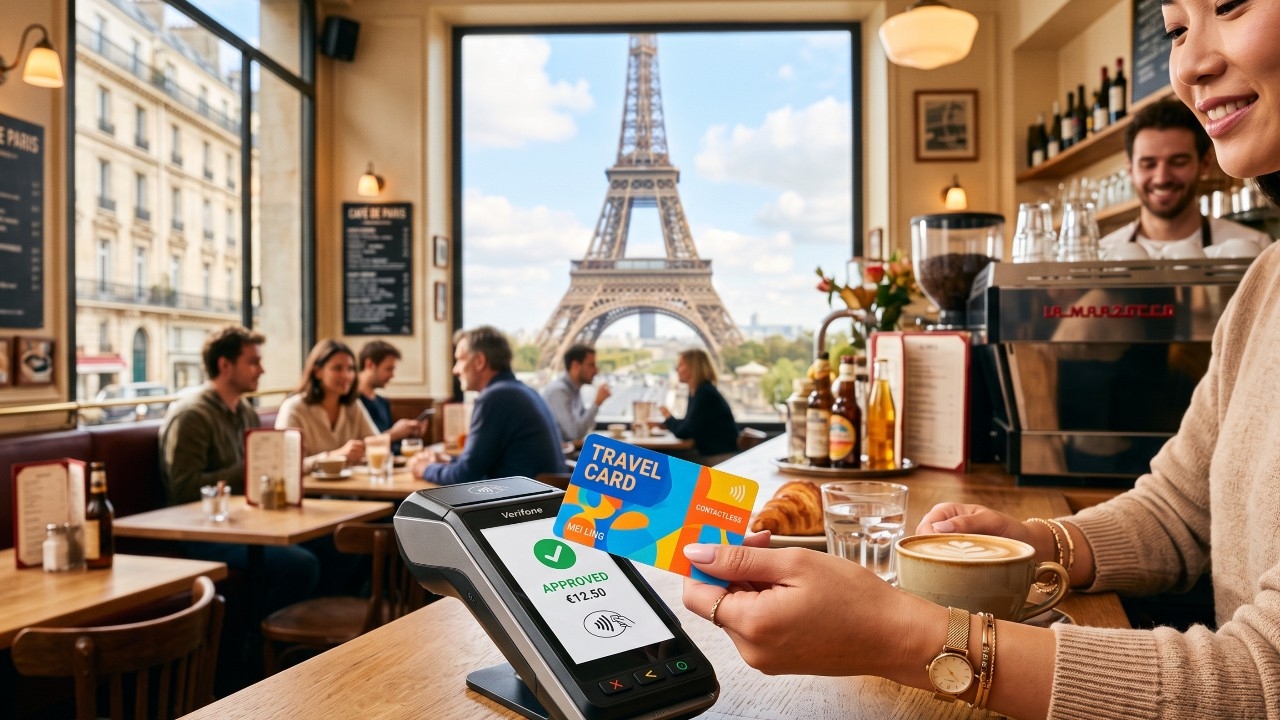
Whether flying abroad or taking a vacation in Thailand, one essential financial item for travelers nowadays is the "Travel Card" or foreign currency prepaid card. However, many people still don't use this card to its full potential! Thairath Online explores in depth how to use Travel Cards domestically and internationally to save money effectively, control your budget precisely, and avoid hidden fees.
A Travel Card is a prepaid or debit card designed for spending abroad and online shopping. Its key advantage over regular credit cards is the absence of a 2.5% currency conversion risk fee (0% FX Fee) and the ability to lock exchange rates in advance through the app as soon as you notice a favorable rate.
Don't wait until your travel day to exchange or top up money. Monitor exchange rates on the app 1–2 months in advance. When your destination's currency weakens, immediately load funds onto your card to avoid exposure to fluctuating rates on the travel day.

When paying with your card abroad, some card machines (EDC) ask whether you want to pay in Thai Baht (THB) or the local currency (e.g., JPY, KRW, EUR). Always select the local currency because paying in THB uses the merchant’s exchange rate, which typically includes a 3–5% dynamic currency conversion (DCC) fee.
Although most Travel Cards don’t charge withdrawal fees from Thai banks, some ATMs abroad impose local bank fees. Before traveling, verify which ATMs offer fee-free withdrawals with your card, such as those in convenience stores, to avoid duplicate charges.
Modern Travel Cards support contactless payments (like Visa payWave or Mastercard Contactless), enabling you to tap in at subway stations, buses, or convenience stores in many countries (e.g., London Underground, Singapore MRT, or buses in Japan). This saves time buying local tickets and reduces the risk of losing cash.
Don’t overlook the "Promotions" tab in your Travel Card app; many providers offer special discounts with hotel booking platforms (Agoda,Booking.com), duty-free store discounts, or cashback when spending meets certain conditions.
Many assume Travel Cards are only useful when traveling abroad, but using them in Thailand also helps save money and manage finances effectively.
Travel style category | Recommended Travel Card type | Key usage features | Cautions |
| Frequent international travelers / backpackers | Multi-Currency cards (support multiple currencies) | Can load various currencies simultaneously; easy contactless payments worldwide | Must monitor exchange rates and load funds ahead of time |
| Shoppers / Large payments | Travel Card linked to a bank account (Auto-Convert) | No need to pre-exchange; payment deducts from account at current rate immediately | Harder to control budget as funds are deducted directly from main account |
| Cash-focused / small town travelers | Cards with free foreign ATM withdrawal fees | Convenient emergency cash withdrawals | Some country ATMs may charge additional local fees |

Using a Travel Card properly not only adds convenience—eliminating the need to carry large amounts of cash and risk losing it—but also helps save on various fees and keep your travel budget on track, making any trip, domestic or international, fully worthwhile.
References: Bank of Thailand (BOT), service terms for Travel Card/Prepaid Card from major commercial banks in Thailand, VISA, and Mastercard