

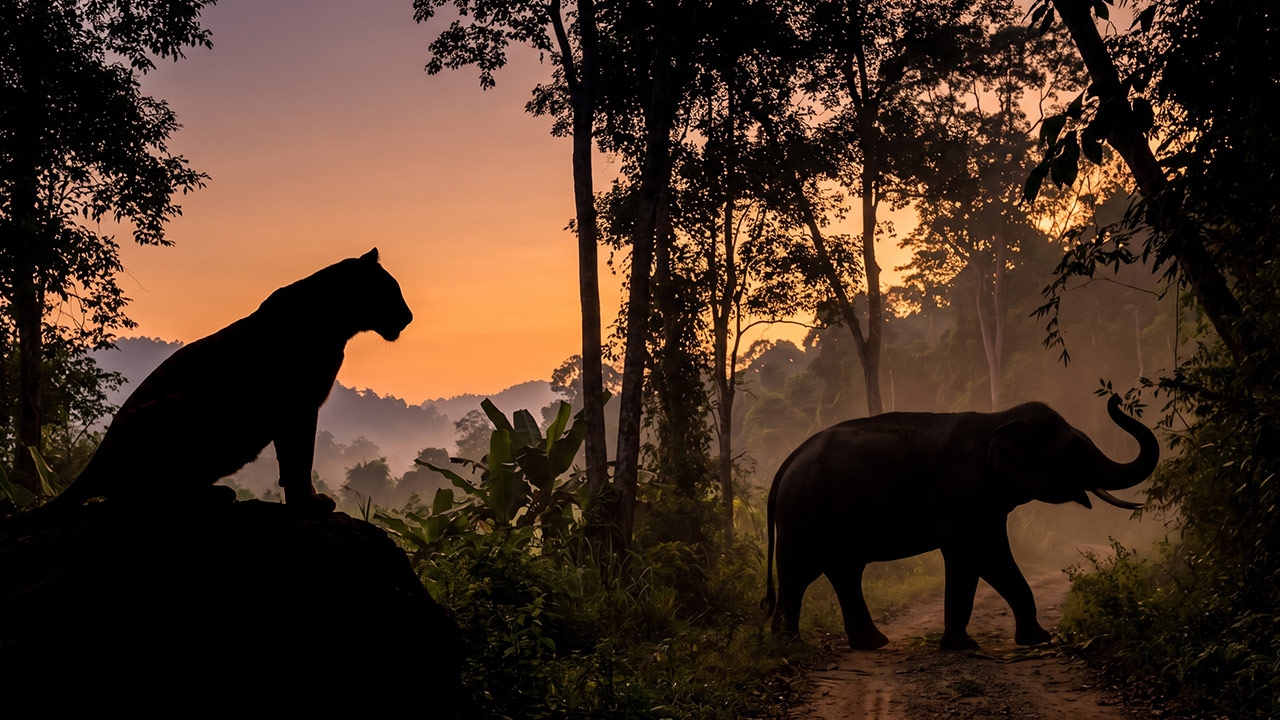
Decoding the mystery of wild animal behavior! Lessons from the Huai Kha Khaeng tiger incident: Why do wild animals act aggressively? Experts share survival tips for nature lovers to stay safe.
Following the tragic event where a forest ranger was fatally attacked by a tiger in Huai Kha Khaeng Wildlife Sanctuary, nature tourists have questioned why wild animals become aggressive and how to cope if such situations arise. Thairath Online explores wild animal behavior scientifically for better understanding and safer coexistence with nature.
Experts in wildlife and the Department of National Parks state that most wild animals naturally avoid human contact. However, aggression or attacks often result from specific triggers.
Territorial Defense Many species, especially predators like tigers or wild elephants, fiercely guard their feeding areas. If humans accidentally enter a territory the animal perceives as threatened, the animal will respond defensively.
Maternal Instinct Mother animals protecting their young have heightened vigilance and will attack anything approaching their offspring.
Guarding Prey or Food Sources Predators that have just hunted may see other creatures approaching as food thieves and react aggressively.
Injury or Illness Injured animals are often stressed, wary, and more prone to attack than healthy ones.
Surprise Encounter Sudden close encounters can startle animals, prompting them to "fight" for survival.

Tigers are apex predators in Thailand's forests, generally solitary and secretive, avoiding humans upon hearing them. Attacks usually occur when humans enter tiger ambush sites or when a tiger is old or injured and unable to hunt normally. Studies indicate tigers avoid confrontations unless cornered.
If unexpectedly confronted by dangerous wildlife such as tigers, bears, or wild elephants, experts recommend the following actions.
Stay calm and still. Do not scream or panic, as loud noises may startle animals and provoke attacks.
Never run away. . (continued from previous part) Running triggers an animal's "predatory instinct" to chase, and humans cannot outrun wild animals.
Do not turn your back to the animal. Maintain eye contact (for some predators) or keep visual awareness, and slowly back away to increase distance.
Make yourself appear larger. If facing predators like tigers or bears, spread your arms or raise backpacks or jackets to appear more threatening.
Give the animal space. If an animal is on the path, slowly step aside to let it pass without feeling cornered.
The best protection is risk avoidance. Visitors should strictly follow park rules, stay on designated trails, avoid loud noises, and immediately report signs of wildlife such as fresh tracks or droppings to officials while retreating from the area.
This tragic loss reminds us that nature is beautiful but also formidable. Understanding wild animal behavior not only improves survival chances during emergencies but also reflects our respect for wildlife as the "hosts" of these lands. Mindful ecotourism and strict rule adherence are the only ways for humans and nature to coexist safely.
Read more:Huai Kha Khaeng temporarily closed! Tent camping locations and forbidden activities in wildlife zones summarized.