

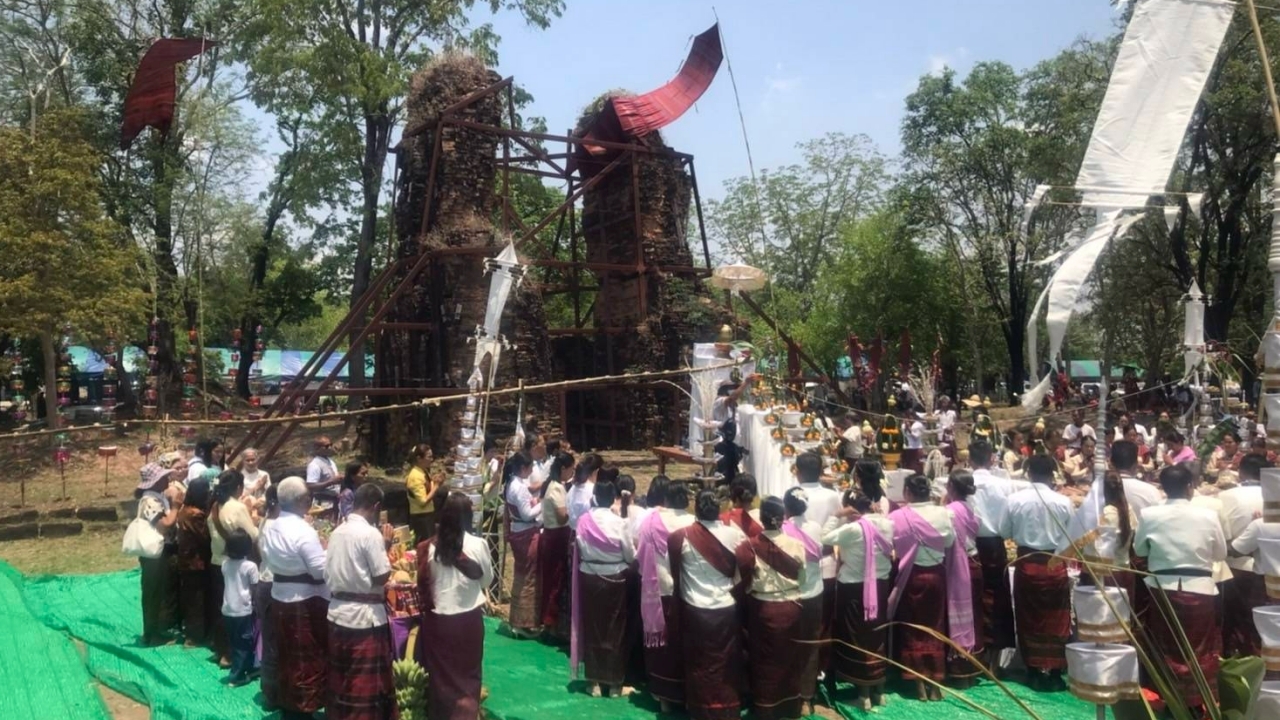
Devotion remains strong despite the scorching heat as locals flock to the lively worship ceremony at "Prasat Meechai" in Surin Province, eagerly awaiting the "incense stick numbers" for the lottery draw on 2 May 2026.
On 30 April 2026, reporters observed that at Prasat Meechai in Krathiam Subdistrict, Sangkha District, Surin Province, despite the sweltering heat, a large number of devotees gathered to participate in the grand worship ceremony of this important ancient site in Surin.
The ceremony was presided over by Mr. Kittichai Ketwongsa, Surin provincial local official, along with Mr. Boonliang Riamthong, Sangkha District Chief, Mr. Nissan Maneesang, Mayor of Krathiam Subdistrict Administrative Organization, and other government heads. Many local residents and devotees attended the event in great numbers.

The ritual proceeded solemnly, led beautifully by Mae Nam Phueng Muang Surin, a renowned local artist serving as the Brahmin. The offerings were lavishly prepared, especially a wide variety of fruits presented in abundance before the main temple, reflecting the people's deep faith.
Beyond the sacred worship ceremony, there were displays and sales of OTOP products from various communities, giving attendees the chance to purchase quality local goods. Additionally, a parade featured participants dressed in traditional attire showcasing distinctive cultural identity, accompanied by graceful traditional dance performances that impressed viewers greatly.
A key highlight capturing much public interest was the "incense stick numbers" revealed during the worship ceremony, which many eagerly awaited and closely watched to use as guidance for the lottery draw scheduled for 2 May 2026.

Prasat Meechai, also known as Prasat Muen Chai, located in Krathiam Subdistrict, Sangkha District, Surin Province, is a Hindu ancient site in classic Khmer style. It consists of a main brick sanctuary on a sandstone base facing east, satellite shrines built of sandstone to the north of the main sanctuary, and smaller brick buildings near moats to the west, north, and east. All structures are surrounded by a U-shaped moat with a single entrance. Evidence suggests it was built around the 15th to 16th Buddhist centuries, with later additions of small brick buildings around the 24th to 25th Buddhist centuries.
This worship ceremony was organized to honor ancestors, seek blessings for prosperity, peace, and well-being for Surin Province and its people, preserve valuable traditions, and promote cultural tourism to gain wider recognition.
