

A street in Lower Manhattan, New York City, once a bustling commercial district less than one kilometer long, has evolved into the Financial District—a global hub of finance and capital markets.
Wall Street has been a financial hub since 1792 and symbolizes the US and global financial systems. The trading floor's atmosphere, with shouting and flashing red and green graphs, reflects the beating heart of the world’s economy in motion.
Although most trading is now conducted via computers and algorithms, the trading floor remains a symbol of the 'human emotion' behind financial markets—fear, excitement, panic, and hope all visibly expressed.
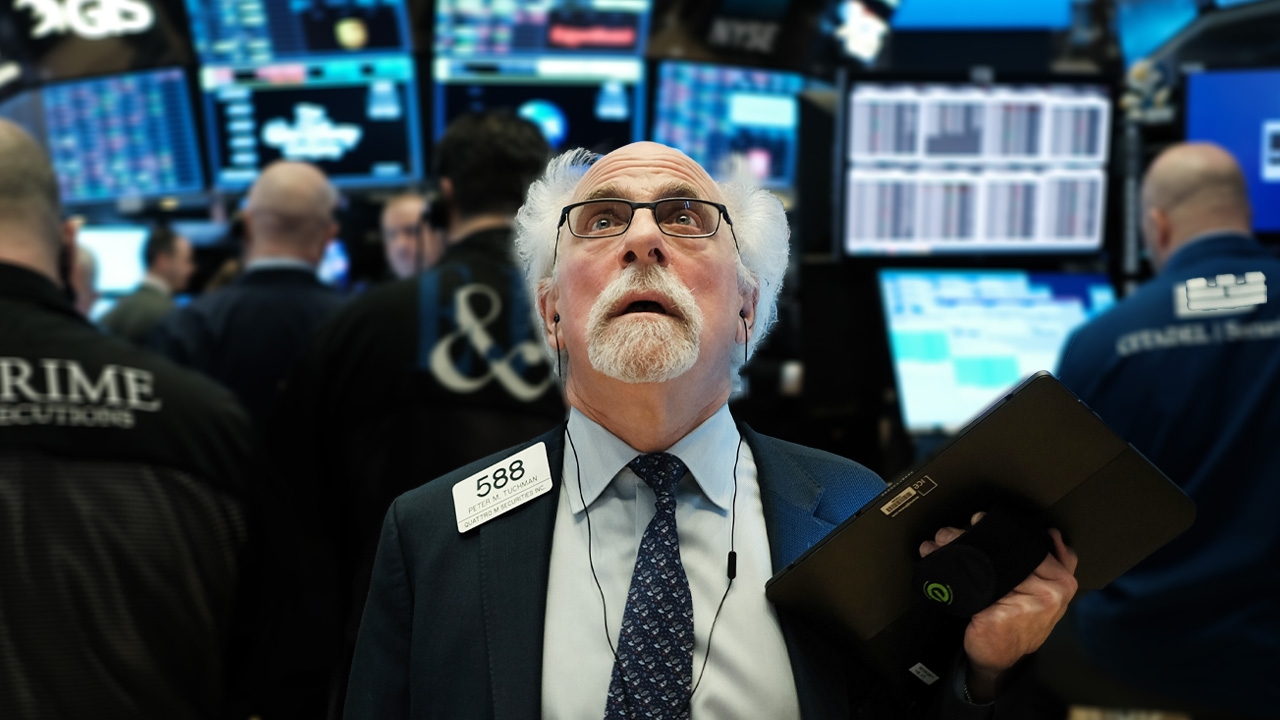
A clear example is the image of Peter Tuchman, a famous trader at the New York Stock Exchange (NYSE), known for his uniquely expressive face and gestures during major market events, becoming an emblematic figure of the stock market, earning the nickname “Einstein of Wall Street.”
His distinctive hairstyle, facial features, and emotional expressions earned him the nickname “Einstein of Wall Street.” Yet, Peter Tuchman has spent over four decades immersed in New York’s market, witnessing many major global financial events.
The trading floor became his second home, teaching him about capital markets, helping him grow into a millionaire and assist others in building wealth. This Thairath Money article in theHow to Make Moneycolumn introduces Peter Tuchman’s journey—his upbringing, why he chose finance, and why he intends to spend his life on the New York market floor until the very end.
Peter Tuchman was born in New York City. Although he did not start in finance and had no early thoughts of a market career, he grew up in the world’s financial capital.
In an interview with Business Insider, Tuchman described his childhood as happy and privileged, largely due to his father, a renowned doctor who immigrated to the United States and built a family.
After graduating from Riverdale Country School in the 1970s, he attended the University of Massachusetts Amherst, studying diverse fields including agriculture, international business, and finance.
In the 1980s, while pursuing an MBA at Baruch College, he started a personal business. One of his proudest ventures was the Corona Record Gallery on Bleecker Street in Manhattan, a store and gallery specializing in rare jazz vinyl records no longer in production.
Jazz was one of Tuchman’s passions. He also worked at the legendary Studio 54 nightclub. Reflecting on that busy period, he laughed and said, “Life was hectic. I was juggling many things and didn’t even know where I wanted to go.”
However, his record store closed after about two years, coinciding with his MBA graduation. Fate then took a turn as he decided to change paths drastically by moving to West Africa for work.
He joined the Norwegian oil company Saga Petroleum in an accounting role, working in the Republic of Benin. Remarkably, before the trip, he spent just 18 hours on a plane self-learning the Lotus 1-2-3 computer program, becoming one of the few proficient users upon arrival.
After a full year in Africa, Peter Tuchman felt the need to take his career seriously. He decided to pack up and return to New York City.
Back home, family advised him to start working seriously. An opportunity arose when his father’s patient, a partner at Cowen & Company brokerage, helped him secure a summer internship as a Teletypist—an order transmission clerk.
March 28, 1985, marked his first day working on the stock exchange floor, coincidentally the same day former President Ronald Reagan rang the opening bell. Tuchman said he barely noticed the president because the atmosphere alone was overwhelming.
At that time, the floor had over 7,000 workers, filled with shouting, ringing phones, and the chaos of the Open Outcry system—all manual, with no internet, mobile phones, or automation like today.
For the 24- or 25-year-old in his first suit, the environment was simultaneously intimidating and thrilling. On his very first day, he realized, “I fell in love from the very first second.”
As a Teletypist, his job was to record all trading details occurring on the floor. Orders came down from upstairs offices to clerks on the floor, then to brokers who negotiated trades in person.
Every trade’s details—shares, price, time, company, and broker IDs—had to be meticulously recorded. Tuchman compared this system to an early form of blockchain, as every transaction was systematically logged to facilitate later settlement and security delivery.
After inputting data, documents were sent by pneumatic tube to the 17th floor, where staff generated the stock ticker tape information.
Though complex compared to today’s systems, this process was fascinating to him. After only a few months, he knew this was the career path he wanted.
In early August, he approached Cowen & Company’s management to request a permanent job after his internship, telling them plainly, “I love it here and really want to work on Wall Street.”
His dedication and performance earned him a full-time position as an Option Clerk, marking the official start of his capital markets career.
Peter Tuchman’s career advanced rapidly compared to others on Wall Street. He told Business Insider that the industry then had no formal training programs; everyone started at the bottom and proved themselves.
The organization valued honesty, attention to detail, responsibility, loyalty, and the ability to learn from mistakes. After about a year as an Option Clerk, he was promoted to Retail Clerk and gained further experience.
Back then, most people took 13–15 years to advance from entry-level to full broker status on the floor. Tuchman, however, was fortunate and in the right place at the right time, earning his NYSE seat just three and a half years after starting work—considered the highest honor at the time.
On April 17, 1988, he officially became an NYSE member, with his parents attending the signing ceremony. Since then, he has devoted over 40 years of his life to this space.
Throughout his more than 40 years in capital markets, Tuchman has experienced nearly every major event in global financial history. One standout memory is Black Monday in 1987, the day US stock indexes suffered one of their steepest declines ever.
He explained that a true crash is not just a correction but a sharp 10–20% drop in a short time, triggering widespread investor panic.
In his career, such crashes have been rare, including Black Monday 1987, the 2000 dot-com bubble, the 2008–2009 financial crisis, the COVID-19 pandemic, trade policy volatility under Donald Trump, and current geopolitical tensions in the Middle East.
He observed that before every market collapse, “everything always looks perfect.” Markets reach new highs, investor confidence is high, and few expect a crisis—this is the most important lesson he has learned after decades on the NYSE floor.
“I’ve never felt at home anywhere like here,” he said, adding he has no plans to retire. He froze his retirement age at 55—now 13 years past that. For him, “Amid the chaos, madness, and turmoil of the stock market, I feel completely calm.”
Although Peter Tuchman’s net worth is not publicly disclosed, analysts estimate it between 5 and 25 million US dollars. The wide range reflects the income volatility typical for traders and that much of his wealth is likely diversified investment portfolios rather than cash.
Source: Business Insider [1][2],The Wall Street Journal,Einstein of Wall Street,iBusiness
Follow the Facebook page: Thairath Money at this link -https://www.facebook.com/ThairathMoney