

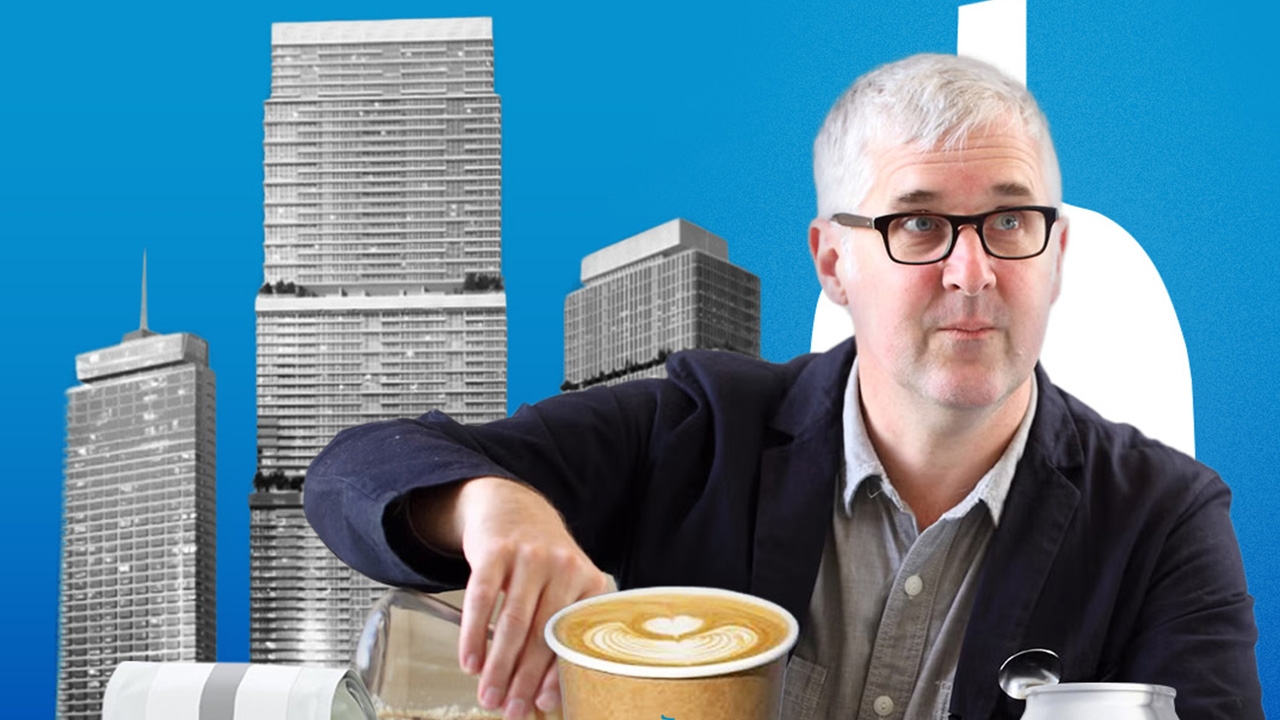
Thailand's coffee market is lively again as Blue Bottle Coffee, one of the world's most talked-about Specialty Coffee brands known for its distinctive blue bottle logo, the blue bottle, opened its first branch in Thailand at Dusit Central Park on 21 August, followed by its second flagship store at EmQuartier on 28 August.
For those following the coffee scene, Blue Bottle's appeal lies not just in its coffee flavor but in its business model that contrasts with competitors racing to serve quickly. Behind its seemingly simple stores, which sometimes take longer to brew than chain outlets, lies a business that generated around 250 million U.S. dollars (approximately 8 billion baht) last year. More importantly, its expansion story has made it a model Specialty Coffee chain setting a standard for coffee shops worldwide.
Why does a coffee brand that does not prioritize speed generate such immense business value? And with Blue Bottle arriving in Thailand, how significantly will this global brand disrupt the Thai coffee market and reshape competition standards in the Specialty Coffee sector?

Blue Bottle's story began in 2002 in Oakland, California, when James Freeman, a former clarinetist and coffee enthusiast, decided to turn his personal passion into a business.
Freeman disliked the American coffee culture at the time, which emphasized speed and convenience, brewing large batches stored in pots for serving. For him, good coffee should be brewed upon order and consumed at its freshest.
This philosophy led to a focus on pour-over coffee—brewing each cup carefully. Freeman started roasting coffee on a small scale before adapting a cart to sell coffee at farmers' markets. What began as a small venture gradually evolved into a coffee shop prioritizing flavor, freshness, and brewing methods over service speed.
This approach became part of the Third Wave Coffee movement, which views coffee not as a commodity but as a craft product whose consumers should know its origin, roasting, and brewing process. This foundation built Blue Bottle's brand equity, allowing premium pricing and a loyal customer base while changing American perceptions of coffee.
While typical coffee chains compete on speed and price, Blue Bottle invests time in meticulousness, transforming it into a product experience and brand value customers are willing to pay for. The brand's core lies in three elements.
From day one, Blue Bottle prioritized coffee freshness—from bean selection to roasting and the interval between roasting and consumption. The concept of a roast date printed on coffee bags became part of the brand's philosophy to ensure customers experience coffee at its peak.
Simultaneously, Blue Bottle emphasizes the unique character of beans from each origin, rather than standardizing flavor across all cups. This shift in consumer perspective—from coffee as mere caffeine to a product with distinct stories and flavors—has been pivotal in the brand's success.
Blue Bottle values pour-over and made-to-order brewing, making the process integral to the product customers purchase. Baristas act as craftsmen, controlling grinding, water volume, temperature, and pouring rhythm to bring out each coffee's distinct character.
Therefore, customers’ wait time for a cup is not merely a cost but part of the product experience, differentiating it from models that minimize waiting. This production process justifies prices beyond raw bean costs, encompassing skill, time, and experience.
Blue Bottle extends beyond drip coffee, gradually expanding the Blue Bottle Experience so it is not limited to in-store sales.
Starting with design and space, Blue Bottle applies minimalism but does not replicate identical stores. Each location incorporates the context of its surroundings and community, creating unique character while maintaining a clear Blue Bottle identity.
The brand also broadens its product portfolio beyond in-store coffee to include beans, brewing equipment like drippers and coffee makers, pour-over accessories, and merchandise. This allows the blue bottle logo to become part of consumers' homes and lifestyles, even outside the café.
Evolving from a coffee shop to a lifestyle brand, combined with community building and in-store experiences, Blue Bottle creates not just customers but a group that feels part of the brand.
As brand equity strengthened, Blue Bottle attracted global investors. A major turning point came in 2017 when Swiss food and beverage giant Nestlé acquired a 68% stake in Blue Bottle for 425 million U.S. dollars, valuing the company at over 700 million dollars at that time.
For Nestlé, the deal meant more than acquiring Blue Bottle's 40 stores; it secured a premium coffee brand with high consumer loyalty. While Nestlé already held strong mass-market and home coffee brands like Nescafé and Nespresso, Blue Bottle gave direct access to consumers seeking specialty and premium coffee experiences.
However, in early 2026, Blue Bottle faced another pivotal moment when Centurium Capital, major shareholder of Luckin Coffee, agreed to buy Blue Bottle's global coffee shop business from Nestlé for reportedly less than 400 million U.S. dollars.
This deal did not entail Nestlé selling all Blue Bottle businesses, as it retained consumer products like packaged coffee, instant coffee, and some ready-to-drink lines.
The deal clearly signals Blue Bottle's new challenge: transitioning from brand building to profitability and scale. It will be interesting to see how Centurium leverages its supply chain, cost control, and scale expertise linked to Luckin to support Blue Bottle without compromising the brand’s DNA of meticulousness and premium quality.
From a coffee cart, Blue Bottle has expanded into multiple countries including the U.S., Japan, South Korea, China, Hong Kong, and Singapore, with over 140 outlets worldwide and steady growth in Asia with more than 30 stores. Notably, Asia is becoming a key business engine.
According toKRAsia,for the 12 months ending 30 June 2025, Blue Bottle’s revenue was about 250 million U.S. dollars (roughly 8.26 billion baht), with approximately 150 million from the U.S. and 100 million from Asia-Pacific, meaning Asia accounts for about 40% of total revenue.
Though Blue Bottle originated in the U.S., Asia's revenue has grown to match the core market. China is increasingly important, with the first store in Shanghai opening in 2022 and about 15 stores there by end-2025. Thus, entering Thailand is not merely opening a new country market but arriving when Asia is a crucial market for Blue Bottle.
On 21 August 2026, Blue Bottle opened its first Thai branch at Dusit Central Park, followed by a second at EmQuartier on 28 August, with Valiram Group handling the market in Thailand.
Valiram is a luxury and lifestyle retail group from Malaysia operating in nine countries with over 600 outlets and representing more than 200 brands. Blue Bottle Coffee is in its portfolio alongside Bacha Coffee and other luxury lifestyle brands.
Therefore, Blue Bottle is not entering Thailand as just another foreign coffee shop but through a partner expert in creating premium retail experiences, choosing top-tier lifestyle destinations in Bangkok. This positioning is clear from day one and reflects a trend where coffee shops become integral to lifestyle and retail ecosystems.
Thailand's Specialty Coffee market already has quality coffee shops. Over recent years, independent shops and chains have continuously improved bean quality, roasting, and barista skills. Blue Bottle’s entry may expand premiumization, encouraging consumers to accept higher prices if quality and experience differ.
Another perspective is that Blue Bottle may not directly compete with all Thai Specialty Coffee shops but act as a market educator, increasing broader consumer awareness of Specialty Coffee, which could also benefit existing Thai players who have developed the market.
If the market responds well, the impact may extend beyond Blue Bottle's sales alone, accelerating a new phase of competition in Thailand’s Specialty Coffee scene where brands must consider not only coffee flavor but also bean quality and experience quality.
Sources Blue Bottle Coffee , CNBC , Fast Company
Read more columns BrandStory More
Follow the Facebook page: Thairath Money at this link -