

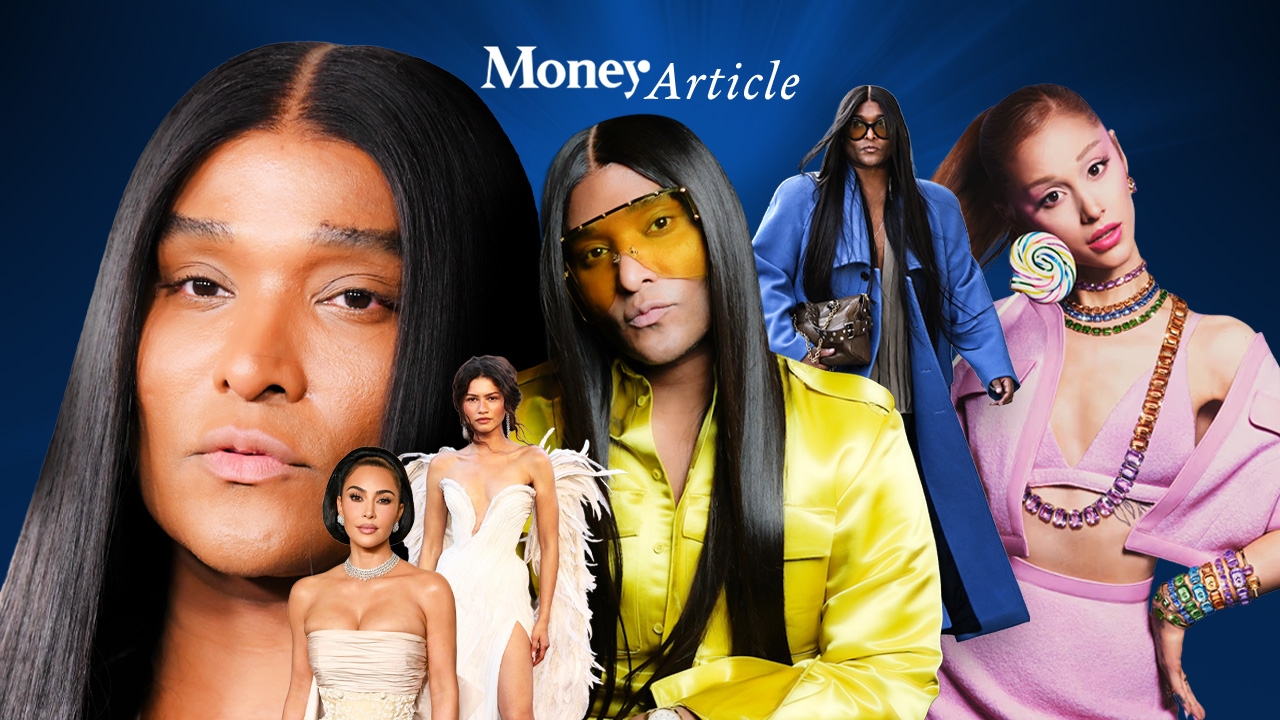
Behind Zendaya's most viral red carpet looks, whether the robotic armor from Mugler at the Dune: Part Two film promotion or the tennis-inspired fashion at Challengers, there is one man responsible for those successes. That man is Law Roach. He is a stylist acclaimed as one of the most influential figures in the global fashion industry.
Last week, he visited Thailand as a distinguished guest for a Thai brand's fashion show and also served as a speaker at the Business of Luxury Summit, marking Thailand as a new landmark for the global luxury fashion scene.
However, what makes Law Roach's story compelling is not just his ability to transform celebrities into fashion icons, but his method of reshaping the stylist profession from earning per outfit selection into a business generating multi-million-dollar annual revenues.
Starting from opening a secondhand clothing store in Chicago due to personal interest, to working with global celebrities, and then expanding his business beyond fashion into consulting for billionaires, creative work, advertising, television, product design, and educational platforms.
Law Roach exemplifies how, in a world where fame and image can generate enormous economic value, those behind the creation of such images can build their own business empires.
This article by Thairath Money inHow to Make Moneyinvites you to explore Law Roach's wealth-building journey—a man who sells not just styling skills but expertise in creating value for celebrities, along with strategies that have allowed him to move beyond hired fashion work to controlling his own business terms.
Let's take a step back. Lawrence “Law” Roach was born on 20 July 1978 and grew up in Chicago's South Side. He is the eldest of five siblings, raised primarily by a single mother and grandmother.
His interest in fashion did not come from studying at a prestigious design school but from weekly trips shopping for secondhand clothes with his grandmother. This experience taught him the value of vintage clothing, including fabric quality, tailoring techniques, and the distinctiveness of fashion across eras.
Interestingly, Law Roach did not graduate in fashion but earned a degree in psychology from Chicago State University. He worked in mental health and social work for over two years, and this background became a key foundation in his approach to fashion later.
For him, selecting clothing is not just about making someone look good but understanding personality, insecurities, and the image the individual wants to convey. He views fashion as a tool for building confidence and altering self-perception, rather than merely matching garments.
In 2009, he decided to turn his passion for secondhand clothes into a business by opening a store called “Deliciously Vintage” in the Pilsen neighborhood of Chicago, in partnership with Siobhan Strong.
The store's business model was straightforward but highly profitable: purchasing vintage and designer clothes from the 1970s and 1980s at low prices, modifying details, and reselling them at a significantly higher price. Some items achieved profit margins exceeding 1,000%.
A turning point came that same year when Kanye West, the famous artist and producer, visited his store. Kanye's presence attracted significant media and paparazzi attention, boosting Law Roach's reputation within the fashion world and enabling him to expand with a second store in Harlem, New York City.
From a secondhand clothing shop, his business evolved into a rare vintage clothing source for stylists working with celebrities in music videos and fashion magazines, revealing much larger business opportunities.
He realized that those using his clothes to style celebrities earned more from their work than from selling clothes alone. This realization marked his transition from store owner to a stylist working directly with celebrities.
In 2011, Law Roach met Zendaya, a Disney Channel actress who was only 14 at the time. This introduction came with a significant challenge: Zendaya was not yet a top Hollywood actress, so most luxury brands were unwilling to support her with clothing.
Instead of waiting for big brands to accept her, Roach adopted a different strategy: dressing Zendaya in outfits previously worn by world-famous celebrities. The goal was to place her in entertainment columns like “Who Wore It Best?” comparisons.
Though just outfit comparisons, this strategy earned Zendaya continuous national media coverage without paying for advertisements or relying on luxury brand sponsorships.
By 2014, Roach moved permanently to Los Angeles and shifted his focus from music artists to film and television actors.
The reason was that, although music artists' projects often had higher budgets, they were usually short-term. Working with actors allowed for building long-term images through awards shows, red carpets, and film promotions.
He accepted lower fees initially to build reputation and credibility, which later led to advertising contracts and collaborations with luxury brands. This strategy became a fundamental part of his business model.
What sets Law Roach apart from typical stylists is his view that celebrity dressing is not just about aesthetics but part of brand-building strategy.
A key strategy that made him famous was working with Zendaya through the concept of Method Dressing—linking themes and stories from films to the clothing worn during promotional tours, making fashion a tool for film publicity.
A clear example is the 2024 film Dune: Part Two, where Zendaya appeared in a metallic robotic armor outfit from Thierry Mugler's Fall/Winter 1995 collection. This look not only amazed on the red carpet but also conveyed the film's futuristic atmosphere, generating global buzz around Zendaya.
Similarly, for the promotion of Challengers in the same year, he drew inspiration from tennis to create fashion for Zendaya, collaborating with brands like Loewe and Thom Browne, including tennis ball detail high heels.
The success of this strategy is measured not only by likes or shares but also in measurable marketing value.
According to Launchmetrics, a luxury brand marketing analytics firm, Zendaya's media appearances generate tens of millions of dollars in Media Impact Value (MIV). One Schiaparelli look alone produced about $21.8 million in media impact within seven days.
Though this figure is not actual income, it illustrates that a single red carpet outfit can generate massive publicity value, sometimes surpassing the media impact of multi-million-dollar advertising campaigns.
This is Law Roach's key selling point: he not only makes celebrities look good but creates buzz, interest, and market value for both the celebrities and associated brands.
Despite the glamorous image of a world-class stylist, red carpet work is not always highly profitable.
Sometimes, movie studios allocate only about $1,000 per appearance for stylists, while actual costs include sourcing garments, alterations, team wages, transportation, and insurance for rare clothing. After expenses, some events yield little or negative profit.
For Law Roach, this is not an issue because he does not see red carpet work as a primary income source. Instead, he uses a Loss Leader strategy—accepting low or negative margins on some activities to generate opportunities for higher-value business elsewhere.
Whenever Zendaya appears in a viral outfit, Law Roach's name is mentioned simultaneously, attracting attention from fashion brands, advertising companies, and ultra-wealthy clients. His reputation acts as a marketing tool that draws new clients without needing to buy advertising space.
Therefore, his main income comes not from assembling red carpet outfits but from converting his reputation into higher-value business contracts.
Behind the stylist image for Zendaya, Law Roach's business has multiple revenue streams, divided into six major categories.
One of Roach's most lucrative ventures is not Hollywood work but private stylist services for Ultra-High-Net-Worth Individuals (UHNWI).
He began serving this clientele around 2017, focusing on individuals with net worths of hundreds of millions of dollars, such as Norwegian industrial heir Gustav Magnar Witzøe and American businesswoman Jaime Xie.
Roach's services include sourcing rare Haute Couture garments, building personal wardrobes, and securing front-row fashion show seats. This business operates on long-term contracts and yields his highest profit margins.
Another significant income source is styling for major advertising campaigns. He works with brands like Lancôme, Valentino, Bulgari, Max Factor, and Smartwater, averaging about 13 major campaigns annually.
These projects have bigger budgets than red carpet appearances and allow him to command premium fees for creating brand-aligned images.
Law Roach extended his fame beyond fashion by serving as a judge on America's Next Top Model seasons 23-24, Legendary seasons 1-3, and appearing on RuPaul’s Drag Race and Project Runway.
Besides compensation, TV exposure broadened his public recognition and opened opportunities to reach general consumers.
He expanded his role beyond styling others' clothes to co-designing products and directing brand creativity.
Notable works include Daya by Zendaya (2015-2016), a footwear and apparel brand focused on affordable pricing and diverse sizing, and serving as Creative Director for Tommy x Zendaya in 2019, showcasing in Paris and New York with inspiration from 1970s Black supermodels.
He also co-designed collections with Hervé Léger in 2022 and acted as co-creator and advisor for Zendaya x On Running from 2024 to 2026.
These roles generate income from creative fees and royalties linked to product sales.
In late 2023, he and Kent Belden, CEO of The Only Agency, acquired School of Style, a fashion education platform. Roach became Chief Creative Officer, developing courses covering vintage clothing analysis, mood board creation, on-set work, and business skills like company setup, accounting, taxes, and negotiation.
A key feature is that top-performing students get interviews with The Only Agency, making the platform both a course provider and a talent development pipeline into the fashion industry.
From a business perspective, School of Style allows Roach to convert his knowledge and experience into a scalable product sold to many learners without personally styling every client.
In October 2024, Law Roach published his first book, "How to Build a Fashion Icon: Notes on Confidence from the World’s Only Image Architect," blending life stories with advice on confidence-building through fashion.
He also delivers lectures on leadership, luxury brand marketing, and creativity. Reportedly, online speaking engagements pay around $50,000 to $100,000 per event, with in-person talks commanding premium fees.
Ultimately, Law Roach does not rely solely on stylist work income but builds a business system that monetizes his expertise and reputation through multiple channels.
Viewed through the creative economy lens, talent creation is only the beginning of success. Long-term wealth comes from knowing how to turn that talent into a business model.
From a secondhand clothing store owner buying low and selling high, Roach gradually built a reputation through celebrity work, then used that reputation to attract advertising contracts, billionaire clients, and partnerships with global brands.
His success lies not only in making Zendaya a fashion icon but also in creating a business system that enables him to receive returns from the value he creates.
When Law Roach no longer needs to accept every styling job, he can still generate income from the knowledge, reputation, and influence he has accumulated over decades.
Ultimately, what he sells is not clothes or styling skills but the power to transform image into business value.
Read business news, marketing strategies, and exclusive interviews with Thairath Money to achieve “Good Finance, Good Life” athttps://www.thairath.co.th/money/business_marketing
Follow Thairath Money Facebook page athttps://www.facebook.com/ThairathMoney