;
Thairath Online
Thairath Online

From Landowner to Mega City Project Developer: Why Sahapat Group is Expanding Its Role in Real Estate

Corporates & leadership03 Nov 2026 12:00 GMT+7

Share

From Landowner to Mega City Project Developer: Why Sahapat Group is Expanding Its Role in Real Estate

Many people recognize the name “Sahapat Group” through daily essential products used from waking up to going to sleep, such as Mama instant noodles, Farmhouse bread, Pao detergent, Shokubutsu body wash, Systema toothbrushes, or clothing brands like Wacoal and Arrow.

The legendary leader, Boonchit Chokwatana, Chairman of Sahapat Group, laid the foundation for a consumer goods empire worth hundreds of billions of baht.

Now, at age 88, Boonchit has stepped down from management, passing leadership to nine third-generation heirs who continue the business with the core value of "integrity," while branching out into food, health, and services sectors.

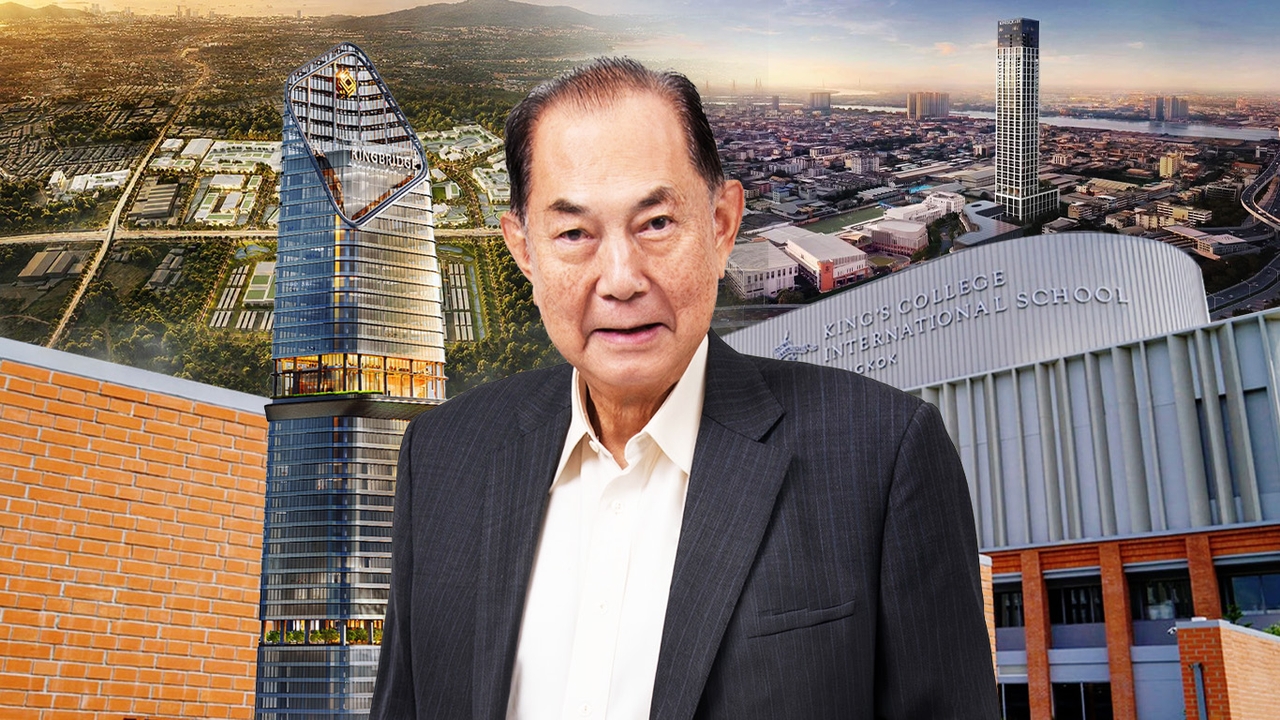
One of the most notable business moves is the full-scale entry into "mega city development and real estate," elevating the group from landholders to urban placemakers through two major strategies on two prime locations: the mixed-use kingdom along the Chao Phraya River in Rama 3 and a future city covering 700 rai in Sriracha district.

Thairath Money explores the thinking behind this and why this consumer goods conglomerate is ready to shake up the Thai real estate industry.


Strong land capital and business power without starting from scratch.

As mentioned, while Sahapat Group is known as an FMCG producer and distributor, it is in fact one of the investors holding a low-cost land bank in key locations for decades.

  • Rama 3 area: Sahapat has long established its headquarters and business base here, owning nearly 150 rai of land including plots along the main road and the Chao Phraya River.
  • Sriracha, Chonburi province: Sahapat pioneered the Sriracha industrial estate since 1974 and accumulated large land plots to support manufacturing sector growth.

This means Sahapat is not a newcomer experimenting in real estate but has deep understanding of real estate mechanics and resident behavior. Especially in Sriracha, the company has developed properties with Japanese investors, such as the Japanese-style community mall J-Park Sriracha Nihon Mura, serviced apartments, and residential projects like HarmoniQ Residence catering to Japanese engineers and executives for over a decade.

Changing the game: merely holding land no longer meets future needs.

However, this transition is driven by three main structural economic factors.

  • FMCG limitations and seeking new growth curves: Consumer goods generally have thin net margins, are price-controlled by the government, and face slowing consumption due to an aging society. Real estate revenue creation thus becomes a new economic engine.
  • Unlocking land value into recurring income: Holding vacant land incurs land and building taxes. Developing low-cost land into offices, hotels, schools, and shopping centers converts these assets into steady long-term cash flow from rents and services.
  • Creating a captive ecosystem: When employees, executives, or families work in the area, instead of spending on housing, schools, or shopping outside, Sahapat builds cities integrating these services so money circulates within the group's ecosystem.

Two strategic locations: Rama 3 vs. Sriracha 700 Rai, future economic cities.

Looking at Sahapat’s urban development plans, each location is clearly designed to meet different spatial needs.

Starting with the Rama 3 kingdom, under the Urban Lifestyle and “Community of Kindness” concept, Sahapat is investing over 10 billion baht to create a sharing and supportive community, attracting affluent families through "leading education."

  • King’s College International School Bangkok: An English curriculum international school on over 20 rai, accommodating up to 2,000 students, drawing over 2,000 affluent families daily into the area.
  • KingsQuare Residence: A 52-story luxury condominium worth 6.5 billion baht, developed jointly with Tokyu, targeting parents with a “Walk-to-School” concept allowing children to attend school without traffic hassle. Units range from 60 to 344 square meters, comparable to detached houses, and hold the global Fitwel 3-star wellness certification.
  • KINGSQUARE Community Mall: A lifestyle mall valued over 1 billion baht, featuring Japanese restaurants and pet-friendly spaces, meeting the needs of modern families.
  • Dusit Suites KingsQuare Bangkok: A premium serviced apartment in partnership with Dusit Thani Group, catering to expatriate executives and families for long-term stays.
  • KingBridge Tower: A 52-story grade-A office building by the Chao Phraya River near Bhumibol Bridge, worth over 6 billion baht, built to Circular Economy and Smart Building standards. It serves as headquarters for group companies like SPI, Thanulak, and Lion, alongside leased space for multinational firms.


New Sriracha city, 700 rai, the future economic hub ready for the EEC wave.

At the Sriracha project, Sahapat is adapting to the city’s transformation as the government upgrades the area from traditional industrial zones to the Eastern Economic Corridor (EEC), positioning Sriracha as a hub for investors, skilled talents, and foreign families.

Sahapat, together with Tokyu Corporation, is studying the feasibility of developing over 700 rai based on a 10-20 year master plan near the Sriracha Service Area, the largest highway service center in Thailand.

  • New city blueprint: The development is anchored by HarmoniQ Business Center, modern office buildings, an international school, an international convention and exhibition center (MICE Center), and mixed-use spaces to support integrated work and living.
  • Linked economic system structure: Starting with employment centers, driving housing demand, followed by families relocating, which creates need for international schools, shopping malls, lifestyle venues, and hotel services like Dusit Suites J-Park Sriracha, soon to open.


Extending toward a seamless future kingdom.

This move also reflects Sahapat Group’s relatively complete new business structure.

  • Investment vehicle alignment: Using SPI (Sahapat Inter Holding Public Company Limited) as the spearhead to hold land, build infrastructure, and partner globally, alongside restructuring TNL (Thanulak Public Company Limited) with partners like BTS Group to advance in real estate and financial services.
  • Intra-group synergy: Once the city is built, Sahapat’s existing businesses immediately provide services—from Lawson 108 convenience stores, Japanese restaurants, Lion consumer goods, clean energy via Sahacogen’s solar rooftops, to security services by Thai Secom.

In summary, from starting as a small retail shop and minor consumer goods producer to becoming a national hundred-billion baht business accumulating large land holdings nationwide.

The third-generation heirs, guided by founder Boonchit Chokwatana’s compass, have made real estate a new milestone, transforming Sahapat from a “landowner” into a “creator of future cities” to truly drive Thailand’s long-term economic growth.

Read economic and government policy news with ThairathMoney for “Better Finance, Better Life” at

Follow the Facebook page: Thairath Money at this linkhttps://www.facebook.com/ThairathMoney