

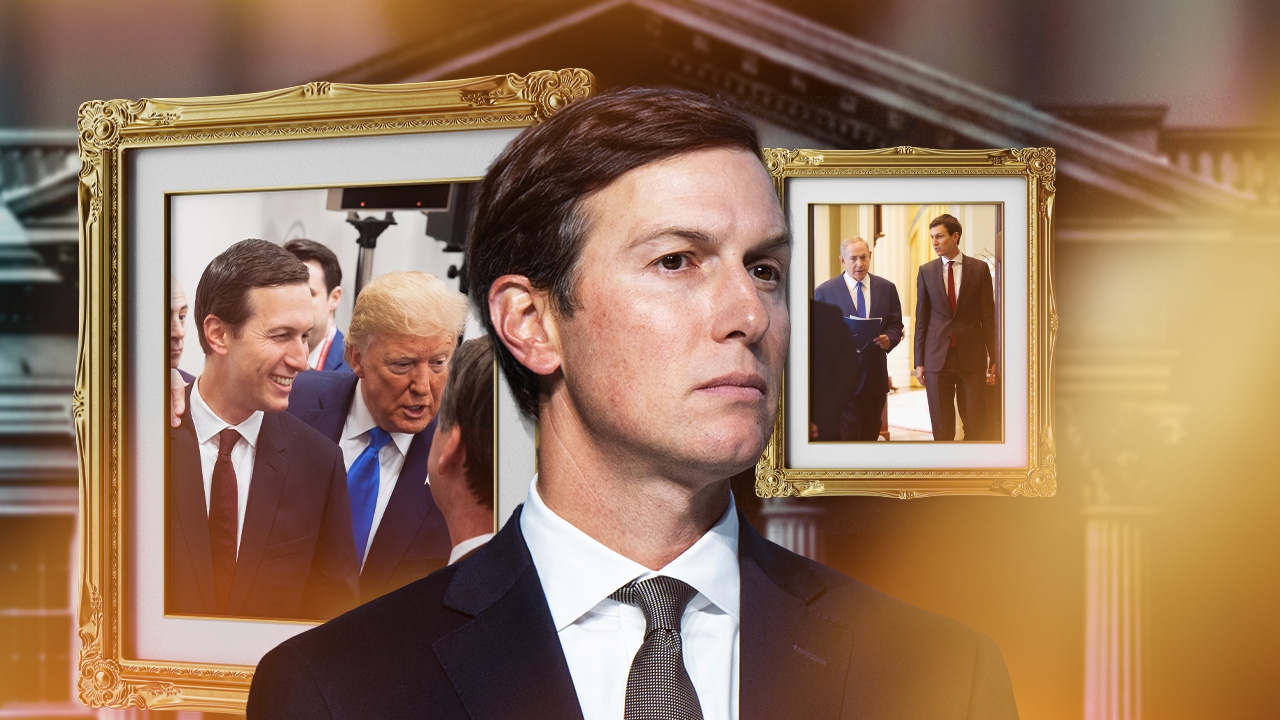
When Donald Trump assumed office as the 45th President of the United States during his first term, he implemented numerous policy changes and regulations, including domestic income tax cuts, a trade war with China, the removal of restrictions and renegotiation of trade agreements favoring the U.S., as well as acting as a mediator in peace negotiations with Middle Eastern countries.
One person behind these government transitions was "Jared Kushner." A man with no prior experience in politics or public policy, yet appointed as a key presidential advisor, becoming one of the most influential figures in the White House.
Looking deeper at his career, Jared Kushner grew up in a billionaire family owning tens of billions in real estate, one of the wealthiest families in the United States. But in terms of relationships, he is Donald Trump's son-in-law, and upon assuming his position, he faced heavy criticism for leveraging family networks in politics to benefit business interests.
While some scrutinized him closely, others praised his accomplishments, noting Kushner's key role in driving criminal justice reform, international trade negotiations, and Middle Eastern diplomacy.
This article from Thairath Money in the columnHow to Make Moneydives deep into Jared Kushner — a wealthy businessman without political experience who chose to enter politics, becoming a high-profile figure in the U.S. political economy due to his complex ties among political power, family networks, and business interests.
Jared Corey Kushner, or "Jared Kushner," was born on 10 January 1981 in Livingston, New Jersey, to a Jewish family that built its fortune in real estate and became highly influential in the U.S.
The family's origins trace back to his grandparents who settled in 1949 after surviving the Holocaust during World War II and started a residential construction business in northern New Jersey suburbs, forming the foundation of the Kushner family business empire.
The business rapidly expanded under Charles Kushner, Jared's father, who grew it from local construction contracting into "Kushner Companies," a real estate firm owning thousands of apartments, commercial buildings, and investments in other sectors.
Jared is the second of four siblings: Joshua, Nicole, and Dara Kushner. He was raised in a wealthy family emphasizing religious customs and close family ties.
Thus, he was nurtured in an environment where family and business were closely intertwined, especially the values of loyalty and network importance, traits that later shaped his business and political career.
Educationally, his affluent upbringing opened doors to elite schools. He graduated from the Frisch School, a leading private Orthodox Jewish high school, before entering Harvard University in 1999.
His Harvard admission sparked controversy, as journalists uncovered that during his enrollment at the Ivy League university, his father Charles Kushner donated $2.5 million to Harvard.
Furthermore, officials from his former school confirmed his academic performance was not competitive compared to other Ivy League students, fueling speculation that his admission was influenced by his father's donations.
Jared Kushner graduated from Harvard in 2003 with a Bachelor of Arts in political science and sociology, then pursued a joint law and business degree at New York University, completing it in 2007.
During his studies, he interned with Manhattan District Attorney Robert Morgenthau and worked at the law firm Paul, Weiss, Rifkind, Wharton & Garrison, gaining insight into U.S. legal institutions and corporate operations.
While Jared was still studying, his family faced internal turmoil when his father Charles Kushner was sentenced to two years in prison, prompting Jared at age 24 to take over management of Kushner Companies.
He frequently visited his father in prison and officially became CEO in 2008, initiating a major strategic shift in the business.
He transformed the company from focusing on suburban apartments in New Jersey to becoming a player in Manhattan's high-end real estate market, one of the world's most valuable.
A landmark business decision came in January 2007 when Kushner Companies purchased the 41-story office building at 666 Fifth Avenue in Midtown Manhattan for $1.8 billion.
This was the largest single-building purchase in U.S. history, reflecting his ambition to elevate the family business from suburban developer to owner of landmark New York properties.
Beyond real estate, Jared Kushner sought opportunities in other industries, notably media, as a key channel to build networks and influence in New York's business and political circles.
In July 2006, at age 25, he acquired the New York Observer, a weekly newspaper influential among Manhattan elites, for over $10 million, aiming to reach readers including real estate investors, politicians, media executives, and other important figures.
Owning media also increased his political role; the New York Observer endorsed Barack Obama in 2008 but shifted to support Republicans in 2012 after disagreeing with Democratic policies.
As technology transformed investing, Kushner expanded into PropTech, co-founding Cadre in 2014 with his brother Joshua, creating an online platform for commercial real estate investment targeting institutional investors through digital means rather than traditional brokers and asset managers.
Cadre attracted investments from major institutions like Goldman Sachs and secured credit lines over $250 million from Soros Fund Management.
Around this business expansion, Jared met Ivanka Trump, Donald Trump's daughter and a prominent real estate businesswoman; they married in 2009, uniting two major American real estate families.
In 2016, when Donald Trump announced his presidential candidacy, Jared Kushner's name gained prominence in real estate and political spheres despite no political experience, as he was trusted to strategize the campaign, contributing to Trump's electoral victory.
Previously a political donor, Kushner took a crucial role in the Presidential Transition, organizing the new administration's team and defining governance direction before Trump's official inauguration.

In 2017, he was appointed Senior Advisor to the President at age 36, moving from real estate businessman to a key White House position without prior elected office or public policy experience.
However, his appointment sparked legal debate since U.S. rules prohibit appointing relatives to positions within agencies overseen by their family members.
Trump's legal team argued the White House is not an "agency" under the law's definition, allowing Kushner's appointment to stand.
To ease concerns, Kushner served without a federal salary, acting as an unpaid senior advisor throughout Trump's first term.
His responsibilities included establishing the Office of American Innovation to improve government efficiency via innovation and technology. This office operated like a management consulting firm, aiming to apply private sector solutions to federal operations.
He championed the FIRST STEP Act, reforming federal criminal sentencing and prison management to reduce penalties for certain offenses and enhance prisoner reintegration, a move seen as influenced by his personal experiences.
Kushner also played a vital role in negotiating the USMCA trade agreement, reshaping commerce between the U.S., Mexico, and Canada by coordinating diplomatic efforts to finalize the deal.
Another significant accomplishment was fostering diplomatic relations in the Middle East, advancing ties between Israel and Arab countries, culminating in the Abraham Accords.
His approach differed from traditional Middle East peace efforts, which focused first on resolving Israeli-Palestinian conflicts before improving Israel-Arab relations.
Instead, Kushner adopted an "Outside-In" strategy, building cooperation from surrounding countries toward the conflict's core, starting with economic and security ties between Israel and Arab states without waiting for full resolution of Israeli-Palestinian issues.
He developed direct relationships with key regional leaders, especially Saudi Crown Prince Mohammed bin Salman, Israeli Prime Minister Benjamin Netanyahu, and leaders of the United Arab Emirates and Bahrain.
He leveraged shared strategic interests, particularly concerns over Iran's expanding influence, combined with economic, trade, and security incentives to bring countries into negotiations.
Kushner was nominated twice for the Nobel Peace Prize for this diplomacy, though Palestinian leaders and foreign policy analysts criticized the approach for bypassing core conflict issues without addressing the region's underlying disputes.
The strong relationships Kushner built as a Middle East peace envoy paved the way for business ties after Donald Trump left the presidency in January 2021.
Kushner's career entered a new phase, transitioning from senior presidential advisor to founder of a private equity firm that raised billions from Middle Eastern sovereign wealth funds.
After Trump's first term, he did not return to lead Kushner Companies but established a private equity firm called "Affinity Partners," to manage large investors' capital and acquire stakes in companies with growth potential across multiple industries.
This new business allowed Kushner to leverage international networks developed during his government service, particularly connections with sovereign wealth funds managing foreign government investments.
Affinity Partners raised over $3 billion, about 99% from foreign sovereign wealth funds, with the largest investor being Saudi Arabia's Public Investment Fund (PIF), chaired by Mohammed bin Salman.
PIF invested $2 billion in Affinity Partners just six months after Kushner left the Trump administration, a remarkably large sum given the company's young age, enabling a multi-billion-dollar business launch within a short time.
However, PIF's decision became controversial after The New York Times reported that PIF's internal investment committee initially opposed investing in Affinity Partners.
Concerns included Kushner's lack of private equity management experience, unsatisfactory operational assessments of the firm, and perceived excessive management fees.
Despite these concerns, PIF's full board, led by Mohammed bin Salman, approved the investment.
This attracted attention because during his White House tenure, Kushner played a key role in U.S.-Saudi relations and developed a direct relationship with Mohammed bin Salman through Middle East diplomatic efforts.
In addition to Saudi funding, Affinity Partners secured hundreds of millions more from the sovereign wealth funds of the United Arab Emirates and Qatar, establishing a Middle Eastern capital base.
These connections raised questions about how Kushner's diplomatic networks helped his firm access such vast foreign investment. While foreign investment alone does not prove wrongdoing, it sparked debate.
From a business perspective, ties to leaders and sovereign funds enabled rapid expansion and access to major institutional investors worldwide. From a regulatory angle, these relationships raised concerns about turning public service networks into private business advantages.
Kushner denied conflict of interest allegations, asserting his business complied with legal and ethical standards during and after his government service.
Affinity Partners marks a turning point in Kushner's journey from real estate businessman entering the White House through family ties to a global investment fund manager with billions in Middle Eastern capital.
As the firm began investing in Israeli financial services, European technology, and luxury real estate in the Balkans, Kushner's role expanded from managing capital to actively investing in projects linked to the global economy.
Kushner's wealth grew substantially after leaving the White House; Forbes and analysts estimate his net worth surpassed $1 billion by 2025, making him a billionaire.
Read business news, marketing strategies, and exclusive interviews with Thairath Money to help you achieve "Good Finance, Good Life" athttps://www.thairath.co.th/money/business_marketing
Follow the Facebook page: Thairath Money athttps://www.facebook.com/ThairathMoney