

Nike, the global giant in athletic footwear and apparel, announced a business revitalization strategy under the "Full Stride Ahead" plan at its 2026 Investor Day, targeting an additional $5 billion in revenue—approximately 160 billion baht—during fiscal years 2028 to 2031.
The company is also restructuring its global operations after facing pressures from slowing lifestyle product sales, inventory challenges, and intensified competition, especially in the Chinese market where revenue fell 26% in the first quarter of fiscal 2027 after adjusting for currency effects.
Elliott Hill, President and CEO of Nike Group, acknowledged that despite the company’s strengths in global branding, athlete networks, and decades of innovation, performance has not met expectations, particularly in Nike Sportswear and Jordan lines, as well as in inventory management, increasing full-price sales, and profitability.
He further assessed that the global athletic footwear and apparel industry is expected to grow at an average annual rate of 3-4%, driven by health trends, sports popularity, and shifting consumer behaviors. Company data indicates that 70% of global consumers engage in sports activities, and 78% identify as sports fans.


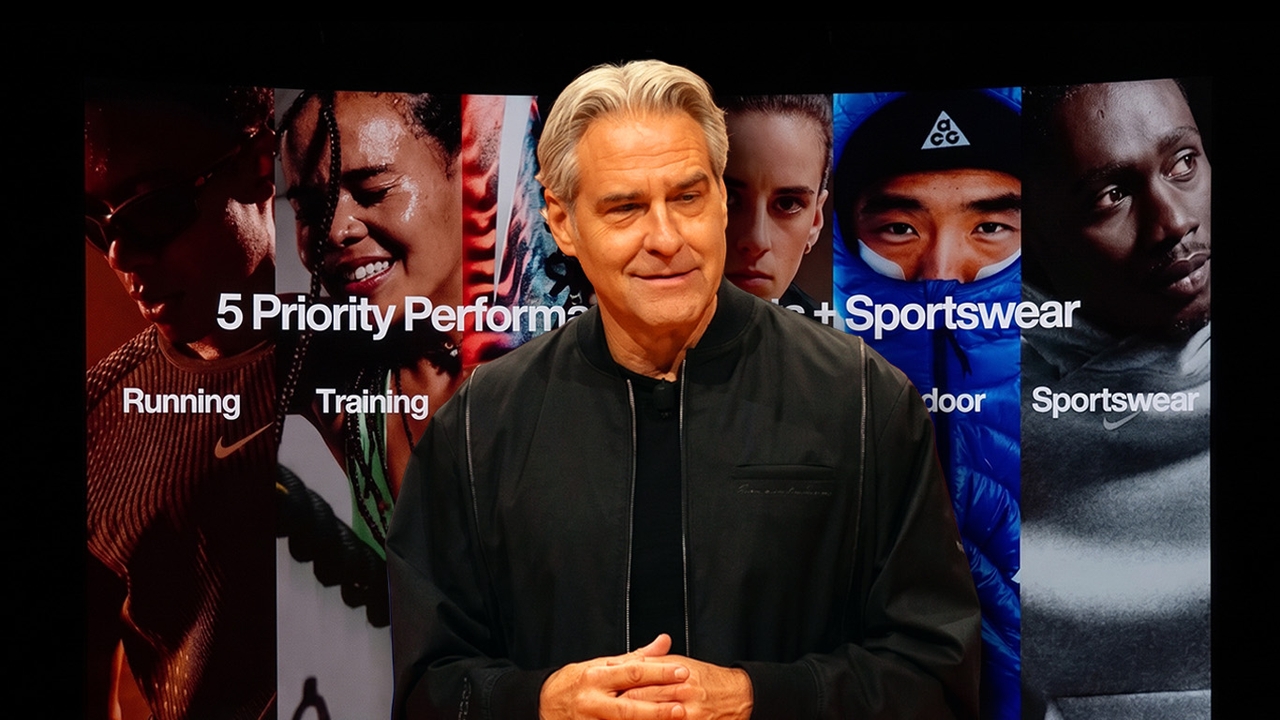
Under the "Full Stride Ahead" plan, Nike will invest in five sports categories: Running, Training, Global Football, Basketball, and Outdoor, alongside the Sportswear business, which includes Nike Sportswear, Jordan, and Converse.
The company expects these business segments to account for over 90% of revenue growth between fiscal 2028 and 2031, with 23 strategic countries contributing approximately 90% of revenue growth during the same period.
This plan will be driven by three main approaches: Epic, focusing on innovation and new products; Connected, empowering local teams to tailor products and marketing to each country’s needs; and Fast, accelerating product development and enhancing supply chain efficiency.
Nike aims to double the number of product units developed within 14 months and will implement the PACE program, which is projected to save $2.5 billion annually by fiscal 2031. Previously, supply chain restructuring and technology initiatives saved over $600 million in fiscal 2026.
A model example of the new strategy is Nike Running, which has experienced nine consecutive quarters of growth, with double-digit increases in the last six quarters, generating an additional $1 billion in revenue after aligning product development and marketing more closely with the running community.
Regarding the Chinese market, Cathy Sparks, Vice President and General Manager of Nike China, revealed that the regional athletic footwear and apparel market is valued at approximately $67 billion and is expected to grow to $80 billion by 2030, representing an average annual growth rate of 5%.
However, Nike’s revenue in Greater China declined 26% in the first quarter of fiscal 2027, despite the company maintaining its position as the leading sports brand in China.
Sparks acknowledged that younger Chinese consumers have more complex demands, including product performance, culturally relevant design, and value, while local brands respond faster to market trends.
She identified three main challenges Nike faces in China: reaching consumer needs across cities, insufficient product differentiation, and fragmented sales channels that require heavy discounting to drive sales.
Nike is restructuring its Greater China business, shifting decision-making power from the U.S. headquarters and Shanghai operations to empower local teams in 20 strategic cities, which collectively represent about half of the region’s revenue.
Each city will tailor strategies based on popular sports—for example, basketball in Shenzhen, running in Shanghai, training in Chengdu, football in Hong Kong, and outdoor activities in Beijing.
Furthermore, Nike is shifting product development from adapting global products for China to designing products locally from the start, establishing a local product development team in Shanghai focused on Nike Sportswear and Jordan. The company expects that in the future, up to half of Nike Sportswear sold in Greater China will be developed locally, using Chinese market data and innovation to inform global products.

Starting January 2027, Nike will restructure its Chinese sales channels to focus on official flagship stores for Nike, Jordan, and Nike Kids on platforms like Tmall, JD.com, and Douyin, including launching an exclusive ACG Flagship on Tmall, alongside Nike.com and the Nike app in China.
The company will increase investment in livestreaming, short videos, and local content to reach Chinese consumers who primarily use digital platforms to discover and decide on purchases. Additionally, it plans to open three new store formats by the end of fiscal 2027 covering Running, Jordan, and Basketball, while upgrading systems.InventoryManagementto respond more swiftly to market demand.
Nike aims for about one-third of inventory to be under a Responsive Manufacturing system by spring 2027. Currently, over 60% of Air Force 1 and Dunk models and more than 50% of Air Jordan 1 models have transitioned to this system.
The key goals are reducing inventory levels, increasing full-price sales, and restoring profitability, even if these measures may impact short-term revenue.
Nike forecasts fiscal 2027 revenue to decline by approximately 7-9%, with adjusted operating profit around 6% and adjusted earnings per share between $1.15 and $1.35.
The company expects fiscal 2029 to mark a critical turning point, with revenue growth returning to near-market levels driven by continued expansion in Performance Sports and slight growth in Sportswear. After 2029, Nike aims to outpace market growth, increase market share in strategic countries, and improve profitability.
By fiscal 2031, Nike targets cumulative incremental revenue of around $5 billion (approximately 169 billion baht) from the fiscal 2027 base, an operating margin increase to 12-14%, and adjusted earnings per share of $3.00 to $3.50.
However, for Greater China, Nike expects fiscal 2031 revenue to remain near fiscal 2027 levels, reflecting that market recovery in China will take time despite the regional sports industry’s average annual growth forecast of about 5%.
The China recovery plan will proceed sequentially—from business restructuring, stabilizing sales and inventory, to achieving sustainable growth and profitability. Nike plans to apply its decentralization and local consumer data-driven product development model to other strategic countries globally.
Dave Denton, Executive Vice President and Chief Financial Officer of Nike Group, said current performance does not fully reflect the true potential of the company’s strengths. Nike still has significant opportunities to improve revenue quality, restore gross margins, and enhance cost discipline alongside investments to drive future growth.
"Moving forward, Nike’s goal is to restore the company’s profit-generating potential, invest with focus, and convert those investments into sustainable, profitable growth that creates long-term shareholder value."

Read business news, marketing strategies, and exclusive interviews with ThairathMoney to help you achieve "Good Finance, Good Life" at https://www.thairath.co.th/money/business_marketing
Follow the Facebook page: Thairath Money at this link https:// www.facebook.com/ThairathMoney