

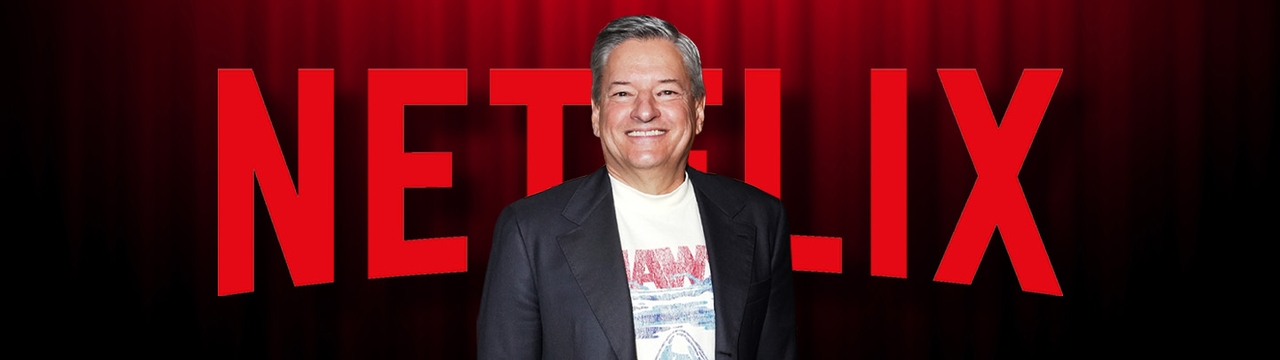
In the Platform Economy era, competitive advantage no longer lies in assets but in the ability to create systems connecting "people, technology, and creativity." Netflix exemplifies an organization with a profound understanding of this dynamic.
While Netflix is commonly known as a streaming service for series and films worldwide, in business terms it operates as a global content ecosystem that enables creators from various countries to reach hundreds of millions of viewers simultaneously. This success stems not solely from algorithms but from designing a decision-making culture aligned with a fast-changing, unpredictable world.
One key leader driving this model is Ted Sarandos, co-CEO of Netflix. He transformed the company from a content distributor into an IP creator and set new standards for the global entertainment industry through a platform leadership approach that eschews hierarchy, empowering trust, autonomy, and experimentation within the organization.
Ted Sarandos is Netflix's co-CEO and a pivotal figure shaping the platform’s content direction and identity, establishing it as a global entertainment industry leader today.
Sarandos joined Netflix in 1999 when it was still a DVD-by-mail rental service. He did not come from a direct technology background but from the entertainment industry, having worked with video stores and content distributors—experience that became a crucial strength as Netflix bridged technology and creativity.
His primary role involves guiding content strategy and fostering relationships with creators worldwide. He championed Netflix Originals and backed major global series and films, from House of Cards and Stranger Things to The Crown, as well as diverse local content from multiple countries.
Many know Reed Hastings as Netflix’s co-founder and former CEO who led technology, backend systems, business models, algorithms, organizational culture, and scalable platform design. Ted Sarandos leads the content and creative side. Together, they form complementary leadership: Hastings builds the system, while Sarandos infuses it with the "spirit of content."
In 2020, Netflix formally appointed Sarandos as co-CEO, signaling that content is not merely a cost but the "core of platform strategy," equal in importance to technology.
The relationship between Sarandos and Hastings epitomizes a true Platform Economy organization. A platform cannot thrive on technology alone without content that users desire, nor sustain itself with content alone lacking scalable systems. Today, Netflix stands as a cultural platform influencing global tastes, ideas, and the entertainment industry.
CNBC Leaders Playbook presented five compelling decision-making lessons from Ted Sarandos. Thairath Money summarizes these for readers to learn from his success, especially as leadership today requires both science and art to navigate AI, platforms, and ongoing change effectively.
1) Take big swings to transform platform structure.
In platform growth, gradual progress may not yield structural advantages. When studio content deals tightened, Sarandos recognized Netflix needed to control its value upstream. In 2011, he boldly invested $100 million to acquire two seasons of House of Cards, despite uncertain proof that original content would succeed on streaming platforms.
This bet was more than a series investment; it restructured the business from a "distribution platform" to a "creation platform," marking a turning point that led Netflix to industry leadership. From a Platform Economy perspective, this major shift invested in long-term network effects rather than short-term returns.
2) Decentralize decision-making instead of central control.
A global platform cannot be managed top-down. Netflix adopted a "Freedom and Responsibility" culture, empowering teams across 50+ countries to make creative decisions independently, reducing approvals and accelerating action.
Leadership in this model focuses not on micromanagement but on selecting top talent, setting clear frameworks, and stepping back to let the system operate. Sarandos says this embodies platform organizations that believe value is created closest to the user, not at the center.
3) Lead with intuition, informed by data—not replaced by it.
Though data-driven, Sarandos believes data should not dictate creativity. In the Platform Economy, data shows "what audiences have done" but cannot predict "what they will love next." Most global content starts with human intuition, not algorithms. Platform leaders must balance data with human judgment to avoid safe but uninspired directions.
4) Build a culture unafraid of experimentation.
In platforms, failure is not an end but a form of data. Netflix grows through continuous experimentation—daring to try new ideas, learning quickly, and moving forward when things don’t work. Many risky projects become global hits rapidly. Platform leaders must foster environments encouraging risk-taking over fear of failure, as innovation cannot thrive where mistakes are feared.
5) Create space for dissent and challenge conventional wisdom.
Platforms that stop questioning are quickly replaced. Sarandos encourages staff to question decisions, even those of senior executives, believing the best ideas emerge from constructive debate.
In the Platform Economy era, strong leaders are not those who are always right but those who create safe spaces for truth-telling and challenge to the status quo.
Netflix’s success demonstrates that modern leadership lies not in controlling every decision but in designing systems, cultures, and trust that enable organizational members to create value autonomously.
Ted Sarandos’s five lessons apply beyond media or streaming businesses and can guide new-age leaders managing organizations amid uncertainty, technology, and constant change.
Read more
Source information CNBC
Follow the Facebook page: Thairath Money at this link -