

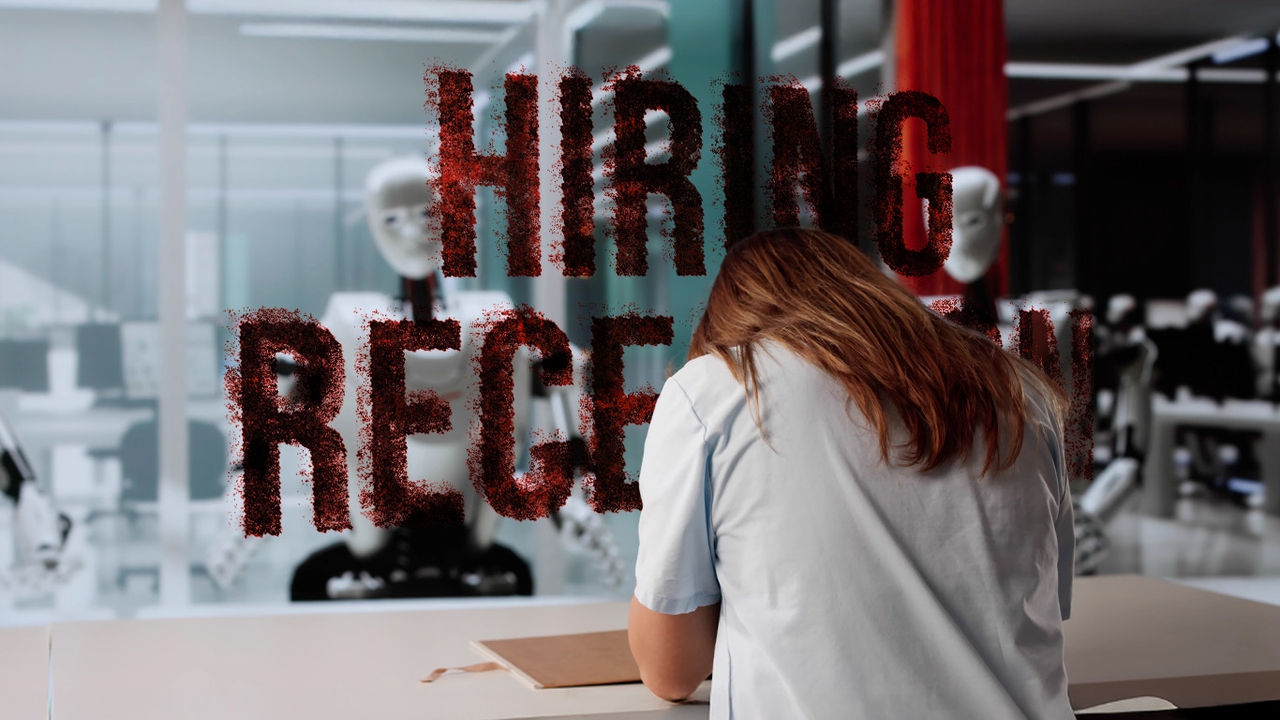
The labor market in 2025 has ushered the world into an era called the 'Hiring Recession'. Or employment downturn. Economists state this is due to reduced hiring and disappearing job positions, making it harder to find work and increasing unemployment over the past year.
A report by Heather Long, chief economist at Navy Federal Credit Union, notes, "In 2025, the United States has entered a hiring recession," affecting both blue-collar and white-collar workers.
Last year, U.S. employment increased by approximately 584,000 jobs (according to the Bureau of Labor Statistics), marking the worst year on record, with most hiring occurring before April.
Furthermore, about 69% of U.S. employment remains in healthcare, making it difficult to bring specialized workers into the labor market. This heavy reliance on a single industry could cause market instability in 2026.
Meanwhile, unemployed workers are remaining jobless longer; 26% have been out of work for at least six months, the highest since February 2022. Employment rates dropped by 3.2% in November, the lowest since 2013.
Nicole Bachaud, a labor economist at ZipRecruiter, said, "Unemployment is becoming a 'permanent' condition rather than a temporary change."
This trend contrasts sharply with 2021-2022, when many workers took advantage of the 'Great Resignation' to leave jobs for better positions and pay. However, economists viewed that period as unsustainable long-term.
During the mass resignations, the U.S. Federal Reserve raised interest rates to cool the heated labor market and control inflation, which in 2022 reached its highest level in four decades.
Several factors have weakened the employment environment, including economic policies like taxation, business uncertainty, overemployment in recent years, and hesitation to hire amid potential AI replacement.
CNBCreported that the labor market will continue slowing in early 2026, with the latter half of the year better suited for job hunting. They also offered tips for job seekers to impress employers.
The labor market is shifting from education-based hiring to skills-based hiring focused on actual skills and experience. ZipRecruiter data shows 88% of entry-level jobs do not require a degree, and over 70% of new hires have less than a bachelor’s degree.
The key is to tailor resumes directly to job postings, highlighting the value created, such as applying skill X to help achieve result Y, rather than vague statements like having good interpersonal skills, which are unhelpful in 2026.
Indeed experts also recommend using AI to extract keywords from job listings and include them in resumes to pass company Applicant Tracking Systems (ATS).
Getting a job is not about applying to as many as possible but targeting the right sectors, including:
Even without direct experience, such as no prior healthcare sales, transferable skills like sales, communication, and negotiation can be emphasized, supplemented with certifications or short courses to fill gaps.
Networking remains a secret weapon for job hunting, whether employed, unemployed, or seeking a change. Conversations with industry peers, joining professional groups, attending events, or building an online presence all increase the chance of landing jobs before official postings.
Experts stress that a one-page resume is not a rigid rule. The format should be easy to read and ATS-friendly, typically single-column with clear headings. Generally, 5-10 years of experience warrants two pages, over 10 years may extend to three, and important experience should not be omitted due to length concerns.
Source:CNBC
Follow the Facebook page: Thairath Money at this link -https://www.facebook.com/ThairathMoney