

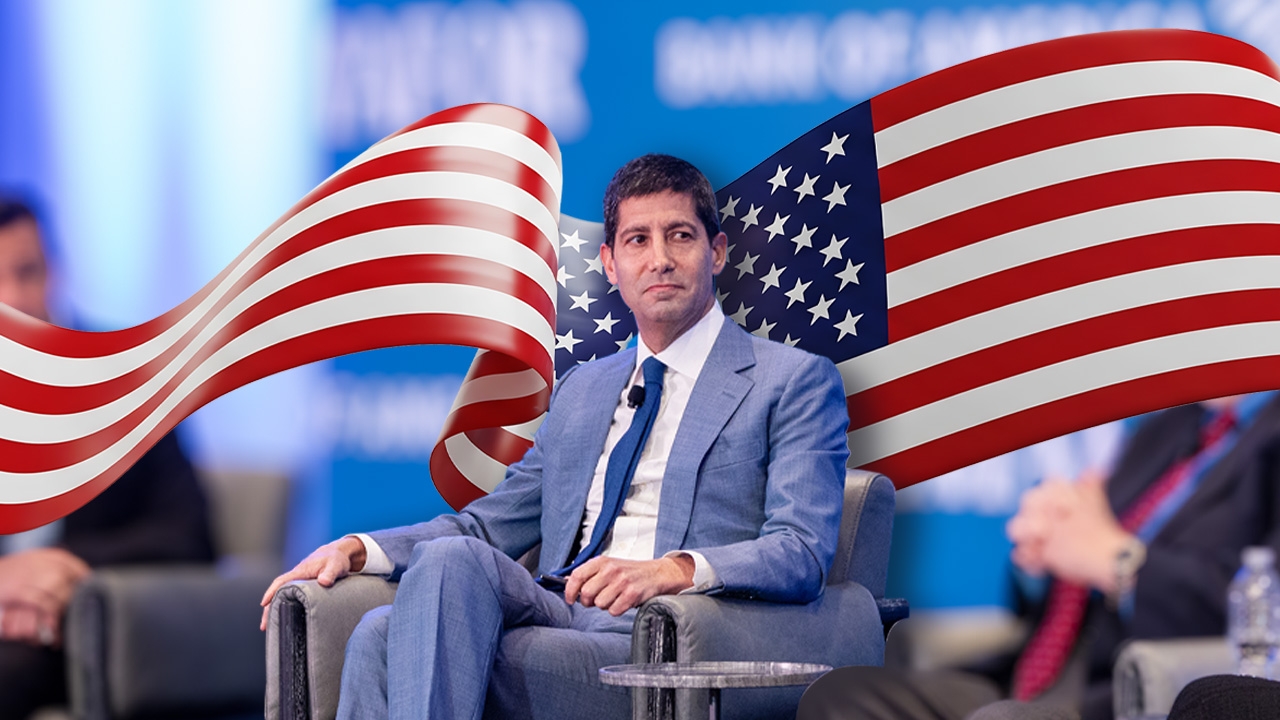
On the morning of Friday, 30 January, U.S. time, or evening in Thailand, President Donald Trump posted a message on Truth Social stating“I am pleased to announce that I have nominated Kevin Warsh to serve as Chair of the Federal Reserve Board. I have known Kevin for a long time and I know he will be remembered as one of the greatest Fed Chairs, possibly the best ever.”
Following this announcement, the name “Kevin Warsh” again surged in searches and discussions, marking a grand return to the Fed stage. Previously, he served as a governor on the Federal Reserve Board and was once nominated to be Fed Chair during Donald Trump’s first term but was passed over in favor of Jerome Powell.
Kevin Warsh, a veteran financial figure with extensive experience, has become the leading candidate that President Trump has put forward to succeed Powell, whose term ends in May. Amid Trump’s pressure for the Fed to lower interest rates, analysts consider Warsh a safe choice, confident in his firm stance from the past that he will not be merely a puppet of the president.
“I would say he is the most perfect candidate, the most qualified. He is very well-educated from top institutions; everything is perfect. He was the youngest ever to serve on the Fed. He is well-rounded in every aspect. Appearance may not matter, but he has the right image,” Trump said during a White House meeting that Friday afternoon.
This article from Thairath Money’sHow to Make Moneycolumn introduces Kevin Warsh, covering who he is, his background and rise to power, and why he has been nominated to lead the U.S. and global economies next.
Kevin Warsh was born in 1970 and is currently 55 years old. He grew up in the major city of New York, graduated from public high school, then studied Public Policy at Stanford University, graduating in 1992. He went on to study law at Harvard University—the same field and university as Jerome Powell, the current Fed Chair whose term is ending—and earned his Juris Doctor in 1995.
That same year, Warsh began his career in mergers and acquisitions at Morgan Stanley in New York, serving as a financial advisor to companies across industries including manufacturing, services, and technology. He also played a role in structuring capital market transactions and supporting fundraising through debt and equity securities.
Kevin Warsh further pursued additional studies in market economics and bond markets at Harvard Business School and MIT Sloan School of Management.
His turning point came in 2002 when then-President George W. Bush sought to bring him on as an economic advisor. Warsh resigned as Vice President and Executive Director at Morgan Stanley to join the government.
Warsh assumed the role of Special Assistant to the President for Economic Policy and Executive Secretary of the National Economic Council, advising the president and senior officials on U.S. economic issues, especially regarding capital flows in financial markets, stock markets, banking systems, and insurance businesses.
At the same time, he was a member of the President’s Working Group on Financial Markets, a high-level body overseeing U.S. financial system stability.
In 2006, Kevin Warsh entered the Federal Reserve when President George W. Bush nominated him to serve as one of the seven Fed governors. He was the youngest ever in Fed history to hold the position, appointed at only 35 years old.
He represented the Fed Board at G-20 meetings and served as a special economic envoy to emerging and developed economies in Asia. He was also the Administrative Governor, overseeing internal Fed operations, personnel, and financial efficiency.
Shortly after taking office, the Fed faced one of its greatest challenges: the 2008 global financial crisis, which nearly pushed the U.S. economy into its worst recession since the Great Depression.
During the emergency faced by major U.S. banks, Warsh—who had strong ties to Wall Street—played a key role coordinating crisis response measures. He was involved in the bailout of AIG, the world's largest insurer at the time, and helped plan JPMorgan Chase’s acquisition of the collapsing investment bank Bear Stearns.
Although initially a supporter of aggressive Fed policies, Warsh later expressed concerns that large-scale economic stimulus measures might lead to long-term inflation. In 2010, when the Fed began quantitative easing by purchasing U.S. government bonds, he openly stated that expanding the Fed’s balance sheet should be subject to rigorous scrutiny. Ultimately, he voted in favor to maintain committee consensus.
After his Fed governorship ended, Warsh became a scholar at Stanford University’s Hoover Institution, a conservative public policy think tank, and served on the board of UPS, a major U.S. logistics company.
After Donald Trump won the 2016 presidential election, Warsh joined the White House’s external advisory group. As Janet Yellen’s Fed Chair term neared its end in 2017, Trump had the opportunity to select a new Chair. Warsh was considered a top contender.
Following the nomination process, Warsh interviewed with Trump but ultimately lost the position. Trump reportedly considered Warsh too young at 47, leading to Jerome Powell’s appointment.
However, during Powell’s second term and Trump’s second term, tensions rose between the two. Trump called Powell “dumb,” “idiotic,” and “bad-tempered” because the Fed under Powell raised interest rates against Trump’s wishes.
In recent years, Warsh has become more critical of the Fed. Deutsche Bank analysts note he believes the Fed relies too much on backward-looking economic data instead of forward-looking forecasts.
Kevin Warsh told CNBC, “AI will reduce costs across the board and the U.S. could be a big winner.If I were president, my concern would be that the central bank is blind to these changes—a central bank still anchored to models from 1978.”
Warsh’s life has also been intertwined with billionaires. He is married to Jane Lauder, daughter of Ronald Lauder, heir to Estée Lauder cosmetics and a major Republican supporter. He works closely with Stanley Druckenmiller, a global billionaire investor, and is a partner at Duquesne Family Office. Warsh has said he manages relatively small amounts of money for these billionaires.
Follow the Facebook page: Thairath Money at this link -https://www.facebook.com/ThairathMoney