

Being the child of a billionaire often means following family footsteps by continuing the family business, such as the Arnault family behind luxury fashion group LVMH, the Walton family who founded Walmart, or the Ellison family where Larry Ellison’s son took over a media empire.
However, not all wealthy heirs follow their family’s path. Some decide to forge their own way, either by leaving the business world or creating their own ventures. One such individual is Phoebe Gates. She is the youngest daughter of Bill Gates and Melinda French Gates, the billionaire former couple who have impacted society through technology and philanthropy.
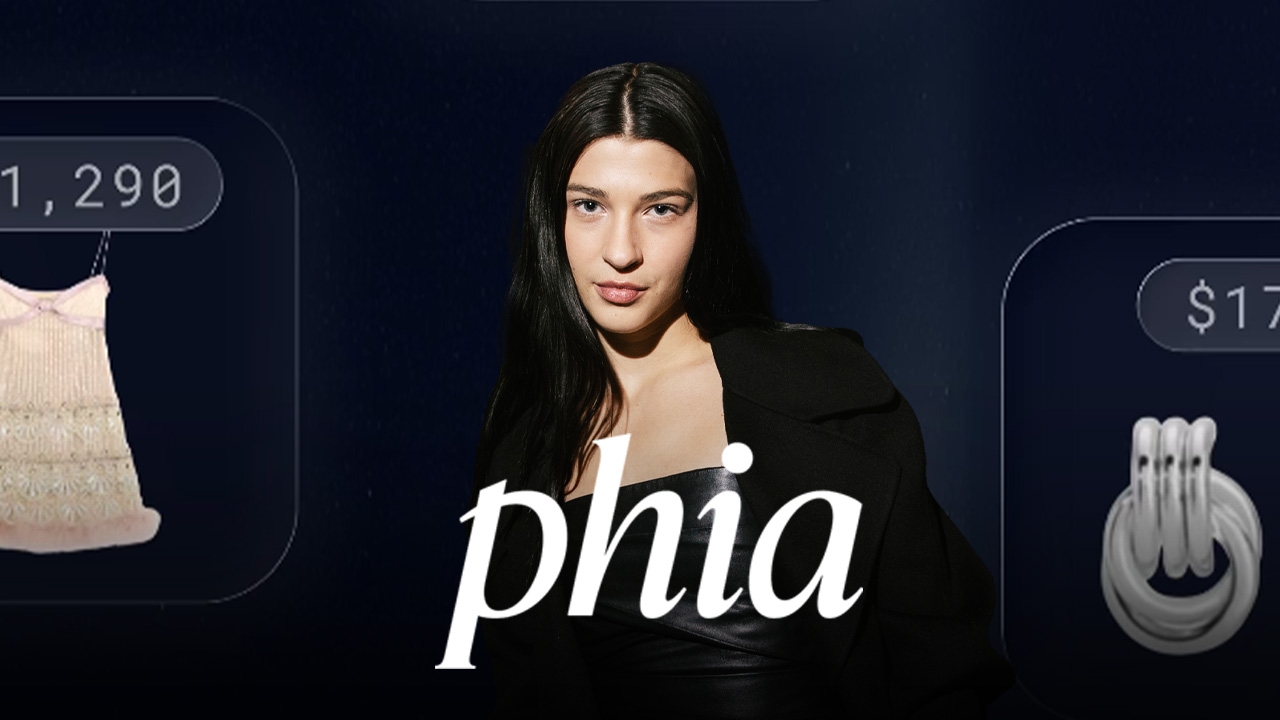
Phoebe co-founded a startup with her college dorm roommate, born from their shared passion for fashion and secondhand goods. They developed a tech platform to aid purchasing decisions by comparing prices to find the most reasonable options. She is also an activist, content creator, and carries on philanthropic efforts like her parents.
. Phia has become a standout startup, featuring AI-powered price comparison and the innovative inclusion of secondhand items in its comparisons. This has enabled continuous fundraising success. Yet, some attribute this achievement to her parents’ influence, as media often focus more on her being Bill Gates’ daughter than on her startup’s name.
This article from Thairath Money’sHow to Make Moneycolumn introduces Phoebe Gates, the important daughter of two billionaires, exploring her relationships, philosophy behind founding Phia from personal interests, and perspectives on the 'Nepo Kids' label often linked to her success. The article aims to provide various viewpoints for readers to decide why she has reached this point.
As her surname indicates, Phoebe Gates is the youngest of three siblings in the Gates family, with elder sister Jennifer Gates and brother Rory Gates. She was born on 14 September 2002, growing up while Bill Gates, Microsoft’s founder, was still the richest person worldwide with wealth exceeding 50 billion U.S. dollars.
According to Daily Mail, she was raised in a luxurious mansion valued at over 131 million U.S. dollars in Washington State, USA. The estate features 24 bathrooms, six kitchens, a private theater, fitness center, trampoline room, and an artificial beach, setting an elite lifestyle standard from childhood.
All Gates children attended Lakeside School, a prestigious private high school in Seattle where their father Bill also studied. The tuition for the 2024-2025 academic year is about 44,730 U.S. dollars (approximately 1.4 million baht).
While her siblings have chosen quieter, low-profile lives, Phoebe has willingly stepped into the public eye.
Phoebe enrolled at Stanford University studying Human Biology in the School of Science and graduated in just three years, ahead of schedule. During her studies, she considered dropping out to start her own business, following her father's path who left college to build Microsoft, but was firmly discouraged by her parents.
She recounted that her parents insisted, “You must graduate first; you cannot drop out to start a company.” They jokingly reminded her, “Your father did exactly that, which got him into Stanford and allowed him to pay tuition.”
Phoebe is also a content creator with nearly a million followers on TikTok and Instagram. She often posted vlogs about university life and shared photos with her parents online. She has a keen interest in fashion and frequently appears at fashion shows.
In 2023, Phoebe and her university dormmate Sophia Kianni, aged 21 and 22, launched Phia, a startup born from their passion for sustainable fashion, supporting secondhand clothing and ethical product management.
Phia’s website states that the fashion industry emits over 1.6 billion tons of greenhouse gases annually, and currently, there is enough clothing on Earth to outfit multiple future generations for six lifetimes.
A main problem shoppers face when buying online is the time-consuming process of finding the best prices across stores. Alternatively, they pay higher prices to save time. Phia aims to reduce shopping time and save money for consumers.
Phia works by allowing users on its website or app to select preferred items, then the system compares those items across various sites and suggests similar products for choice.

The Phia website displays store names, product prices, and a "Typical Price" indicator showing how the item's price compares to others—from secondhand goods to brand-new official retail products.

If users install the Phia browser extension, for example, while shopping for a dress priced at 200 U.S. dollars on Anthropologie, Phia might alert them that the same dress sells for just 80 U.S. dollars on Poshmark.
Phia’s system includes both new and secondhand items, covering clothing, shoes, and bags for men and women. It partners with over 40,000 fashion brands and online stores, also categorizing styles for users to explore according to their interests.
The founders’ entire mission is to provide “Style Meets Sustainability,” creating a space for sustainable fashion that saves buyers money and aims to position Phia as the future of fashion.
Though the idea and name Phia originated in 2023, the official launch occurred in April 2025. In its Seed Round, Phia raised over 8 million U.S. dollars, attracting investors like Kris Jenner, Sara Blakely, and Sheryl Sandberg.
Within just 10 months, the startup, less than a year old, closed a Series A funding round raising over 35 million U.S. dollars, led by Notable Capital, with participation from Khosla Ventures and returning investors Kleiner Perkins.
Phia’s revenue model resembles affiliate marketing: the app earns a commission when brands sell products through its platform. New features have proven results, such as increasing average order value by 15%, gaining 30% more new customers, and reducing product returns by up to 50%.
A key driver for Phia is “Founder-Led Marketing.” Both founders share passions—Kianni is a climate activist and former UN advisor. Together, they have over 2 million social media followers and host a podcast called The Burnouts, discussing entrepreneurship and interviewing notable figures.

Phoebe candidly shared on The Burnouts podcast about being labeled a Nepo Baby—a privileged child. She acknowledged that her parents’ names, Bill Gates and Melinda French Gates, undoubtedly helped her reach this point.
“When I got into Stanford, I thought, ‘I am so privileged compared to others.’ I was a Nepo Baby, and that made me very insecure, especially as a freshman with no experience or achievements.” Phoebe said on the podcast.
Regarding whether her parents financially supported or invested in Phia, she said they fully support her as parents, but Bill and Melinda have stated she never asked them for help.
Melinda once said in an interview, “I have a daughter who started a business this year. She got funding not because of my connections or myself, and I did not invest money in her company.” Though Melinda named her daughter directly, it was clear she meant Phoebe, as her siblings keep their lives private.
When asked how he would react if Phoebe asked him to invest, Bill Gates replied, “I’d have to supervise her closely and review the business myself, which would be uncomfortable. I’d question whether that’s the right thing to do. Fortunately, it hasn’t happened.”
Phoebe has firmly stated, “This business must stand on its own without relying on privilege or my family name.”
“I have a driving force inside me,” she said, explaining her determination to prove herself capable of gaining Silicon Valley investors’ confidence through talent, not inheritance or family reputation. Her recent successful funding round for Phia confirms this.
In 2025, Phoebe Gates was named among Time100’s rising influential stars along with Sophia Kianni, and also listed in Forbes 30 Under 30 for co-founding Phia.
Follow Thairath Money Facebook page at this link -https://www.facebook.com/ThairathMoney