

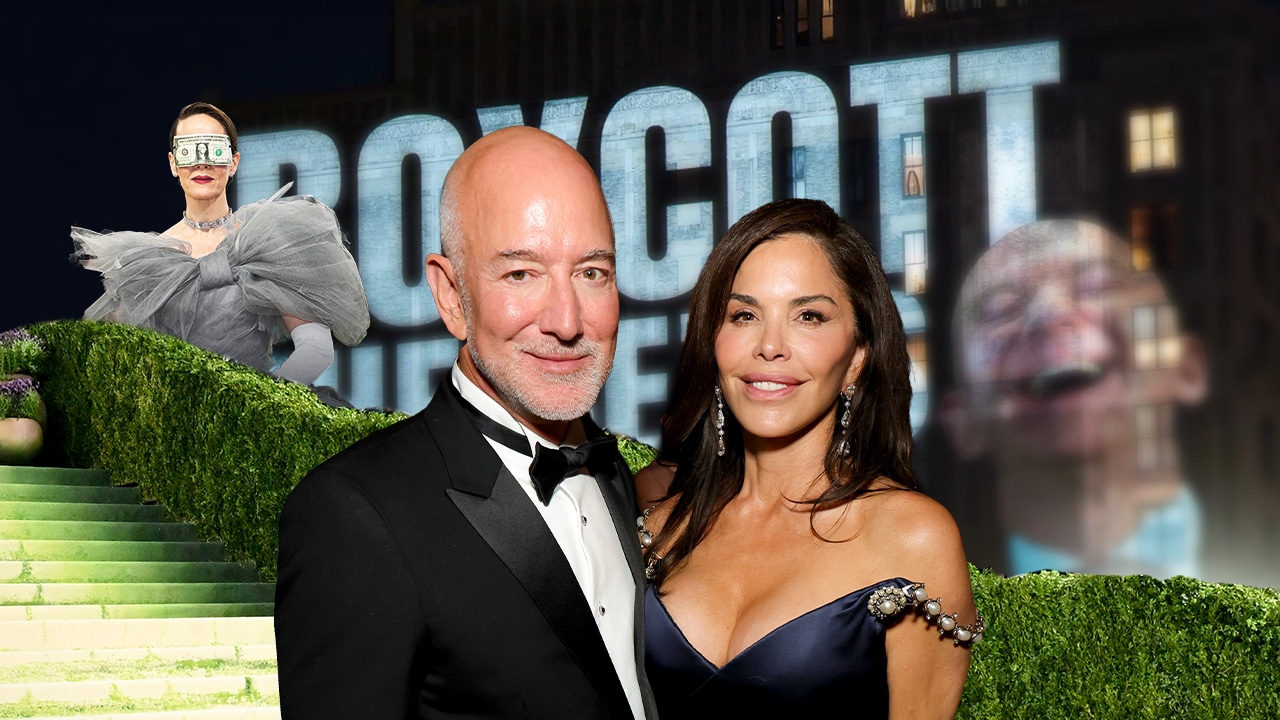
Met Gala The Met Gala is becoming a major global topic. Beyond fashion, luxury, and elite celebrities, the 2026 event faced heavy criticism as Amazon founder Jeff Bezos and his wife Lauren Sánchez Bezos contributed over $10 million and co-hosted alongside Anna Wintour and other celebrities like Beyoncé, Nicole Kidman, and Venus Williams.
This trend sparked an "anti-billionaire" backlash and highlighted growing social inequality, with the gap between billionaires and ordinary workers widening. As a result, this year's "biggest night in fashion" at New York City's heart was viewed as overly glorifying billionaires.
Typically, the Met Gala raises funds for the Costume Institute at The Metropolitan Museum of Art, supporting conservation, research, and showcasing fashion as a global art form. The museum serves as a red carpet venue for prominent figures in society and fashion, from actors and singers to models and billionaires, this year notably led by various Tech Bros.
. Thairath Money in itsHow to Make Moneycolumn previously explained the Met Gala's revenue model and how funds support the fashion world. This article delves into the hot topic of the 2026 Met Gala, where Big Tech executives joined the fashion scene. Why are these figures supporting charitable art events and making a serious debut on this red carpet?
Going back to 1948, the gala was first organized by Eleanor Lambert, a renowned fashion writer aiming to fund the Costume Institute's launch. The initial event, called the Met Gala, sold tickets at just $50.
Early Met Galas were held across New York, inviting high society and fashion elites for dinners before settling at The Metropolitan Museum of Art on the first Monday of May, becoming a globally watched event.
A clear change came in 1995 when Anna Wintour, then Vogue's editor-in-chief, became co-chair, elevating the event from a social dinner to a global cultural phenomenon remembered for its opulence.
The Met Gala's theme changes annually per the museum's direction. For 2026, the theme is "Costume Art" with the dress code "Fashion Is Art," aligning with the museum's spring exhibition exploring fashion's relationship to the body.
All proceeds from the Met Gala dinner go to the Costume Institute, which preserves over 70 years of significant fashion artifacts totaling more than 33,000 items. Funds are systematically allocated to exhibitions, historical archives, artifact conservation, academic research, and salaries for 29 staff members.
Each year, tickets, tables, and sponsorships are sold to support the event, drawing sponsors from fashion, media, finance, and technology. This year set a new record, raising $42 million, led by Jeff Bezos and his wife contributing $10 million.

This revenue surpasses 2025, driven mainly by higher ticket prices, including:
Sponsor contributions, previously undisclosed, receive special privileges aligned with the event theme, such as Apple supporting the "Manus x Machina" theme in 2016 or Gucci backing "Camp: Notes on Fashion" in 2019. This year, the major sponsors are Jeff Bezos and Lauren Sánchez Bezos, who also serve as Co-Chairs.
Looking back, Met Gala revenues have significantly increased with rising ticket prices: approximately $17.4 million in 2022, $22 million in 2023, $26 million in 2024, and $31 million in 2025.
The main reason for strong opposition to the Met Gala this year is the participation of Silicon Valley tech executives and billionaires joining the red carpet, historically reserved for actors, singers, models, and stylists. This year’s "Tech Bros" included:
Mark Zuckerberg and his wife Priscilla Chan attended quietly without walking the carpet (sharing a table with Anna Wintour). Jeff Bezos allowed his wife to walk alone before they posed together on the stairs. Major tech companies including Amazon, Meta, OpenAI, Snapchat, and Shopify also purchased tables.

With rising funds each year, questions arise about exclusivity and celebrity involvement, as ticket buyers must be invited, and prices climb annually. This year, the event was criticized as "out of touch with reality."
The issue is not the museum itself but the involvement of Bezos and other tech billionaires, despite previous participation by Apple, Yahoo, Instagram, and Amazon's support since 2012.
However, 2026 marks a turning point: the first time tech figures are main sponsors, multiple tech companies bought tables in the same event, and the highest fundraising occurred while Silicon Valley took center stage over fashion brands or Hollywood stars.
Although the Met Gala has long been criticized as an elite event, it remained respected in the fashion world. This year, opposition came from both fashion supporters and anti-billionaire advocates.
Most of the world's top billionaires are tech executives: Brin ranks third globally, Zuckerberg sixth, and Bezos fourth, making 2026's event seen as fashion becoming a new frontier for capitalism in tech.
Traditional billionaires have a long history of building credibility via donations to cultural institutions, but Silicon Valley Tech Bros are criticized for limited support of traditional arts. Bezos's fashion support is seen as an image-building effort for new-age billionaires.
There were rumors that Jeff Bezos tried to buy Condé Nast, Vogue's parent company, as a wedding gift for his wife and an entry into fashion. Lauren Sánchez Bezos appeared on a Vogue cover in a wedding dress, fueling speculation later denied as false.
Fashion and art supporters view donations positively but also note such charitable giving can reduce tax liabilities.
Among the public, the rise of the "Tax the Rich" movement led to boycotts of the wealthy. During the Met Gala red carpet, opponents organized a parallel event with Amazon employees affected by unfair conditions and layoffs, creating their own fashion show.

Signs reading "Boycott the Bozos Met Gala" appeared amid discontent over inequality: Amazon demands hard work with low pay and mass layoffs, while Bezos spends vast sums on exclusive elite events.
"While most struggle in a digital-transformed world, those who built the systems live in luxury making Versailles seem modest," said the LA Times.
Therefore, the 2026 Met Gala is more than fashion; it reflects the clash of modern capitalism where money, technology, and culture collide intensely. The key question is not "what to wear" but "who controls this stage."
Sources:Fortune,LA Times,Vanity Fair,CNN,Business Insider
Follow the Facebook page: Thairath Money at this link -https://www.facebook.com/ThairathMoney