

When tourists travel, we often see full hotels, bustling restaurants, and a revitalized economy. However, behind every spending transaction lies another business rarely discussed—one that profits more as tourists spend more. That is Visa, a global payment network provider.
For Visa, tourism is not merely about travel but a source of revenue through cross-border payments, one of the company's high-margin business segments.
This is due to Visa's business model: transactions made abroad, or cross-border payments, generate revenue from fees at higher rates than domestic spending. Therefore, the more tourists travel and spend overseas, the more Visa's network earns substantial fee income.
As tourism becomes a crucial business, the next question is whether Visa can play a role beyond the moment customers take out their cards to pay.
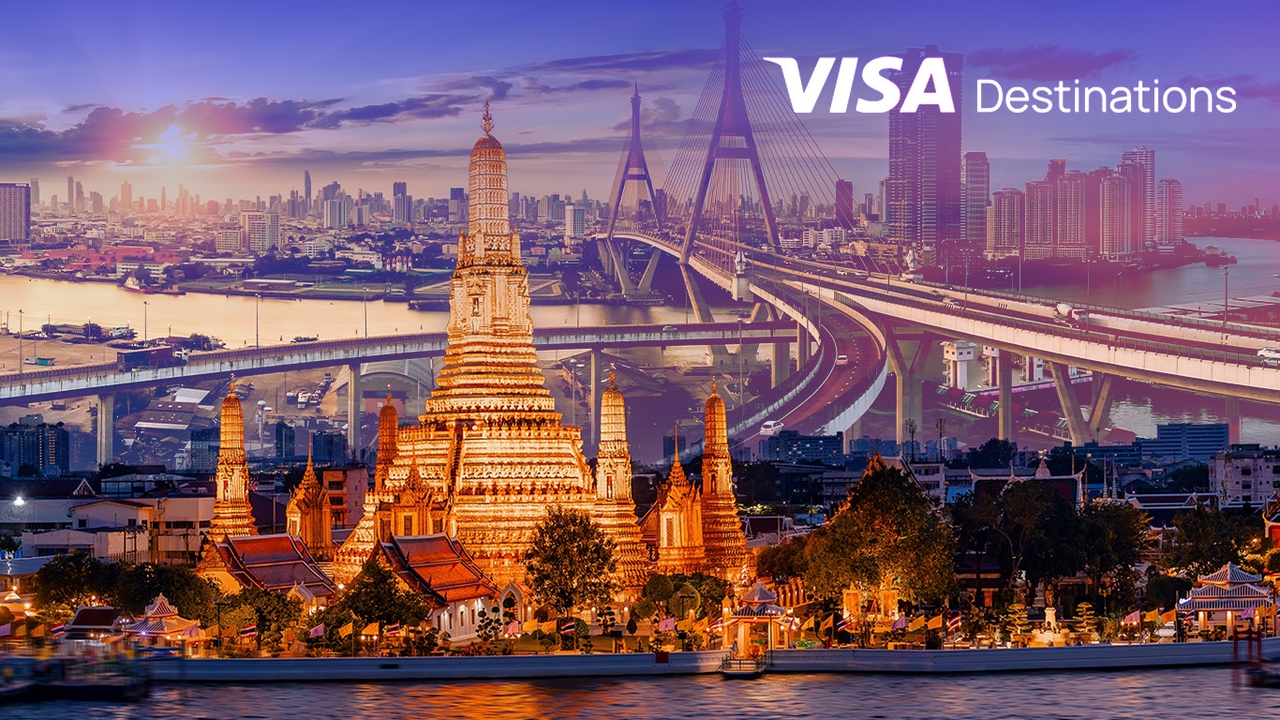
For this reason, Visa launched Visa Destinations, a global travel platform recently officially introduced in Thailand—the first country in the Asia-Pacific region—following launches in Paris, London, and Dubai.
This launch reflects Visa's shift from being solely a payment network provider to becoming part of the travel experience from the trip planning stage onward.
Visa Destinations is designed as a mobile-first platform for Visa cardholders, compiling destination information, restaurants, accommodations, shopping spots, activities, wellness options, and local recommendations to assist travelers from planning and booking through to payment.
The business rationale is clear: the earlier Visa enters the traveler's decision-making process, the higher the chance that spending will occur through Visa's network, which can then be leveraged into benefits, membership programs, and additional services.
This launch timing is deliberate, as Visa views the global economy entering a new phase energized by investments in AI, especially in booming sectors like semiconductors, hard drives, and data centers.
The consequence is...A boom in capital markets and AI supply chains, leading to a significant rise in purchasing power among affluent consumers, particularly in markets connected to the AI supply chain such as the Philippines, Taiwan, Vietnam, and South Korea. Additionally, a new class of millionaires from technology and startup sectors has emerged, forming a high-spending travel customer base.
At the same time, despite rising travel costs, tourism remains a flexible spending category. People may reduce budgets or change destinations but do not stop traveling, making tourism a sustained source of important cross-border transactions for Visa long-term.
Why did Visa select Thailand as the first country in Asia-Pacific for this initiative?
The answer lies in Thailand's role as a regional tourism hub and the significant volume of tourist spending flowing through the country.
According to Visa's Thailand Travel Pulse 2026 report, cross-border consumer spending in Thailand grew 14% year-on-year, reflecting robust international travel and traveler confidence. The United States remains the largest inbound tourist market, followed by the United Kingdom and Germany.
The most interesting figure from a payments business perspective is the behavior of "repeat visitors," who, despite representing only 20% of all cardholders, account for 34% of total inbound spending.
In other words, a small group spends heavily and is highly valuable to the payment system. This is why Visa emphasizes engagement and encouraging repeat visits over merely increasing tourist numbers.

The behavior of high-spending travelers is shifting. They no longer seek just luxury hotels or generic search engine recommendations but desire unique, customizable experiences unavailable elsewhere, which they can share as memorable stories.
Especially culinary experiences, such as Michelin-starred restaurants, where this customer segment is willing to pay premium prices. This aligns with Visa Destinations' role as a gateway to curated local experiences.
Data from Thailand clearly reflects this trend: tourists on their third visit tend to spend four times more than on their first trip, explaining why the industry increasingly competes on "experiences" rather than price.
Airlines like Star Alliance are also shifting strategies from route competition to developing seamless premium travel experiences to attract high-value passengers.
Another market opportunity Visa sees is wellness tourism. As the world ages, people's focus shifts from merely living longer (lifespan) to having more healthy years (healthspan), leading consumers to invest more in prevention than treatment.
For Thailand, this is a significant opportunity because health tourists spend on average over $100,000 per trip, stay 2-4 weeks, and often return, generating high-value, recurring cross-border transactions.

What completes this strategy is that Visa does not stop at building a platform for travelers but also expands payment infrastructure to local merchants.
Under Visa Destinations in Thailand, Visa has already expanded its network to over 50 operators in the Song Wat area and aims to extend digital payment acceptance to 56,000 small businesses nationwide, covering restaurants, retail, accommodations, transport, tourist attractions, wellness, and local experiences.
This merchant-side investment is significant because the more digital payment points there are, the greater the likelihood that tourist spending—especially cross-border transactions—will flow through Visa's network. Simultaneously, small merchants can more easily access international tourists and participate systematically in the tourism economy.

Anthony Watson, Country Manager of Visa Thailand, said Thailand is entering a pivotal moment for its tourism sector as changing traveler expectations open new opportunities for destinations, businesses, and communities. Visa aims to collaborate across the ecosystem to unlock the next phase of tourism growth.
"In the past, Visa's role was limited to the moment a card is swiped, but today the company strives to engage earlier—from the moment travelers start researching destinations, planning trips, and deciding where to spend. In payments, those who enter the consumer decision journey first have the best chance to capture transactions in the end," he explained.