

The overall Thai real estate market is facing pressure from multiple sides, including economic slowdown, delayed purchase decisions, and rising loan rejection rates due to household debt issues. These factors have stalled sales momentum for many developers.
However, in this challenging environment where the market "struggles to move forward," Sansiri has defied the trend by achieving condominium sales exceeding 16 billion baht in the first seven months of 2026, reaching 70% of its full-year target of 23 billion baht. The company also plans to launch nine new projects worth 11.7 billion baht in the second half of the year.
Thairath Money analyzes this phenomenon, noting that the sales growth against the trend is not due to luck but comes from expert market insight and management strategies that serve as key lessons for businesses navigating one of the toughest market periods.
The key to Sansiri maintaining its growth pace lies in analyzing the market based on Real Demand—actual buyers—not creating supply in hope of speculative investors.
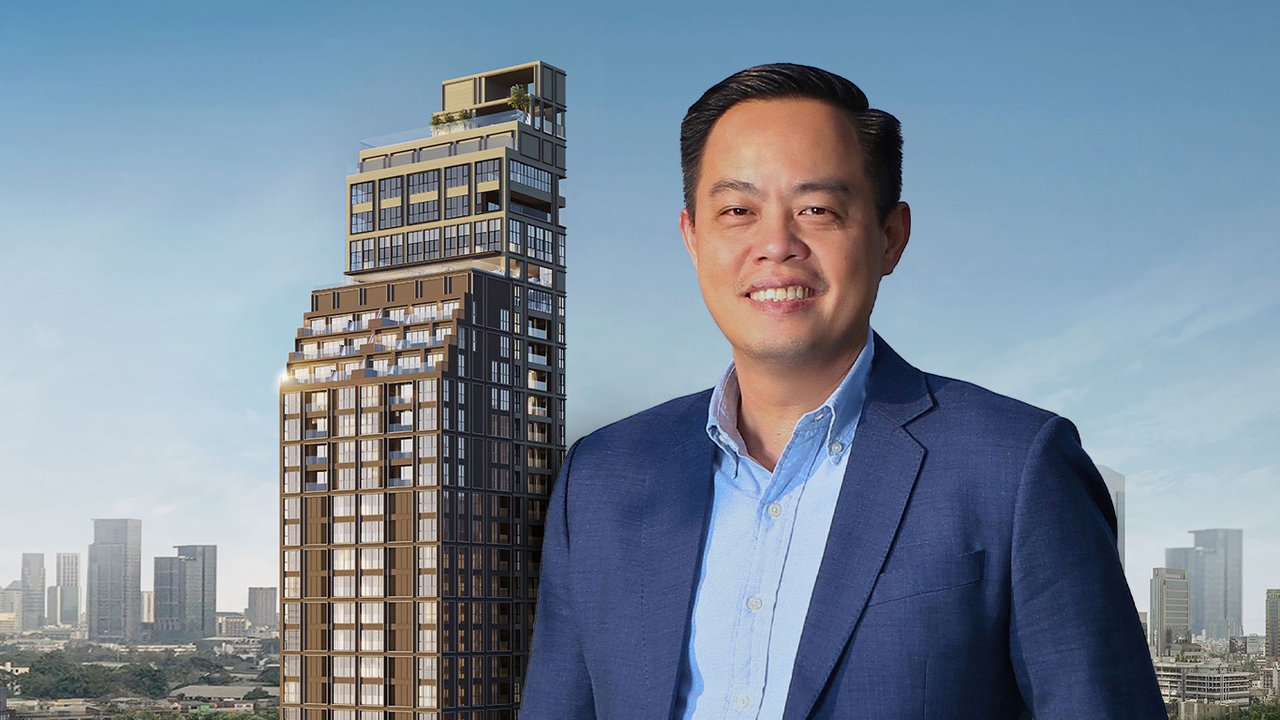
Ongart Suwankul, Deputy Managing Director of Condominium Project Development at Sansiri Public Company Limited, compares the company's approach to a "7-Eleven Strategy," meaning they access every location with real purchasing power, regardless of how competitive the area is.
"Wherever people shop, we go. We survey competitors and cost per transaction, then enter the area fully prepared. If the product is truly good and reasonably priced, consumers will choose it themselves."
Weekly adjustments and constant situational assessment allow Sansiri to maintain discipline in product release, covering everything from affordable to premium levels, including iconic projects like the queue-forming LOVE Charoen Nakhon and XT 10 Ekkamai, which achieved billion-baht sales within days of presale.

Currently, Phuket is the hottest location and serves as Sansiri’s strategic engine, generating up to 40% of the condominium portfolio’s revenue, or about 4 to 4.5 billion baht annually.
Phuket’s market strength comes from foreign purchasing power and tourism recovery, resulting in a surprisingly low loan rejection rate below 2% compared to the overall market average. Project expansion covers areas from Phang Nga and the Andaman coast to Rawai and the city center, capturing demand comprehensively.
However, Phuket's market reflects a clear contradiction in real estate development: while residential projects grow rapidly, the main infrastructure, specifically the road network, has seen little change in over 16 years. Sansiri notes that traffic congestion is a major issue the government must urgently address to avoid becoming a bottleneck that hampers long-term growth.
In an era where real estate profit channels narrow, investors decrease, and sales take longer, "liquidity" becomes the vital lifeline determining developers’ survival.
Sansiri executives explain that over 60% of real estate business costs come from land and construction. Thus, their cash flow management focuses not just on sales figures on paper but on quickly recovering cash into the system.
Sansiri offers views on urban planning trends and increasing Floor Area Ratio (FAR) in various areas, which allow greater building density. While this seems positive for real estate development, in reality, increased buildable area immediately reflects in "land prices."
Landowners adjust prices proportionally to the allowed buildable area, so development costs don't necessarily decrease. Hence, urban planning adjustments mainly increase land-use flexibility but don't directly solve affordable housing issues.

Ultimately, genuine real estate market recovery depends largely on the overall economy and people's incomes. As long as purchasing power remains weak and loan rejection rates stay high, real estate business will no longer focus on maximum expansion but on accurately reading demand alongside strict financial discipline to handle potential market fluctuations.
For 2026, Sansiri plans to launch 17 new condominium projects worth 29.4 billion baht: eight projects totaling 17.7 billion baht in the first half and nine projects worth 11.7 billion baht in the second half, with over 36% located in Phuket.
Additionally, seven Ready to Move (RTM) projects worth 18.6 billion baht will be completed, highlighting premium developments valued at 12.3 billion baht that showcase excellence in quality, design, superior service, and prime locations. Leading projects include Via ARI, SHUSH Ratchathewi, and The Standard Residences Hua Hin to meet upper-tier Real Demand. These moves position Sansiri as a key Market Indicator, creating ripples in the market and attracting attention from all sectors.

Read business news, marketing strategies, and exclusive interviews with ThairathMoney to help you achieve "Good Finances, Good Life" athttps://www.thairath.co.th/money/business_marketing
Follow the Facebook page: Thairath Money at this linkhttps:// www.facebook.com/ThairathMoney