

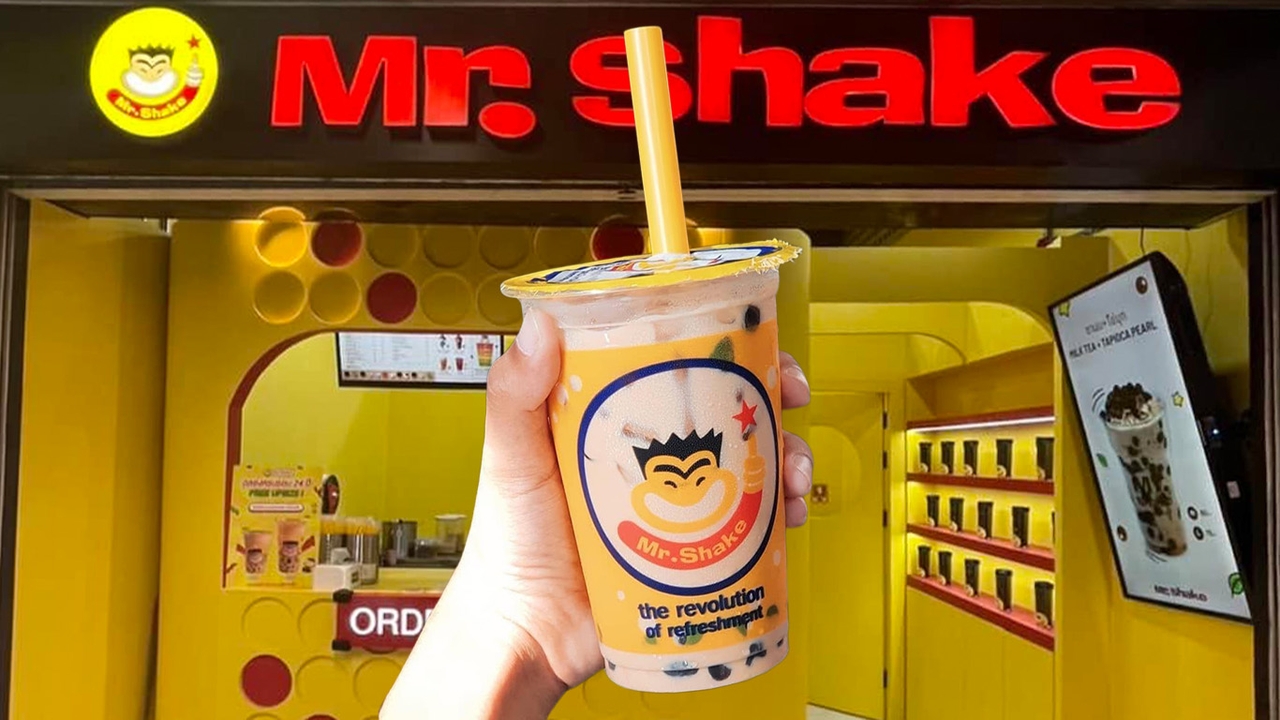
Who remembers holding the tall, elongated "dumbbell-shaped" bubble tea cup from Mr.Shake around Siam after school? Do you still recall its taste clearly? ?"Mr.Shake"?
Before bubble tea in Thailand offered various sweetness levels or toppings like brown sugar and cheese foam, the distinctive tall cup featuring a logo of a smiling child with spiky hair was a familiar image to many Thai youths. That beloved cup was called "Mr.Shake."
Mr.Shake’s first branch officially opened at Centerpoint Siam Square on 5 Aug 1999 GMT+7, marking it as Thailand’s pioneering bubble tea brand. The iconic "dumbbell" cup became a signature of the brand, and from that day to today, Mr.Shake has entered its 27th year.

Over this period, Thailand’s bubble tea market transformed drastically—from a niche, novel drink for youth to a fiercely competitive battlefield hosting Thai, Taiwanese, Chinese, and Japanese brands, with prices ranging from under 30 baht to nearly 200 baht per cup for premium teas.
Amidst new tea brands launching almost weekly, some expanding rapidly and others creating buzz with long queues before fading away as the market evolved, Mr.Shake continues to sell bubble tea. The question is how this longstanding brand manages to survive when "newness" no longer favors it.

Early success does not guarantee perpetual market leadership. As bubble tea gained popularity, new competitors entered, segmenting the market from street carts and affordable franchises to Thai brands with unique selling points and international chains offering new images, ingredients, and menus.
Competition now extends beyond flavor to price, location, cup size, packaging aesthetics, in-store experience, social media marketing, and trend-responsive menu innovation. In such an arena, a brand’s longevity can be both an asset and a liability.
On one hand, it represents trust and a loyal customer base; on the other, there is the risk of being perceived as outdated—especially since newer generations may lack memories of Centerpoint or the dumbbell cup, unlike parents or working adults aged 30-40 today. Mr.Shake’s challenge is to preserve what customers cherish while offering new reasons for today’s consumers to choose it.

A key advantage of Mr.Shake lies in its long-familiar taste, particularly the rich milk tea and chewy pearls. In a market flooded with new menus, consistent flavor carries unique value as customers need not risk trying something new each time. Those who drank it as students can return to the same order, assured of the expected taste.
This is the power of "familiarity," which new brands find hard to establish quickly. Moreover, Mr.Shake’s outlets have diversified beyond the original bubble tea to offer green tea, fruit tea, cheese tea, brown sugar, and toppings aligned with market trends. The original menu retains loyal customers, while new offerings attract younger consumers to try the brand.
Today, Mr.Shake’s customers fall mainly into two groups: those who grew up with the brand—former students who now are working adults or parents—and still buy for the familiar taste. Nostalgia bridges the gap between the brand and these customers.
The other group is younger consumers who see Mr.Shake simply as another tea shop without ties to its 27-year history. The challenge is that nostalgia can draw back old customers but is insufficient for long-term market growth. If products, experiences, and communication don’t connect with new generations, efforts like adding green tea, cheese tea, and contemporary menus reflect attempts to broaden the customer base while keeping the original bubble tea recipe central.

Another factor sustaining Mr.Shake’s market presence is its branch locations in high-traffic areas such as BTS stations, office buildings, and shopping centers. Many outlets are small kiosks focused on take-away rather than dine-in, a model suited to products with quick purchase decisions and enabling the brand to be part of customers’ daily commutes or shopping trips.
Current branches include Siam Square, Mo Chit BTS Station, Silom Complex, and multiple malls—demonstrating a strategic focus on high foot traffic over large store formats.
These locations may not create dramatic expansion buzz but help the brand remain visible and convenient to buy from.
Regarding pricing strategy, Mr.Shake positions itself "in the middle" between budget shops under 30 baht and premium brands approaching 100 baht or more. Maintaining prices below 100 baht preserves quality and brand value while staying affordable enough for repeat daily purchases, avoiding perceptions of being overpriced or resorting to low-cost price wars.
Sustaining a presence for 27 years is an achievement but does not guarantee immunity from competition. Mr.Shake’s ongoing challenge is to retain its loyal customer base while creating compelling reasons for new generations to choose it amid an increasingly fast-changing and competitive bubble tea market.
Read more business news, marketing strategies, and exclusive interviews with ThairathMoney to help you "Good Finance, Good Life" athttps://www.thairath.co.th/money/business_marketing
Follow the Facebook page: Thairath Money at this linkhttps://www.facebook.com/ThairathMoney