

When discussing China and the luxury goods market, many picture shoppers buying designer bags or clothes from Europe or tourists shopping in fashion capitals worldwide. However, China now plays another critical role that retailers must watch: becoming a brand creator that enters consumer choices and is ready to expand globally.
At the same time, simply having famous brands in a retail space may no longer suffice to attract customers. As shopping increasingly connects with leisure, food, health, and spending time with loved ones, businesses must answer what motivates people to visit and want to stay longer.
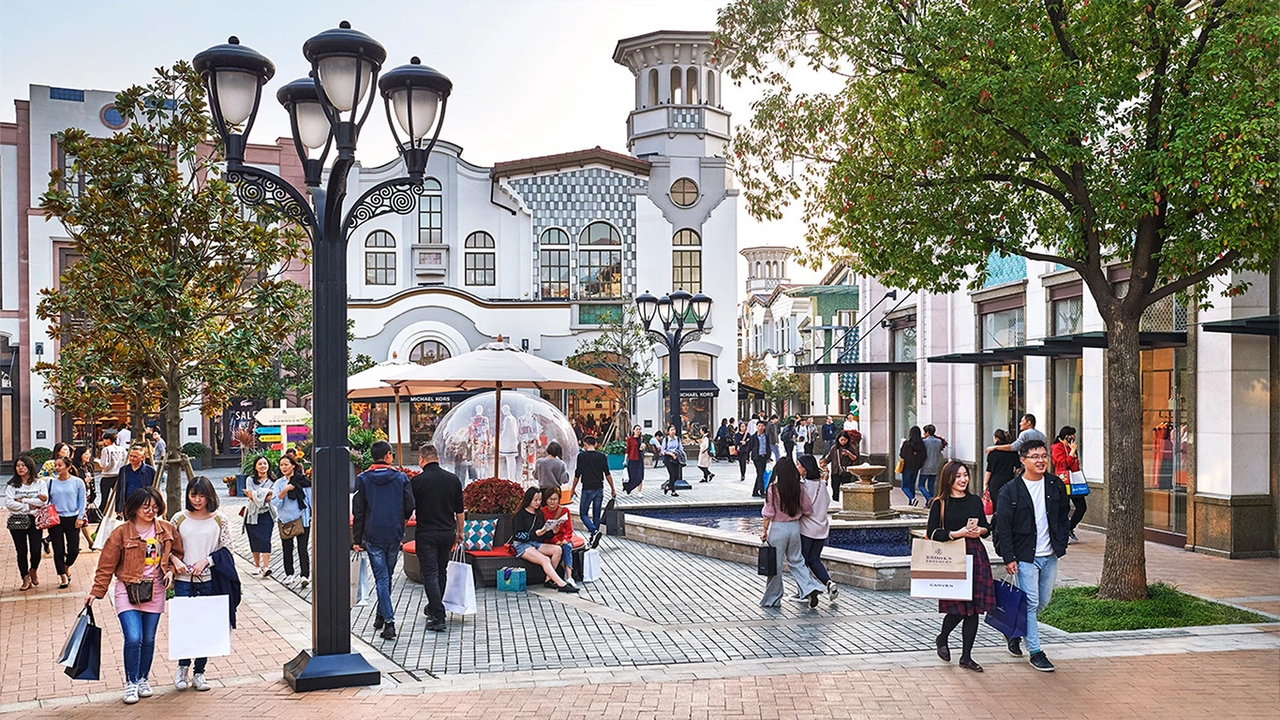
Last October, Thairath Money visited Shanghai Village and Suzhou Village, two shopping destinations within The Bicester Collection in China. We conducted an exclusive interview with Desirée Bollier, Chair and Global Chief Merchant of Value Retail, the company behind the network, about changes in Chinese consumers over the past decade and signs pointing to the future of luxury retail.

Founded in 1995, The Bicester Collection now operates 12 outdoor shopping “Villages” across Europe, China, and the U.S., including Bicester Village in the UK, Fidenza Village in Italy, Shanghai Village and Suzhou Village in China, and Belmont Park Village in New York, which launched in October 2024.
According to company data, in 2024 the Villages welcomed over 46 million visitors and achieved record-breaking total sales that year. Beyond retail, the network also operates entertainment and hospitality ventures, such as UBS Arena in New York and a resort hotel in California.
While exploring Suzhou Village, the palpable atmosphere was one of relaxation and a sense that visitors could spend the entire day there without feeling the need to constantly enter shops to buy products.
When sharing this impression with Bollier during our interview, she immediately responded,
“That is the future of luxury retail.”
This reflects both the philosophy behind the design of retail spaces and the changes in Chinese consumers over the past decade, which Bollier believes are transforming what Chinese shoppers choose and China's role in the global retail market.
For Bollier, the key challenge is attracting people of various ages with places that make them feel good and want to spend time there. Purchasing goods becomes part of an all-day experience.
“The more relaxed and happy you are, spending time enjoying a coffee and yourself, the more you want to reward yourself,”Bollier explained.
Behind this feeling of relaxation is design that starts from visitor behavior—who they come with, whether they bring children or pets, their walking paths, where they get tired, and when they want to rest for coffee or use the restroom.
These details explain why retail businesses must focus on more than just sales areas, since convenience and atmosphere along the way influence decisions to stay longer or end the visit.
Hence, restaurants, cafes, and services play a role in giving customers reasons to spend time on-site and increase chances to discover products and brands throughout the day. However, turning that time into sales depends onmore than that.It also depends on the products, prices, and customer demand.

Creating experiences goes beyond designing the space to choosing what customers can do and discover inside.
Bollier observes growing interest in outdoor activities, sports, fitness, long-term wellness, and the role of food in consumption. Therefore, the Village’s mix must reflect these interests through outdoor brands, cosmetics, cafes, and restaurants alongside fashion products.
Moreover, the same consumers often have multiple needs in one outing—shopping, dining, and spending time with family. Having brands that address only one aspect may not be enough to make a place an all-day destination.
Another change Bollier emphasizes is the brand landscape in China’s market. Over the past decade, many interesting Chinese brands have emerged, so retail spaces now feature Chinese, Japanese, Korean, European, and American brands together.
“Chinese customers want to buy Chinese brands just as much as European or American brands. Ten years ago, they didn’t have this choice.”
Of course, Chinese consumers are not abandoning foreign brands but have more choices, with Chinese brands increasingly included in their consideration set.
For foreign brands, this means competition to be selected among products from many countries in the same space. Therefore, product value, design, and brand experience must be clearly communicated to customers.
As consumer behavior changes and choices expand, Bollier states that The Bicester Collection, as retail space manager, has adjusted its Brand Mix to reflect these demands.
Looking at the luxury market in China recently,a Bain & Company reportindicates that China’s mainland personal luxury goods market contracted 17-19% in 2024, before slowing to a 3-5% decline in 2025, as consumers become more selective, seeking value in quality, uniqueness, and practicality.
While Bain expects slight market growth in 2026, volatility and uncertainty remain high. The report also highlights continued growth of local Chinese luxury brands, especially in beauty, consistent with Bollier’s observations.
Behind the increased choices is the development of Chinese businesses evolving from manufacturing expertise to building their own brands.
“In the past, when you thought of China, you might not have thought of design but manufacturing. Today, many Chinese brands have emerged.”Bollier said.
She cited ERDOS, a cashmere producer that evolved from manufacturing expertise to building its own brand, along with 1436, a high-end Chinese clothing brand in the same group. ERDOS continues to manufacture for other brands as well.
From a business perspective, this shift brings manufacturers closer to consumers, allowing control over brand image, product design, customer relationships through retail, and added value from their own brand name.
Bollier expects Chinese brands to gain confidence in expanding retail businesses, and consumers in countries like Thailand and India will see more of these brands entering their markets.

Though Chinese brands have gained prominence, Chinese consumers remain vital to foreign retail businesses. Bollier emphasized that Chinese tourists continue to be a key customer group at The Bicester Collection sites in Italy, the UK, and France, reflecting that domestic brand acceptance and overseas shopping travel coexist.
Conversely, Shanghai Village and Suzhou Village aim to develop as global visitor destinations similar to Bicester Village in the UK, Fidenza Village in Italy, and Belmont Park Village in the U.S.
Thus, China plays multiple roles simultaneously: consumer market, brand origin, source of outbound shoppers, and destination attracting external customers.
Understanding Chinese consumers requires a comprehensive view of what they buy, where, and the experiences they seek on each journey.
Read business news, marketing strategies, and exclusive interviews with ThairathMoney to help you "Good finance, good life" athttps://www.thairath.co.th/money/business_marketing
Follow the Facebook page: Thairath Money at this link https://www.facebook.com/ThairathMoney