

In 2023, Asset World Corp Public Company Limited (AWC), the real estate business group led by tycoon Charoen Sirivadhanabhakdi, attracted attention by announcing an investment plan exceeding 30 billion baht to develop over 100 rai of land along Chang Klan Road in Chiang Mai Province. The project aims to transform the area into a new destination for art, culture, and tourism in Thailand, under the name “Lannatique.”
This land parcel was not acquired overnight but accumulated gradually through 11 contiguous plots along Chang Klan Road extending to Sri Don Chai Road by the Ping River. The Sirivadhanabhakdi group spent more than 30 years assembling this land before planning its development into a mixed-use empire comprising leading hotels, lifestyle hubs, cultural spaces, and key tourism destinations.

At that time, one notable element of the development plan was the concept of introducing a "tram" system to connect different locations. The goal was to extend tourism beyond just hotel stays or within the project area, enabling visitors to connect with Chiang Mai’s tourist attractions and local way of life.
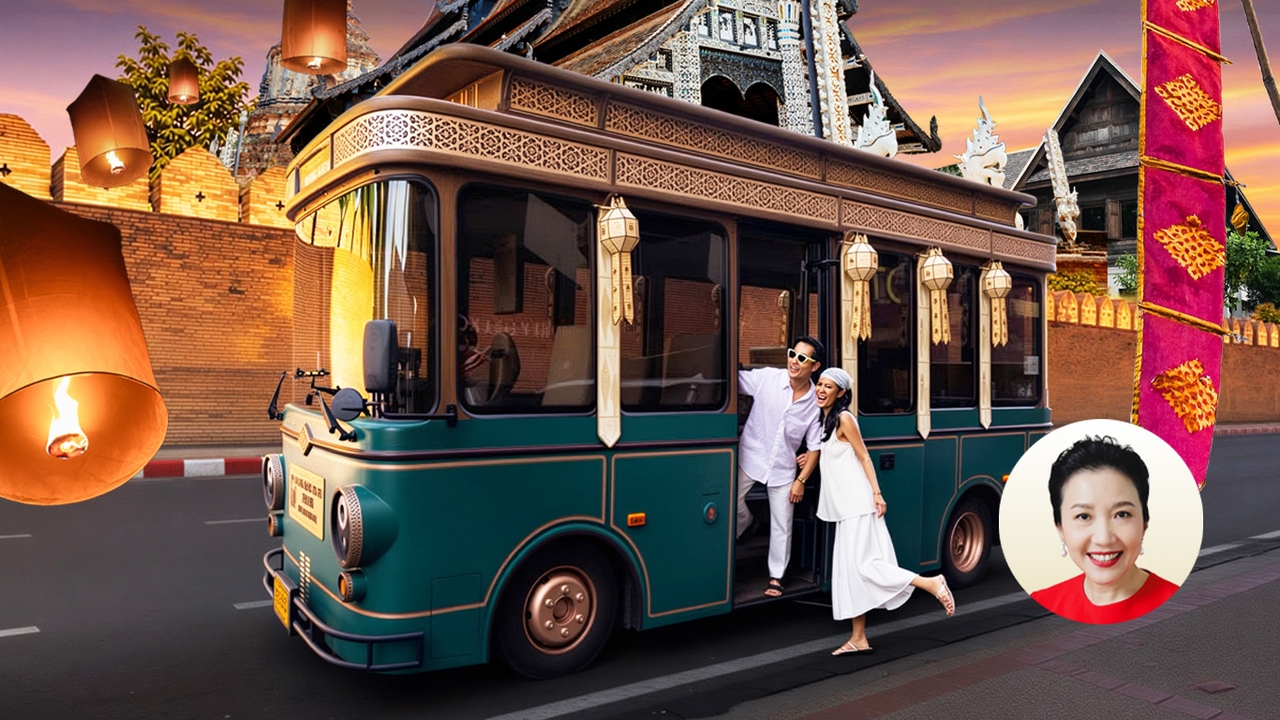
Now, the concept has started to materialize as AWC has launched the "Chiang Mai Tram by Lannatique," a clean-energy electric tram operating on a 15.8-kilometer route connecting 15 important sites, from ancient temples and Warorot Market to Tha Phae Gate, the Chang Moi district, leading hotels, and lifestyle centers. The service is open to the public and tourists at 20 baht per trip or a one-day pass for 99 baht with unlimited rides, along with special programs for communities and promotions for long-stay tourists offering monthly and yearly passes starting at 450 baht (with ID).

However, behind the tram that currently draws interest from tourists and locals alike, AWC’s effort is more than creating a new tourism experience. It represents another piece of their urban development strategy aiming to shift from merely being a real estate developer to becoming a creator of a business and tourism ecosystem that connects the entire city.
This raises important questions: What motivates a major real estate company to enter the transportation system? And how will this investment create value for AWC Chiang Mai and local entrepreneurs?
Currently, AWC’s real estate projects in Chiang Mai include:
- Chiang Mai Marriott Hotel
- InterContinental Chiang Mai the Mae Ping Hotel
- Meliá Chiang Mai
- Lannatique Destination project
- Pantip Lifestyle Hub Chiang Mai shopping center
Wallapa Traisorat, CEO and Managing Director of AWC, explained that the company does not see itself merely as a real estate developer but as a crucial connector that brings local values, culture, and Chiang Mai’s identity to travelers worldwide.
Under this concept, AWC recognizes changing tourist behavior: travelers no longer focus solely on hotels or major attractions but seek meaningful experiences that allow them to engage with local people, culture, food, and lifestyle.
Therefore, the tram is designed not just as a means of transport from one point to another but as part of a journey that immerses passengers in Chiang Mai’s unique cultural values.
"Modern tourists don’t just look for accommodation but seek meaningful experiences. AWC aims to be the connector so that traveling by tram is not simply moving between points but a journey that truly connects them with temples, communities, and the roots of Chiang Mai’s people," she said.
From a business perspective, this is an intriguing concept. Developing a single hotel or attraction may not suffice to make the city a repeat-visit destination. Creating experiences that link multiple sites adds value to the destination.
With hotels as resting points, the tram as the connector, and temples, markets, communities, restaurants, and cultural sites as destinations, travel can become a tool to distribute people and economic activity more widely across the city.

However, it remains to be seen how much this connectivity will translate into business outcomes—such as longer tourist stays, higher per capita spending, and income distribution to operators beyond the AWC network—since the success of a destination depends on tourism revenue reaching local businesses and communities.
Another meaningful dimension of this project is that it revives the city’s historical transportation story as part of its urban future.
Tossapol Puanudom, Governor of Chiang Mai Province, recalled that about two years ago when he first saw the project concept, the tram was just a model on paper. Today, it has become a real project that reconnects with the memories of Chiang Mai residents of the public transport Route 5, which stopped operating nearly 20 years ago.
The return of this route is not simply reintroducing an old transport system but an effort to blend the city’s identity and history with modern travel technology.

For Chiang Mai, with its cultural sites, ancient temples, markets, and unique communities, transportation can be part of the travel experience rather than merely a cost or time burden for tourists reaching destinations.
At the same time, this project aligns with the province’s goals to elevate Chiang Mai as a global tourism city, a world heritage city, and a low-carbon (Carbon City) city.
"When I first saw it two years ago, it was just an image on paper. I even wondered if it would be like Disneyland. But today the dream has come true. This tram is not just beautiful; it revives 'Route 5' which stopped nearly 20 years ago, answering Chiang Mai’s needs and advancing it toward becoming a world heritage and Carbon City," said the governor.
The significance of launching the Chiang Mai Tram by Lannatique also lies in its coincidence with local public transportation development. Chiang Mai Provincial Administrative Organization (PAO) has disclosed that it is progressing with mass transit reform by tendering for the first two electric bus routes totaling 34 buses and is applying for concessions for four additional routes, aiming to procure 100 more electric buses.
They are also introducing technology for operational management, such as real-time bus location and schedule apps, to enhance convenience for the public and reduce reliance on private vehicles.
This context strengthens the connection between AWC’s tram launch and Chiang Mai’s broader transport challenges. If the government successfully develops a comprehensive, interconnected public transport system, the tram could become part of a network that improves mobility in this tourism city.

Another notable aspect is the public-private partnership approach. The Chiang Mai governor views this as an example of collaboration where the state facilitates and removes obstacles, allowing capable private entities to invest in urban development.
The core of this cooperation is not just about private companies running transport businesses but combining expertise from various sectors. AWC brings the concept and tourism ecosystem connections; ARUN+ from PTT Group supports electric buses; and Toyota Auto Body Thailand contributes technology such as GPS tracking and systems narrating historical stories at sites.

Transitioning from fuel-powered buses to electric ones will reduce travel pollution. The trams used are 100% electric, manufactured in Thailand, comply with Land Transport Department safety standards, and are designed to align with Chiang Mai’s identity.
Beyond investment structure, the governor emphasizes managing the tram as a social enterprise, where net revenues after expenses support social and community projects in Chiang Mai.

Chiang Mai Tram by Lannatique charges a fare of 20 baht per trip across a 15.8-kilometer route connecting 15 key destinations, including the Zheng He Heritage Home, Lannatique, Sri Don Chai Temple, Chedi Luang Temple, Phra Singh Temple, Lok Molee Temple, Chang Moi district, Warorot Market, Tha Phae Road and Gate, as well as leading hotels.
Additionally, AWC has opened The Gallery space to showcase and sell products from local artisans, entrepreneurs, and community enterprises, aiming to reinvest operational income after expenses into social and community development.
This raises another question to monitor: to what extent will the tram distribute passengers to local businesses? Will shops or communities outside the developer’s network benefit from increased tourism?
Ultimately, building a sustainable tourism city does not just mean having more attractions but ensuring that local people participate in and benefit from growth.

From AWC’s 30 billion baht investment on over 100 rai in 2023 to the launch of Chiang Mai Tram by Lannatique in 2026, it is clear that urban development is being viewed in a broader context than just building hotels or new landmarks.
For AWC, the tram is part of creating a tourism ecosystem that connects assets, businesses, culture, and people, while the government sees an opportunity to restore a transport system with distinct identity to support Chiang Mai’s development goals.
However, the true test lies ahead: in passenger numbers, integration with other transport systems, income distribution to communities, environmental outcomes, and making Chiang Mai a world-class tourism city that grows sustainably together.

Read business news, marketing strategies, and exclusive interviews with ThairathMoney to help you "Good finance, good life" athttps://www.thairath.co.th/money/business_marketing
Follow the Facebook page: Thairath Money at the link belowhttps:// www.facebook.com/ThairathMoney