

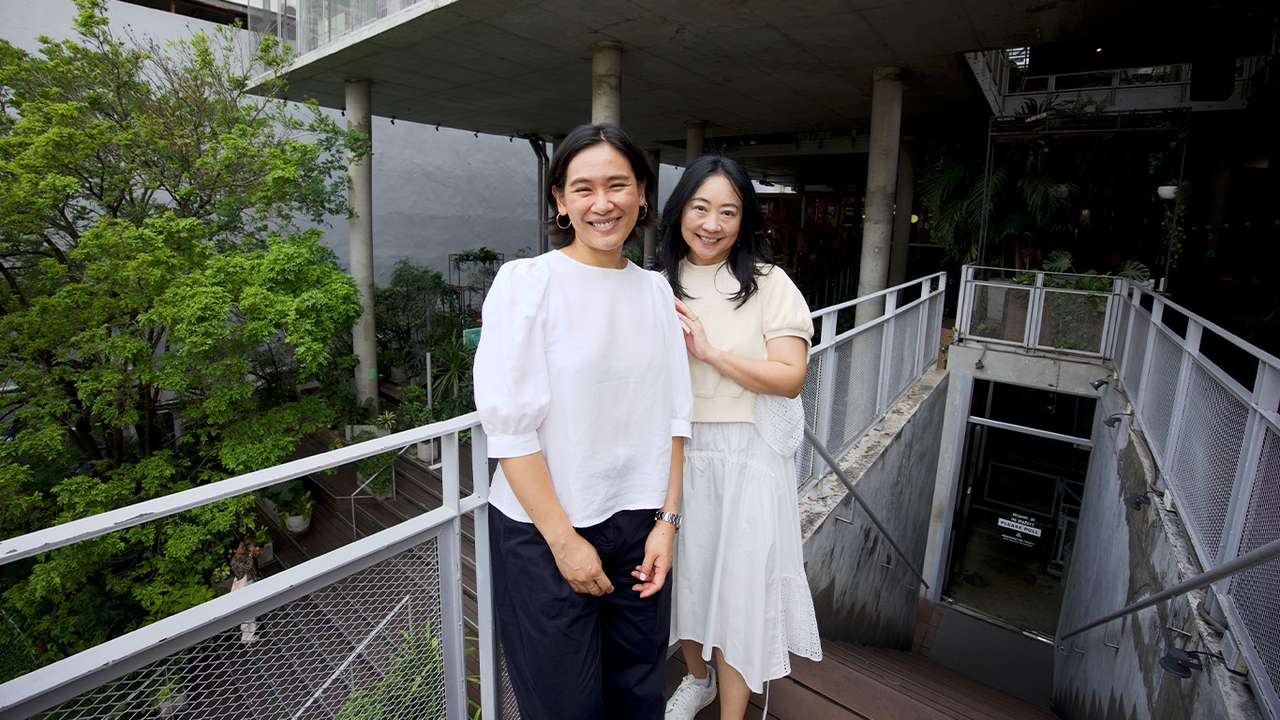
This is the answer from Taew Vicharee Vijitvattakarn, founder of theCOMMONS, a pioneering community space that has inspired a new generation of urban developers in Thailand. When asked how theCOMMONS business elevates the city and connects with people's lives as a ‘micro real estate developer,’ to open a conversation with BrandStory Exclusive Series: Space, a special series that tells the stories of project owners and developers who connect people, reflect identity, and meet the needs of modern consumers. While large-scale projects worth hundreds of billions transform the city into a modern metropolis, community spaces and small developers are bringing “space” to life.

“Back then, Bangkok had no true ‘public spaces.’ There were few parks, and large shopping malls were just places to shop, not spaces where people could genuinely meet and talk. At first, we didn’t even know what to call this space. The term Community Space was not widely used then; people were familiar with Community Mall, but we insisted we weren’t building a mall. We intended to create a space conducive to meeting, where groups with similar interests could gather, a place where people could live their lives fully in one location.” Vicharee began by recounting the development of the space 13 years ago, explaining how her dream project became the city’s backyard, a hangout spot for Bangkok residents, and a hub for diverse community clubs.
After surveying a 5-rai site on Thonglor 17 and exploring the feasibility of her dream business model, the heart of Bangkok began to take shape. Pam Thidarat Wiwatsurakit, Director of New Business & Concepts, one of the founding team members who helped complete the core concept of theCOMMONS, continued explaining the idea of creating a space that holistically improves life, or ‘Wholesome Living.’ This concept inspired the design of activities and space allocation—from food programs, relaxation, exercise, workshops, to serving as a platform for small entrepreneurs to showcase and sell their products.
“Wholesome Living means eating well, living well, exercising, taking care of oneself, spending time with loved ones, and learning new things. We want this to be a place where people can live this lifestyle easily without dealing with traffic or long commutes. We design activities to connect people, whether it’s clubs for running enthusiasts, Tai Chi, yoga, book lovers, events that give artists a chance to showcase their talents, environmental activities through the Common Compassion project, as well as giving back to society and maintaining relationships with surrounding communities.”
Both explained the ‘business model’ and revenue generation of community spaces, which resembles that of shopping malls but differs in details. Beyond just charging rent, if a developer isn’t proactive in deeply understanding and connecting with people, or in creating enough attraction, even with ample retail space, it will be difficult to draw visitors and succeed.

Vicharee further explained that she intended the space to be a platform for small entrepreneurs passionate about producing quality products, including those who do not want to sell in large malls. Therefore, instead of charging high fixed rents, she adopted a revenue-sharing model (GP) combined with a minimum rent from tenants to grow together.
theCOMMONS allocates 40% of its space as commercial area and 60% as public and communal space, unlike the typical mall formula that emphasizes retail space. Instead of focusing solely on rent, the theCOMMONS team continuously creates diverse activities to attract people to spend time there, generating long-term revenue. However, this model poses significant financial challenges, she said.
Operating a community space like theCOMMONS is a high-touch business with rising costs—land rent, management, labor—all pressures that push prices up. Yet their main intention is to support tenants, making it impossible to raise rents constantly. Balancing this is challenging because sometimes costs rise but revenues do not.

“ If you think running a community space is quick and that it recoups investment in just a few years, it probably isn’t.” Vicharee stated, from an investment perspective, community spaces do not recoup capital quickly or generate high profits in the short term and may require over 10 years. theCOMMONS focuses on long-term profitability because their mission goes beyond making money—they aim to create value and positive social impact. Hence, finding investors who understand this is crucial.
Thidarat added that customer needs are ever-changing, so promoting interaction in all dimensions is key. Nowadays, people better understand theCOMMONS through activities and visibility; they have a clearer image of what theCOMMONS aims to build.
She cited the market zone at theCOMMONS, which hosts small food and beverage vendors without table service, encouraging customers to walk around and perhaps talk to the owners. The building’s design allows visitors to see each other from all points, fostering connection even without direct conversation. This includes the iconic communal table intended to encourage strangers to sit together.
“Ten years ago, people may have just wanted good restaurants, cozy coffee shops, or nice hangout spots after work. Today, especially post-COVID, behavior has changed rapidly and diversified. Many don’t come just to eat or relax anymore but use our space as their ‘everything’ in life. They might start the day with morning coffee, work all day, then meet friends for dinner or drinks. theCOMMONS has become like a workplace, social space, and living room for some groups.”

Vicharee agreed and explained that theCOMMONS was not designed to target a specific age group but to be a space for everyone in the neighborhood—from parents bringing children to play, teenagers hanging out, to workers seeking quiet corners, and even tourists wanting to experience something new in Bangkok. These turned out to be larger customer groups than originally expected.
“When we opened, we encountered much more diversity than anticipated, showing that if a space is well designed, it can meet many needs without limiting itself to traditional target groups. The most important thing for community builders is ‘patience.’ Building a community takes time, requires learning through practice, being present in the space, listening to customer feedback, and being ready to adapt continuously. It’s not just working from an office and calling it done; you must be on-site to truly understand users.”
Moreover, customers, investors, and business partners—especially early investors who believed in the concept before it was proven—now better understand the community space business. They seek not only financial returns but want to see real new developments in communities.
As small-scale developers, they explained key factors for developing spaces for people, illustrating why community spaces have become a trend in real estate development and investment recently. Asked about the current urban growth with many large projects—both malls and residences—the role of Micro-Developers in ongoing urban change was discussed.
Vicharee said the real problem for small players isn’t lack of ideas but the challenge of lacking understanding investors and suitable spaces to realize those ideas. Small developers need investors who value creating good spaces for people, cities, and society, even if some projects don’t generate large profits but create other intangible values.
Thidarat offered the perspective that building spaces isn’t about size but having a clear ‘purpose.’ Compared to Mega-Developers, Micro Developers’ advantage is ‘closeness to community,’ enabling them to access real needs and design activities that quickly and appropriately address their community’s demands.
“We never felt that being a small developer meant we couldn’t compete with big players because the most important thing is that we ‘know why we do this.’ We can experiment quickly, adapt easily, notice details that might be overlooked. Customers feel this—they don’t come just to eat or drink but because they feel part of a valued space. Sometimes they feel they identify with the space or are contributing to something meaningful in society.”

Vicharee offered a broader view that the government should play a role in supporting good urban spaces, especially ‘green spaces,’ which city dwellers now greatly desire. She noted that these don’t have to be large parks but ‘pocket parks’ of half a rai in every alley, which collectively could transform urban quality of life.
“Although we have abundant vacant land, owners often build other things to avoid taxes, such as agricultural spaces to reduce land tax. But if the government provided good support, such as tax incentives for granting community space use for a period, it would open many opportunities for more creative and sustainable space utilization.”
Finally, she invited those interested in contributing to urban space and city development to come together. “If anyone has capital or land and wants to do something good but lacks ideas or experience, we invite you to talk with us. theCOMMONS or Kinnest Group started as a collaboration of small people with a passion for creating great spaces, and it happened. We want to see Micro Developers who understand communities, understand people, and genuinely want to contribute to the city.”
." Thailand now has a new generation of Micro Developers who dare to think and act, with many good ideas trying to create spaces that serve multiple groups within one area. One location may host various activities supporting diverse communities. Many also restore old buildings, reviving them to offer both emotional and historical value.”
Both expressed gratitude that many developers see theCOMMONS as an inspiration for other communities. They view the growth of many communities today as beneficial and positive for the city.
“More people want to do good things and don’t see each other as competitors. We want to see good things happen in many places but urge developers not to just build spaces without careful thought. We want them to care deeply and think about the ‘essence’ of the space—what it aims to fulfill for the community or customers to ensure what is created truly meets real needs.”

Click to read the "BrandStory" column for more.
Follow the Facebook page: Thairath Money at this link -