

Amid post-pandemic global challenges, where many question the necessity of face-to-face business meetings, Thailand's international trade exhibition industry (MICE) had reached its peak in 2019, aligned with national strategies targeting 3–5% annual growth. However, the COVID-19 crisis in 2020–2021 became a turning point that disrupted all sectors and raised a challenging question. "Can digital innovation replace real-world business meetings?"

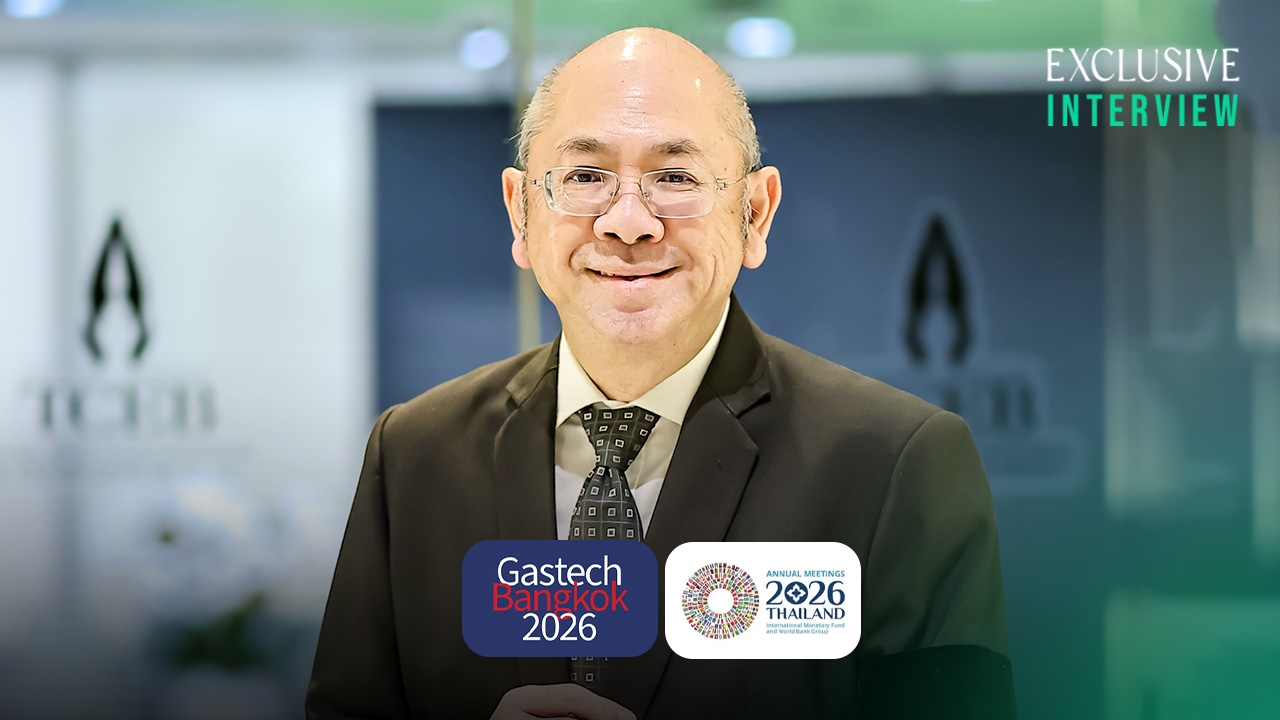
Duangdet Yuaykhwamdee, Director of the International Trade Exhibition Industry at the Thailand Convention and Exhibition Bureau (TCEB), answered this by assessing that humans still crave face-to-face interaction because building trust and conducting high-level business negotiations remain most effective in physical spaces.
While global forecasts predicted the MICE industry would take at least five years to recover, Thailand created a phenomenon by returning to pre-COVID levels within just three years. In 2025, participant numbers and revenue surged to 135% compared to 2019, marking the fastest recovery in the ASEAN region.
Currently, trade exhibitions are a key driver, accounting for 60% of the total MICE industry. In 2025, more than 23.6 million Thai and international attendees participated, growing 5.64% from the previous year, generating an economic value of 98.54 billion baht. MICE travelers have high spending potential, averaging 66,000 baht per person per trip.
A survey by the Global Association of the Exhibition Industry (UFI) recognized Thailand as one of the countries with the most effective and comprehensive government support worldwide and among the top five with the clearest exhibition strategic plans. This positioned Thailand as a "High-Value Destination" for regional trade exhibitions.

Thailand is not just a trade platform but a "Marketing Tool" that fuels five strategic industries:

In 2026, TCEB aims to attract at least 15 new events to Thailand, including two major global events expected to bring an additional 70,000 visitors and generate over 6 billion baht in economic impact. The highlights include:
Duangdet added that most pre-COVID events lasted five days, but post-COVID they focus on four-day events, especially during peak months July to October. During low seasons, TCEB addresses challenges by conducting roadshows, supporting event management, and planning meetings.
A key success highlight is Gastech, an energy event. Thailand hosts 8–9 energy events annually. This conference in Bangkok, lasting about four days, is expected to draw over 50,000 participants from 150 countries, including more than 1,000 speakers and energy experts, plus around 1,000 exhibitors. These figures exclude accompanying persons and families. The direct benefit to Thailand is showcasing the capabilities of major national energy agencies together.
In the MICE industry, the countries sending the most exhibitors to Thailand are China, Singapore, and the United Kingdom, while visitors come mainly from Singapore and Malaysia.
Regarding next year's hosting of the important global IMF-World Bank Annual Meetings, TCEB views this as a 'Game Changer' and a 'Golden Opportunity' for Thailand's MICE industry. Duangdet explained that the significance and national collaboration involved in hosting this global convention after 20 years is a major success stemming from strong cooperation.
This event is a Game Changer and a model for attracting other global events. TCEB will use this cooperation model (host agencies + venue + TCEB) as a template to bring more international meetings, incentives, and exhibitions to Thailand in the future.
For Thai SMEs, hosting such global events domestically reduces barriers by avoiding high costs of traveling abroad to exhibit. Instead, SMEs can meet and negotiate with foreign buyers and businesspeople coming to Thailand, facilitating easier global market access.
Preliminary economic estimates predict about 10,000 attendees, generating average MICE traveler spending of around 66,000 baht per person per trip.
Amid fierce competition from Singapore, Hong Kong, and Vietnam trying to "clone" or attract events away from Thailand, TCEB applies proactive strategies:
Regarding barriers to overcome, Duangdet emphasized integrating cooperation across ministries. If all government agencies regard exhibition attraction as a national mission and collaborate with TCEB as the expert, Thailand will gain sustainable competitive advantage and offer Thai SMEs golden opportunities to access global buyers without overseas travel.
Thus, on the path of the fastest and strongest recovery in ASEAN, Thailand's MICE industry has proven to the world that Thailand's success is not only due to modern venues or comprehensive infrastructure but the "heart" of success lies in a proactive adaptation strategy that transforms crises into golden opportunities.
This elevates Thailand from merely a "business negotiation venue" to a "full-fledged macroeconomic driving platform" enabling trade shows and international meetings to be key drivers that bridge Thai businesses to global markets easily.
Ultimately, today's Thai MICE industry is not just about nearly 100 billion baht revenue or tens of millions of participants, but a declaration of Thailand's status as a "High-Value Destination" with the most influence in the region, ready to inspire confidence among global investors and serve as a vital engine leading Thailand toward sustainable economic prosperity.
Follow Executive Interviews news with Thairath Money at
Follow the Facebook page: Thairath Money at this linkhttps://www.facebook.com/ThairathMoney