

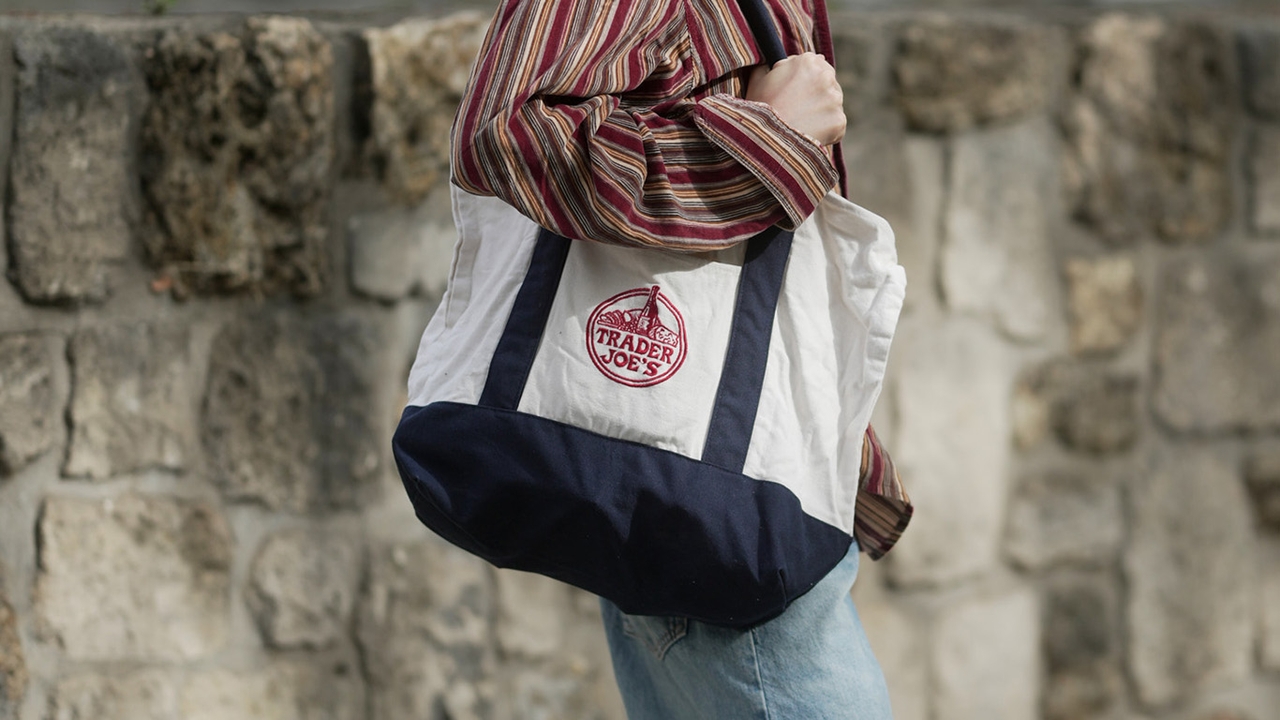
A $3 canvas tote bag, roughly 100 baht, designed simply without flashy logos, originally for carrying groceries, has become one of the most talked-about items on social media. It has risen to fashion icon status among youth who match it with daily outfits, queued to buy it like limited-edition sneakers, and resold for hundreds to thousands of baht on eBay.
Trader Joe’s The U.S. community supermarket chain sells everyday groceries and began offering reusable tote bags in 1977. However, these bags only became collectible items in the past few years. Why has this tote bag become a viral must-have worldwide despite its low price and unpretentious design?
The turning point came in 2024 when Trader Joe’s launched the Mini/Micro Canvas Tote, a very small bag not suitable for real grocery shopping but causing a massive craze. Pastel spring editions sold out within hours, Halloween editions prompted customers to line up early, and some stores limited purchases. From a cheap utility item, it became a scarce "must-have".
Trader Joe’s acknowledged on its website that "the smaller the bag, the bigger the buzz." Especially the Mini Canvas Tote perfectly exemplifies Scarcity Marketing. Produced in limited quantities, sold only seasonally, not available online, and with no guarantee of return, these familiar supermarket canvas bags have been made rare. Their value is thus redefined—not by utility but by ownership.
After the mini tote's debut in March 2024, TikTok videos showing people scrambling at shelves and long queues created intense FOMO (fear of missing out). In the resale market, scarcity drove prices from $2.99 (about 100 baht) to listings reaching thousands of baht on eBay and Depop.
Some Mini Canvas Totes have resold for $100–$500, with some eBay listings asking up to $10,000. While not all sell at these prices, the asking prices reflect the bags' elevation to Cultural Assets rather than mere consumer goods.
Consumer behavior analysts agree that the Trader Joe’s Tote Bag functions as a Social Signal—a low-cost status symbol. Ownership does not require wealth; holders signal, "I know the trend," "I'm an insider," and "I'm part of this culture." The bag's simple style also aligns with popular fashion trends like the "Clean Girl" and "Minimalist" aesthetics.
Geographic scarcity further enhances the bag’s symbolic value, especially in Japan, South Korea, and the UK, where no Trader Joe’s stores exist. In Japan, it’s a cool, niche American-style item; in South Korea and London, it symbolizes travel, implying prior visits to the U.S. or connections there, making it a "cool insider" item.
Cultural experts compare the Mini Canvas Tote to Labubu art toys, both global trends but of different styles driven by the same mechanism. Labubu represents maximalist collectibles reflecting value through emotion, art, and identity, while the Trader Joe’s tote embodies minimalist irony, symbolizing ordinariness and low cost but cultural power. Both operate as consumer symbols conveying meaning.
The tote’s popularity benefits from Trader Joe’s strong fanbase, viewing the store as more than a supermarket but a lifestyle. It is seen not simply as a grocery store but as a brand evoking a local market, community, and a simple, friendly, and genuine lifestyle.
The brand rarely advertises, growing instead via word of mouth. New products generate buzz on TikTok, Reddit, and X, matching young consumers’ habits of sourcing information from social media, especially seasonal launches that often become trends.
Trader Joe’s strategy transformed an ordinary canvas tote into more than a grocery bag. The Trader Joe’s Tote Bag sells experience, shared memories, and being part of "what everyone is talking about." In a world where product value is no longer measured by cost, this $3 bag offers a prime example of how the most ordinary item can become the most coveted.
Follow the Facebook page: Thairath Money at this link -