

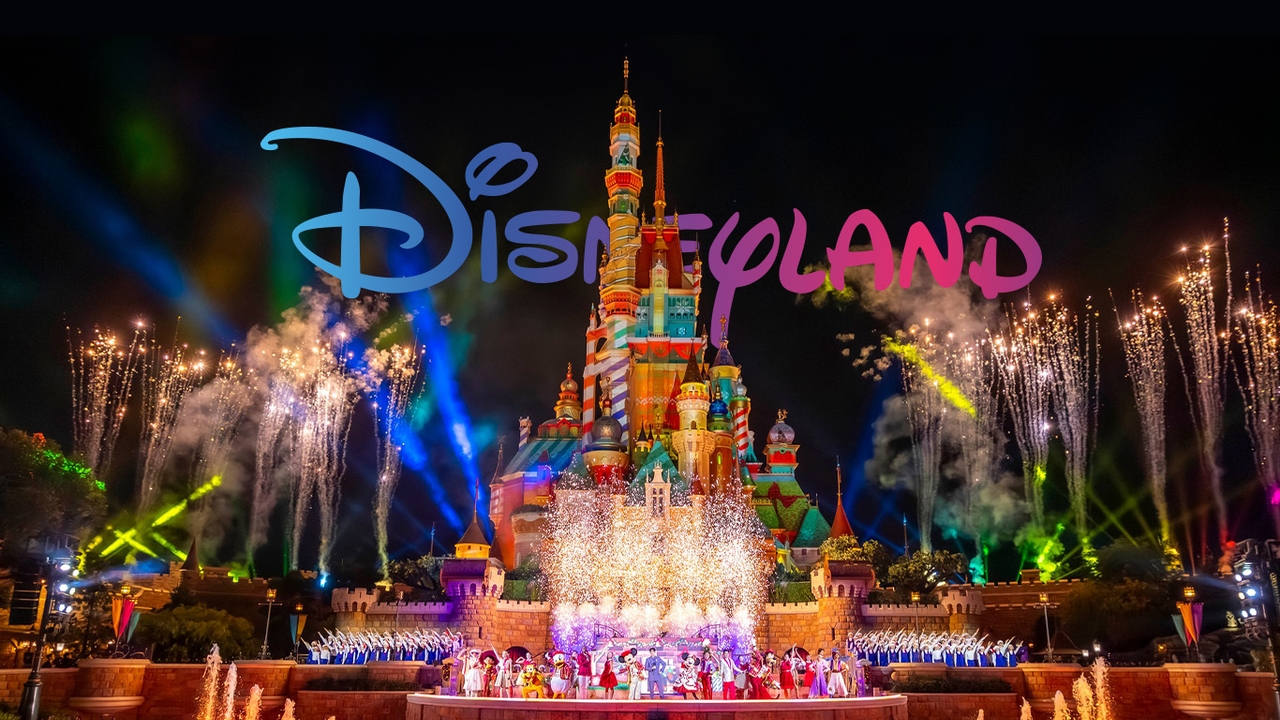
"The concept of attracting Disneyland" to Thailand was officially proposed on 8 Jan 2026 by Phiphat Ratchakitprakarn, Deputy Prime Minister and Minister of Transport, as a leader of the Bhumjaithai Party, aiming to accelerate infrastructure projects in the EEC area, such as the high-speed rail connecting three airports and the development of U-Tapao Airport and the Eastern Aviation City, enabling real progress. It is also intended as a new selling point for Thailand, realizing the dream of having a “Man-Made Destination” to compete globally.
The key point from Phiphat's statement is clear: creating a world-class sports complex to host international competitions was previously discussed with the Sports Authority of Thailand, including an indoor stadium seating 30,000, a football stadium seating 80,000, and an Olympic-standard swimming pool. While necessary, these are not daily attractions. Thus, the idea of building Disneyland was raised.
Phiphat said the high-speed rail project connecting the three airports (Don Mueang, Suvarnabhumi, U-Tapao) and the U-Tapao and Eastern Aviation City development are not economically viable alone. Furthermore, the EEC has ample vacant land, and the Office of the Eastern Special Development Zone Policy Committee (OSDC) already plans to develop this area, so it only needs new attractions added.
After presenting this idea last year, some investors have shown interest, primarily Thai investors whose names remain confidential. He confirmed that discussions with the OSDC about attracting Disneyland to Thailand have been completed and that the government is moving toward concrete planning.
Phiphat added that Thailand has advantages in land area, project scale, tourism and service costs, especially its central location in the region and the ready transportation infrastructure linking these areas. Tourists can land at Suvarnabhumi or U-Tapao airports and take the high-speed train to visit within hours, then continue to other domestic destinations.
In this context, Disneyland Thailand is not just an amusement park but a strategic move to revive infrastructure projects in the EEC that have stalled for over five years. The idea aims to support two key projects: the high-speed rail connecting the three airports (Don Mueang-Suvarnabhumi-U-Tapao) and the development of U-Tapao Airport and the Eastern Aviation City. This will help push forward construction and make private investors more willing to invest further.
Two approaches have been disclosed, based on statements from 8 January.
According to data cited by Phiphat, a small Disneyland covers about 960 rai, a medium one 1,800-2,000 rai, and a large one 3,000 rai. Combining this with the original idea of building a versatile sports complex for international conferences, total area could reach about 5,000 rai, which is larger thanShanghai Disney Resort,China, which occupies about 2,435 rai with an investment of 5.5 billion US dollars or approximately 175,450 million baht.
Based on investment proportions, Thailand might need to invest as much as 7-8 billion US dollars, equivalent to about 256,000-292,000 million baht, for a 3,000-rai world-class theme park, excluding rising current construction costs.
Although no specific province has been named, given all conditions, this Disneyland would be located within the Eastern Economic Corridor (EEC), covering Chonburi, Rayong, Chachoengsao, and Chanthaburi provinces, with many speculating that Chonburi is the most likely site.
Currently, Disneyland and affiliated theme parks under The Walt Disney Company number 12, spread across six main resorts worldwide:
United States
- Disneyland Park (California)
- Disney California Adventure (California)
- Magic Kingdom (Florida)
- EPCOT (Florida)
- Disney’s Hollywood Studios (Florida)
- Disney’s Animal Kingdom (Florida)
Japan
- Tokyo Disneyland
- Tokyo DisneySea
France
- Disneyland Park (Paris)
- Walt Disney Studios Park (Paris)
China and Hong Kong
- Shanghai Disney Resort (Shanghai)
- Hong Kong Disneyland (Hong Kong)
Currently, Disney is building Disneyland Abu Dhabi in the United Arab Emirates, the first Disney resort in the Middle East and the seventh worldwide, expected to be completed around early 2030. Notably, ASEAN lacks any Disney theme parks, so if the Thai government can officially bring Disneyland or affiliated parks to Thailand, it would be the first world-class Disney-themed park in the ASEAN region.

Since Disneyland first opened in the U.S. 70 years ago, the brand has succeeded both as a business and cultural phenomenon. It exemplifies the modern theme park industry and has become a powerful economic engine for the United States.
Disney Parks & Resortsgenerate an economic value of about 67 billion dollars or around 2.3 trillion baht annually and support over 403,000 jobs directly and indirectly, spanning California, Florida, and all 50 U.S. states.
These figures show that Disneyland's revenue is not just from ticket sales but that it drives an entire economic ecosystem including hotels, accommodations, restaurants, transportation, suppliers, and local services, generating substantial tax revenue for both local and national governments.
Applying the U.S. model to Thailand, the expected positive impacts include investments in the hundred-billion-baht range, significant long-term employment, attracting high-spending quality tourists willing to pay for experiences, surrounding area development, leveraging existing government infrastructure, and enhancing the country's global image.
At this point, the big questions are whether Thailand will be chosen, whether it is ready to host Disneyland, and how prepared it is for this level of theme park business.
Disney's Asian expansion does not follow a single formula; each park reflects strategies suited to its time, laws, and economic conditions of the host country, balancing risk control and adapting to distinct local cultures.
1) Tokyo Disneyland: The Licensing Model Tokyo Disneyland(established 1983) was the first Disney park outside the U.S. and the only one not owned by Disney but licensed instead.
2) Hong Kong Disneyland: Public-Private Partnership Model Hong Kong Disneyland(opened 2005) adopted a joint venture model with the local government to stimulate the economy.
3) Shanghai Disney Resort: Modified Joint Venture Model Shanghai Disney Resort(opened 2016) has the most complex structure to comply with Chinese laws, split into two main parts:
From a global brand perspective, beautiful location and tourist numbers alone are not decisive. Even though Thailand ranks as a top tourism hub with land, resources, and a strong hospitality reputation, lessons from Tokyo, Hong Kong, and Shanghai show Disney chooses countries based on “structural readiness.”
Disney uses multi-dimensional strategic assessments to ensure multi-billion-dollar investments yield returns over 50 years, balancing the Disneyland brand with the local culture.
1. A strong domestic market, not relying solely on tourists
Disneyland cannot survive mainly on foreign tourists; it depends on repeat visitors from domestic and nearby regional markets. Thailand’s challenge is a fragile middle class with limited spending on premium entertainment, so repeat visits for “experience” rather than mere tourism are not as robust as in Japan or China. To be a Disneyland base, the domestic market must demonstrate sustainable long-term spending, not just during peak seasons.
2. Policy stability
Disney invests over 50 years, so political risk is as crucial as returns. Thailand must ensure policy continuity, legal clarity, land tenure, incentives, and governance, especially the ability to uphold agreements across governments. To global investors, these uncertainties are hidden costs greatly influencing decisions.
3. Systematic infrastructure
Thailand must prove its mass transit can handle tens of thousands daily—airports, high-speed trains, roads, hotels, and surrounding towns must connect seamlessly. Managing surrounding areas to avoid scattered growth is vital because Disney values the city around the park as much as the park itself. Clarity on EEC infrastructure is a critical urgent issue.
4. Labor and service systems
Disneyland is a high-end service business measured by second-level details and smiles. Thailand has strengths in hospitality but must elevate labor standards to unify consistent service culture nationwide, support a large long-term workforce, and provide training and development systems.
5. Clear investment model
In Asia, Disney uses various models—from Japan’s licensing to China’s joint ventures. Thailand must clarify who leads, the government’s role, and whether Thai private investors are ready for multi-billion-dollar risks. Without this clarity, interest cannot progress to contracts.

For Thailand, the Disneyland deal cannot be seen merely as selling an idea or inviting wealthy investors. It exposes a large gap across sectors that remains unspoken and requires urgent national readiness assessment. If Thailand can upgrade its entire system to be chosen, Disneyland will move beyond symbolic dreams to become a significant reality, not just government imagination.
Follow Thairath Money on Facebook at the link below -