

Thailand's Japanese food market remains one of the most popular categories, but in 2025, this sector is facing a "structural turning point." According to the latest survey by the Japan External Trade Organization (JETRO), Thailand has a total of 5,781 Japanese restaurants, down 2.2% from 5,916 the previous year — marking the first decline since the survey began in 2007.

Amid what appears to be a downturn, “Shichi Japanese Restaurant” sees a golden opportunity to compete on quality rather than quantity. Its success is evidenced by total revenue exceeding 300 million baht in 2025 and an average check size of 3,000 baht, confirming that premium customers have not reduced spending but rather "choose" brands that offer clear value and distinct experiences.
Papontee Chanchanayotin, Executive Director of Pun Khao Pun Rak Co., Ltd. (Shichi Sathorn) said the foundation of Shichi’s strength is not built merely on statistics but stems from a deep passion for the art of flavor. They have sampled Japanese cuisine from nearly every establishment, ranging from local eateries to Michelin-starred restaurants, investing millions of baht to discover the perfect taste essence that has been refined into Shichi’s current identity.
This personal passion inspired the strict standards in selecting ingredients and creating proprietary sauces that have become the brand’s signature.
Over the past nine years, Shichi has steadily grown from a family restaurant model in suburban areas like Ratchaphruek and Bangna to a strategic milestone with the opening of its fifth branch, “Shichi Sathorn” at Supalai Icon Sathorn. This was not just an expansion but a brand repositioning into the heart of the economic district to serve businesspeople, executives, and expatriates.

Under the concept of Modern Japanese Luxury, the space is designed to be more than just a dining venue — it is a place to build business relationships, featuring multiple private rooms equipped for meetings and presentations. This caters to urban customers seeking a premium yet formal atmosphere that retains warmth, including table-service dining.
The key to Shichi’s endurance under the philosophy “Always Better” is strict supply chain control and uncompromising standards. Despite ingredient costs fluctuating with the yen, Shichi maintains 80% of its ingredients imported from Japan, with fresh deliveries three times weekly.
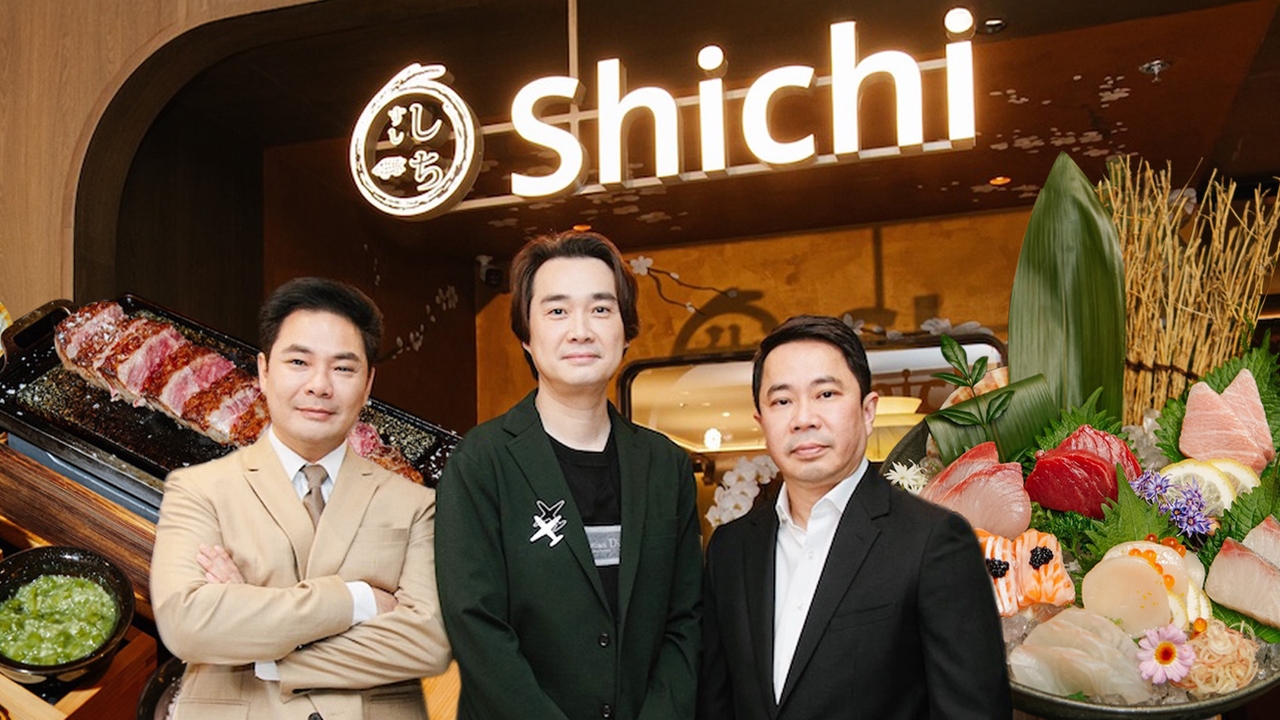
This attention to detail is reflected in their Experience-Driven Dining concept, elevated at the Sathorn branch through table service where chefs prepare dishes and share ingredient stories at the table. For example, the highlight menu, Shichi Steak Flambé, uses Australian Wagyu Striploin MB 8–9, flambéed tableside to create a "must-capture moment" for customers to photograph and share on social media, turning an ordinary meal into a memorable experience.
The signature dish and highlight at this branch is the Shichi Steak Flambé, where the chef pours sake and ignites the steak fresh at the table.
Beyond special table-service dishes, Shichi Sathorn offers the brand’s full signature menu, from the bestselling Shichi Roll—salmon roll with mentaiko sauce, selling over 2,000 plates monthly—to premium sashimi and sushi.
Papontee added that, from a business management perspective, Shichi is preparing to list on the stock exchange within three years. Their goal is not to be the fastest-growing restaurant but to maintain the highest customer repeat rate, currently over 50% from a membership base exceeding 20,000. This confidence supports ongoing branch expansion into areas such as Ramindra Expressway and Krungthep Kreetha, as well as plans to enter the premium shabu-shabu market in the future, aiming for 20% sales growth in 2026 compared to the previous year.
Thanat Thongsomkaew, Executive Director of Pun Khao Pun Rak Co., Ltd. (Shichi Sathorn) said that in 2025, Shichi Group achieved total revenue of approximately 300 million baht, reflecting a recovery in performance and the robustness of its business model amid a restaurant industry rebound driven by consumers dining out more. Especially among premium customers who prioritize quality, experience, and consistency over price.
“Our strategy focuses primarily on quality. We import nearly 80% of our fish directly from Japan, with the remaining 20% sourced domestically. In this business, we see no direct competitors; thus, the upper market segment typically competes not on price but on value and the experience offered.”
Therefore, revenue growth comes from both the loyal customer base that trusts the brand and branch expansions in strategic locations, increasing access to new customers. The average check size remains premium at about 3,000 baht, especially among business clients and guest receptions. This results in a high repeat customer rate and the ability to maintain customers’ willingness to pay consistently, reflecting sustainable long-term growth potential.