

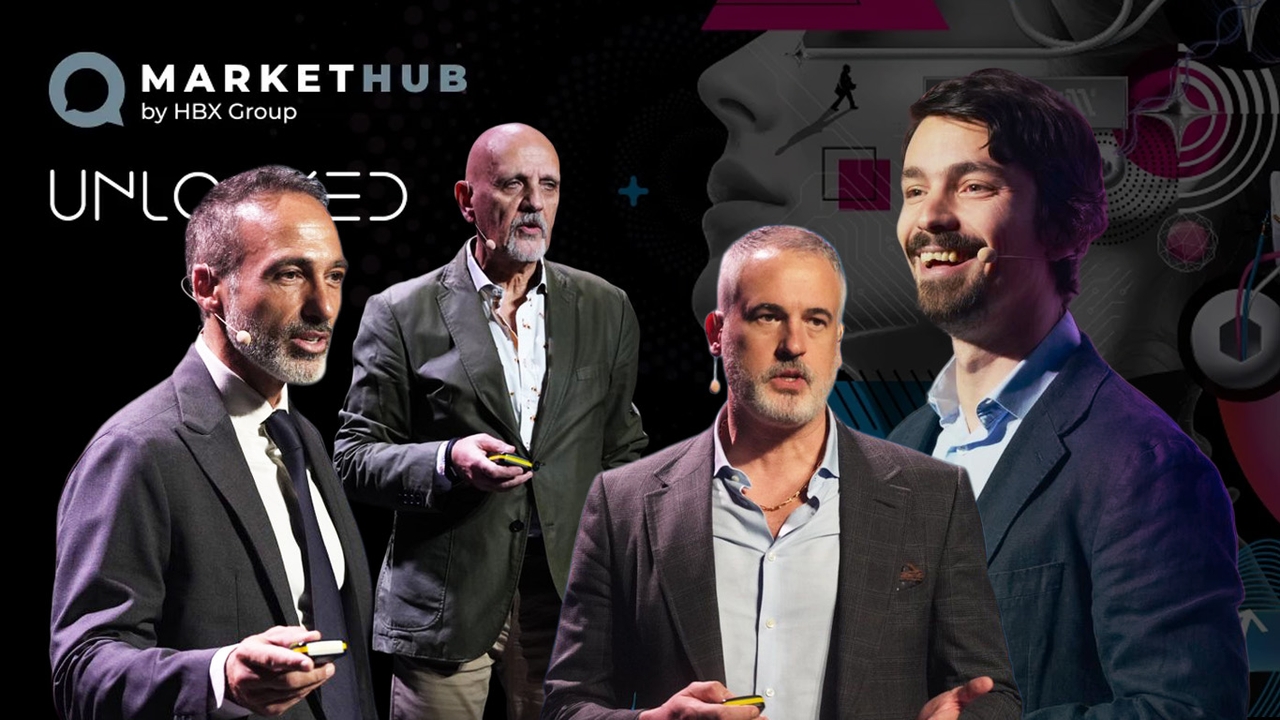
MarketHub Asia 2026 projected a clear future that by 2035, the world will enter a strong growth phase, driven primarily by intelligent technology.
It is forecasted that by 2035 (CE 2578), the number of global overnight stays will significantly increase compared to 2025, with international tourism growing rapidly by 64%.
International overnight stays are projected to reach 2.4 billion, with destination spending soaring to $3.3 trillion, surpassing domestic tourism growth of just 54%.
The APAC region (Asia-Pacific) is the core driver of this growth, especially in outbound tourists, supported by an increase in "travel-eligible income households," notably in China and India.
Most APAC travelers, about 75-80%, tend to travel within the region, with the top destinations in 2025 being Japan at 15%, followed by Thailand at 12%, and China at 10%.
Amid these massive growth projections, the travel industry must accelerate adaptation to address these changes.
At MarketHub Asia 2026, organized by HBX Group, a global leader in B2B travel technology platforms, information was exchanged and business partnerships formed to underscore the travel industry's full transition into a data- and intelligent technology-driven era.
The event gathered leading organizations including Minor Hotels, Traveloka, Accor, Grab, Make My Trip, Tripbtoz, and DCT Abu Dhabi.
The key message this year was that travel in 2026 is no longer just about booking accommodation or transportation but is being rewritten by increasingly sophisticated AI.

/ Brandan Brennan, Chief Finance Officer (CFO), HBX Group offered an insightful perspective that although technology plays a major role, the real challenge lies in seamlessly connecting these technologies, especially in the Asia-Pacific region, which is considered a global technology leader today.
Statistics show Bali and Indonesia as success models for tourism recovery, with 7 million international visitors to Bali last year, growing over 11%, while Indonesia overall expanded by 10%.
This reflects global traveler confidence viewing Asia as a prime destination. Brandan emphasized the industry's resilience despite cost pressures and volatile geopolitical situations. In 2025, the global travel industry was worth $11.7 trillion, accounting for 10% of world GDP, highlighting its economic influence.
However, the biggest concern for travel operators is the complexity of applying technology, with 28% of attendees citing it as a major business obstacle, followed by cost and risk management issues.
"HBX Group's solution is Agentic AI, a system that can make decisions and perform certain tasks on behalf of humans, breaking down technological complexity and enabling personalized travel experiences," Brandan explained.
A notable trend is Gen Z's higher expectations for travel services. Surveys show over 60% of this generation find current trips insufficiently personalized. This presents a golden opportunity for operators to unlock data potential and create highly tailored experiences while preserving the "Human Touch," the traditional charm of travel service.
Thus, this gathering of industry leaders was not just a networking event but a collaborative effort to design a future where technology and humans work together, ensuring Asia's travel sector remains a key driver of the global economy.
/ Mark Antipof, Chief Growth Officer at HBX Group, explained that HBX Group clearly separates its core business management from growth initiatives to ensure that while existing operations run smoothly, new ventures can emerge and expand through global partnerships. HBX Group remains a 100% B2B player, not competing directly with consumer markets but acting as a "supporter" for its partners.

Simply put, HBX Group connects Suppliers,/travel product and service owners offering accommodations, activities, transfers, and car rentals via HBX Group's system, with Distributors—businesses that resell these products to consumers or corporate clients, such as tour operators or travel platforms.
"HBX Group acts as a technological gear enabling these businesses to start and grow instantly, especially in Southeast Asia and Thailand, where daily travel-related searches reach 8 billion, signaling clear rising travel demand," Mark said.
/ Miguel Angel Hernández, Global Partnerships Director at HBX Group, elaborated on how technology is attracting new players into the travel market, including non-travel companies like airlines or firms with large consumer communities seeking to join the travel ecosystem to add value to their existing customer base.
Regarding AI's role at HBX Group, Miguel noted AI is not merely a sales tool but will organize an entirely new business model, especially advancing into the Agentic AI era, which manages complex back-office tasks like seamless 360-degree trip management on behalf of humans.
In unforeseen events like flight delays or bad weather, AI can predict and resolve issues in advance, such as emailing a restaurant to move a reservation indoors without disturbing the traveler, making the concept of a "Connected Trip" accessible to all, not just VIP customers.
On competing with global giants, Mark compared it to finance: although large market leaders hold significant shares, medium and smaller players can strengthen by "uniting and establishing shared standards." Using common platforms and technology enhances bargaining power and market transparency.
Moreover, although travel and trip durations are shorter, travelers have not reduced their travel frequency but adapt their methods and destinations. Today's travelers seek not just "price" but "value" and unique "experiences" unavailable elsewhere.
HBX Group's next step in 2026 is focusing on "unlocking"technology potential,especially in delivering personalized experiences and reaching Gen Z travelers who prioritize experiential travel via social media.
Mark concluded that regardless of technological advancement, the core of travel business remains "trust" among partners and in technology systems. Success cannot occur without it. HBX Group commits to being a transparent, secure, and sustainable partner to advance the global travel industry steadily.
For Thailand and Southeast Asia, key growth markets, technology will expand awareness and promotion of tourist spots to reach new audiences. Mark noted the region is shifting from group tours toward more independent travel, leveraging influencers and social media. HBX sees Thailand as a "photogenic" country, using technology to present attractions via modern media to convert beauty into actual bookings.
/

/ David Amsellem, Chief Distribution Officer, HBX, said the luxury travel segment is expanding fastest in the industry, driven not only by rising traveler demand but also by overall tourism growth, from airlines adding premium seats to hotels launching new luxury brands.
The most notable trend is technology adoption changes, with the luxury market among the first to embrace AI.
Despite economic slowdowns and inflation, luxury travel demand surges, which David views as inevitable. From a business perspective, AI helps reduce costs in mass markets while enhancing experiences in luxury markets.
Thailand remains a strong destination but must adapt by integrating AI with service staff and consolidating to maintain bargaining power globally.

HBX aims to enable all bookings in Thailand—accommodation, transfers, and attraction tickets—to be completed in one place by linking fragmented Thai travel business back-end systems to international standards, allowing travelers seamless, technology-integrated service.
In short, HBX Group’s strategy in Thailand is to use technology to "upgrade" already outstanding travel products, making them more accessible, personalized, and aligned with evolving booking behaviors, serving as digital infrastructure to help Thai businesses compete globally.

For marketing news, follow Thairath Money at
Follow the Facebook page: Thairath Money at this linkhttps://www.facebook.com/ThairathMoney