

In an era when supermarkets compete not just on variety but on understanding consumers and making products more accessible, the familiar name to many Thais has been Don Don Donki, a Discount Lifestyle Store that has become a destination for both casual browsing and bargain shopping.
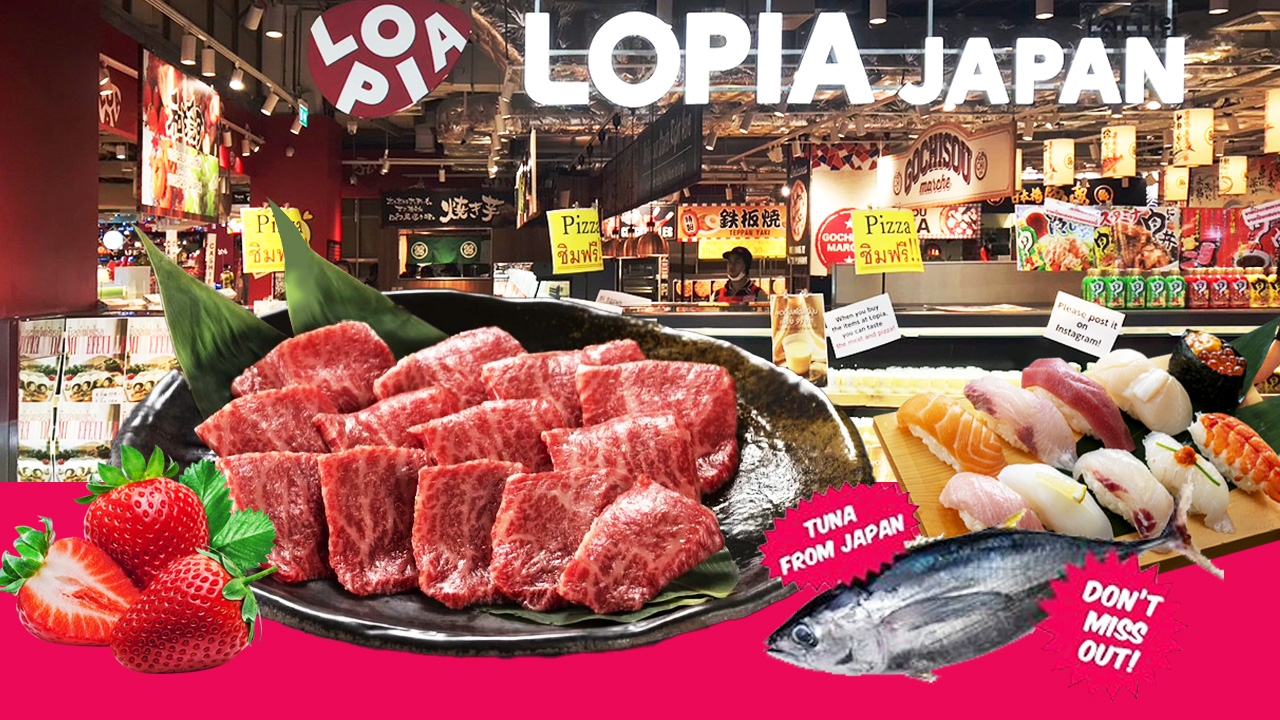
. . . “Lopia Japan” A Japanese supermarket recently announced its official entry into the Thai market, opening its first store on the ground floor of Central Chaengwattana shopping mall. It offers Thai consumers authentic Japanese flavors and quality ingredients, highlighting premium “wagyu beef” without the need to fly to shop in Japan.
The nameLopia Japanmay still be unfamiliar to many Thais, but in Japan, it is one of the fastest-growing and most talked-about food retail brands in recent years. It is recognized as a genuinely good and affordable supermarket, built on the concept “Low Price Utopia” which has won the hearts of Japanese homemakers nationwide.
Lopia Japan has officially launched its first branch in Thailand at Central Chaengwattana shopping mall, ground floor, allowing Thais to experience authentic Japanese quality ingredients and flavors, especially the store's star attraction—premium wagyu beef—without needing to travel to Tokyo or Hokkaido.
BrandStory Column This article introduces Lopia Japan, the newest supermarket chain entering the Thai market and one of Japan's fastest-growing players. It began over 50 years ago as a small local butcher shop and has since expanded to over 100 branches, achieving sales of several hundred billion yen, and is now seriously expanding internationally.
Lopia Japan’s story did not start with massive capital or a giant retail conglomerate, but as a small butcher shop in Fujisawa City, Kanagawa Prefecture. The first store, opened in 1971, was named “Niku no Takarabako” which means "Treasure Chest of Meat." Founder Hideo Takagi aimed to create a butcher shop that focused on ingredient quality and fair prices for consumers, targeting families wanting to buy meat for home cooking.
At that time, Japan had many traditional retailers and modern department stores, but Lopia Japan focused on value. This concept evolved into the business philosophy “Low-Price Utopia,” aiming to create an ideal food land where everyone could access quality food without paying high prices. This is the origin of the name “Lopia.”
Initially, Lopia Japan stood out in the market as a high-quality meat shop. Rooted in butchery, its beef—especially A5 wagyu—and pork were of very high quality and cheaper than those in typical department stores. It then expanded into a full-service supermarket offering fresh foods, dry goods, imports, and processed foods, with meat products remaining a core strength.
Today, Lopia Japan operates 139 branches across Japan and has expanded internationally to markets including Taiwan and, most recently, Thailand, which serves as its first stronghold for ASEAN expansion.

Lopia Japan is a retail business under the OIC Group, whose operations cover the entire supply chain—from farms and factories to import-export and retail stores. By cutting out middlemen, they can price products lower than competitors while maintaining profitability. In the fiscal year ending February 2024, Lopia Japan reported sales of about 320 billion yen (approximately 65 billion baht), continuing steady growth. Its parent company, OIC Group, reported total revenues exceeding 521 billion yen (about 105 billion baht) in fiscal 2025.
This advantage stems from Lopia’s origins as a butcher shop, giving it deeper insights into costs, ingredient selection, and consumer behavior than typical supermarkets. It is renowned for having one of the strongest meat departments in Japan, covering beef, pork, chicken, and seafood.
While promoting low prices, Lopia Japan does not engage in aggressive discounting typical of discount stores. Its clear market positioning is “low price but comparable quality,” attracting customers seeking both quality and value.
Lopia continues to source premium meat, fresh ingredients, and authentic Japanese foods, including premium wagyu beef, kuroge wagyu, giant-sized sushi, premium Japanese fruits, charcoal-oven baked pizza, ready-to-eat meals, and popular Japanese desserts like pudding and cheesecake. The supermarket also emphasizes large-pack products, creating a surprisingly strong value proposition similar to Costco in the U.S., catering to large families or value-conscious shoppers.
Unlike many large supermarkets, Lopia Japan does not sell non-food items such as home appliances or household goods. It focuses exclusively on high-quality food products, avoiding expansion into general merchandise like household items or clothing brands. This focus streamlines management and reduces inventory costs, contributing to its successful pricing strategy.
Lopia Japan’s supermarkets are large, typically spanning 2,000–3,000 square meters, offering over 10,000 items, including fresh food, seafood, frozen goods, processed foods, and Japanese-style ready meals, enabling customers to complete one-stop shopping.
The store layout is organized into easy-to-understand categories, making browsing enjoyable like a department store but decision-making as straightforward as a market. For international branches, Lopia employs a strategy of “exclusive products” and “authentic imports.” It excels in direct imports from Japan and offers private brand products made under strict Japanese quality control, surpassing typical stores carrying the same brands but without genuine Japanese standards.

Mr. Hitoshi Mizumoto, director of LOPIA and head of the Asia regional headquarters, revealed that Lopia Japan’s overseas expansion aims to spread Japanese food globally and create stores where everyone can experience authentic Japanese cuisine without traveling to Japan.
The company first expanded abroad to Taiwan in January 2023, growing to nine branches in less than three years, with plans to open 20 branches soon. Thailand is not just a normal expansion but a strategic move to enter the ASEAN market of over 680 million people, confident in Thai purchasing power and Lopia’s quality-driven business model.
Japan’s market, with 120 million people, is shrinking, while ASEAN’s market is much larger. Thailand was chosen as the first ASEAN base due to its diverse population—Thai, Western, and Chinese communities. Success in Thailand would prove potential success across the region.

Mr. Hitoshi added that partnering with the major Central Group and choosing a prime location on the ground floor next to Top Food Hall, a high-potential area, was strategic. Opening next to the local leading supermarket Tops is expected to create synergy, attracting customers to both stores. After a prior pop-up store trial, they found Thai consumers’ purchasing power was very strong, about 1.5 times higher than Taiwan’s. They anticipate an average basket size of about 1,000 baht per person, targeting not just Japanese residents in Thailand but primarily Thai consumers.
A highlight for Thai shoppers is the premium wagyu beef imported from Japan. Lopia manages its own beef procurement and processing system, ensuring quality and price control, aiming to revolutionize the wagyu market in Thailand by making this premium beef affordable for Thai consumers.
Another highlight is “extra-large sushi and sashimi,” made from fresh seafood with thicker, larger cuts than typical stores, along with a wide selection of dry goods, seasonings, ready meals, and Japanese-style sweets. Over 95% of these products are imported directly from Japan, and Lopia is confident competitors cannot undercut their prices for comparable items.
Currently, Taiwan serves as a model for Lopia’s international marketing strategy, using diverse approaches to build consumer awareness successfully. Their food products stand out in quality and taste, and they believe customers who try them become loyal fans. Lopia Japan in Taiwan has become so popular that customer entry per round is limited. They believe they can replicate this success in Thailand. Mr. Hitoshi concluded,

Click to read the “BrandStory” column for more.
Follow the Facebook page: Thairath Money at this link -