

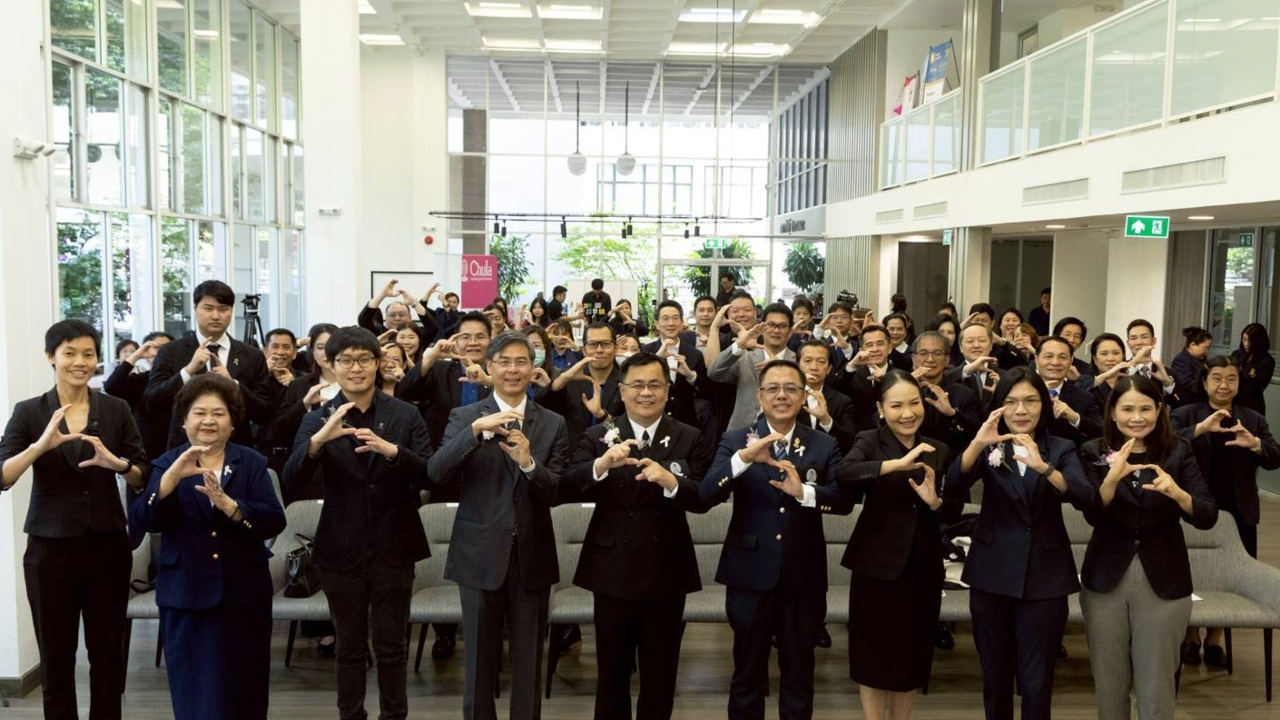
Professor Dr. Wiles Phurivajra, President of Chulalongkorn University, presided over the MOU signing ceremony and delivered an honorary keynote address, stating that Chulalongkorn has ranked number one in sustainability in Thailand for 17 years. He emphasized belief in long-term development, not using up future happiness today but preserving it for future generations. This is Intellectual Innovation—wise innovation that considers all impacts, not just convenience.
Associate Professor Dr. Panthawat Sampanpanich, Director of the Institute for Sustainable Environmental Research (SERI), delivered a keynote titled PFAS-Free Chula, explaining that PFAS has a very strong chemical structure, is not biodegradable in nature, and can accumulate in the human body. Preventing contamination from the source is the best approach. He stressed that sustainability is not an option but a mission for health and society's future.
Professor Pharmacist Dr. Piti Janwarachoti, Deputy Director of SERI, added that the university’s role is not only to study problems but to transform scientific knowledge into innovations that protect public health. Knowledge from laboratories should be passed on to society.

Ms. Orathicha Thamkoedsap, CEO of Thainburi Corporation Limited, said they believe Thai consumers are ready to change when provided with information and better choices. The CU ENVI certification from Chulalongkorn will build confidence in selecting safe products.
The PFAS FREE SAFE THAILAND project initially protects more than 40,000 members of the Chulalongkorn community and simultaneously raises public awareness. It results from collaboration between SERI, an academic institute focused on creating environmental sustainability knowledge at Chulalongkorn University,
together with KETIS Research and Development Company Limited, experts in research and development of packaging from bagasse, and Thainburi Corporation Limited, marketing and communication specialists. The project aims to build a Thai society permanently free from chemical hazards, based on principles of sustainability and social responsibility.

Sahapat Pursues Low-Carbon Organization Sahapat or SPC revealed successes in advancing environmental strategies by developing low-carbon transportation systems and using renewable energy. They reduced greenhouse gas emissions from electric truck use by 23,936 kilograms of CO2 equivalent, equal to planting over 1,596 trees. They also utilize solar energy from rooftop systems to reduce reliance on external electricity, cut energy costs, and minimize environmental impact, reinforcing their sustainability mission and long-term growth.

Solar Power Tax Reduction HomePro and Mega Home announced support for government policies promoting clean energy use in households, responding to tax incentives encouraging rooftop solar installations for residential homes. Their Home Solar service helps homeowners gain four benefits: long-term electricity bill reduction and tax deductions on actual expenses up to 200,000 baht under a new measure available from now until 31 Dec 2028. Consultations and solar system installations are available at HomePro and Mega Home branches nationwide.