

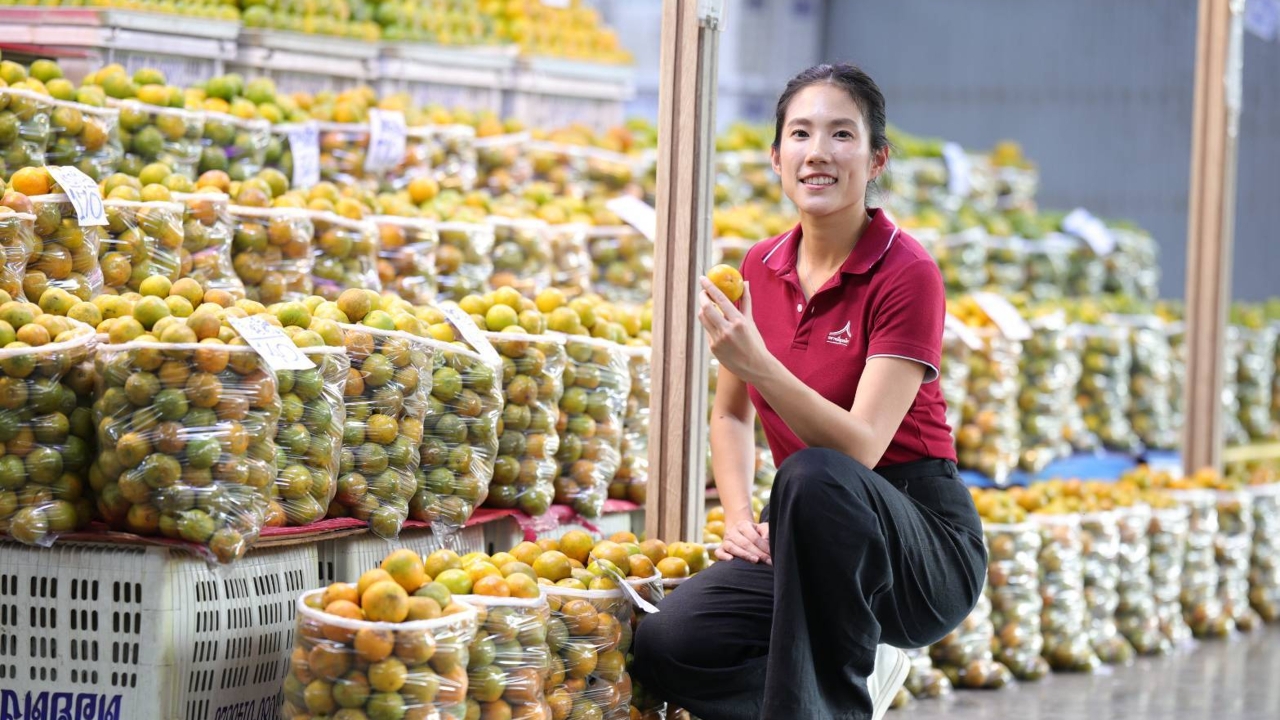
Irin Pataraprasit, Director of Organizational Development at Simummuang Market, said Simummuang Sustainable City is a systemic business restructuring to align operations concretely with Environmental, Social, and Governance (ESG) principles. It is not merely a short-term project but an integration of sustainability directly into the organization's core strategy.
In today’s economic context, sustainability is not optional but a condition for competitiveness and long-term risk management regarding energy costs, resource use, and societal trust. The main challenge is not expensive technology or high investment budgets.
Rather, it is changing the mindset of tens of thousands of stakeholders in the market ecosystem to recognize waste as a resource, clean energy as business security, and growth that must not come at the environmental cost.
We have continuously driven sustainability for over 10 years since 2013, covering waste sorting and value addition such as converting organic waste to animal feed, recycling management, wastewater treatment development, and installing solar panels on cold storage building roofs. These infrastructures form the foundation of Simummuang Sustainable City.

Currently, to enhance systematic environmental management, Simummuang Market has conducted a carbon footprint organizational assessment (CFO), certified by the Thailand Greenhouse Gas Management Organization (Public Organization) in 2024. Through waste management under the LESS project, the market has reduced greenhouse gas emissions by more than 40,000 tons of carbon dioxide.
The market also organizes Carbon Neutral Events, yielding results equivalent to planting over 14,000 rai of trees. Over the past decade, the market has operated under ESG principles combined with the Shared Value concept, believing sustainability arises when all sectors — vendors, workers, and staff — move forward together by sharing clear goals and easy participation.
We aim for Simummuang Market to be a model Thai organization advancing business under ESG principles, proving that green business models not only generate economic returns but also improve people's quality of life and sustainably protect the environment long-term. The three main pillars of Simummuang Sustainable City are:
1. Energy: Establish a clean energy foundation throughout the system to achieve Net Zero in the future.
Simummuang Market is upgrading systematic energy management, aiming to increase the clean energy share while improving energy efficiency across the organization, targeting a total energy cost reduction of more than 24 million baht annually. Key projects include:
Installing solar cells with a total capacity of 3.98 megawatts peak (MWp), saving approximately 19 million baht annually on electricity and serving as the main mechanism to continuously increase the market’s renewable energy proportion.
Measures to improve overall energy efficiency include proper cold room temperature control, cooling system upgrades, and replacing equipment with high-efficiency, energy-saving models, further reducing expenses by about 5 million baht annually.
Developing a Monitoring Platform to track and manage energy use, aiming to reduce electricity and diesel consumption by 15% by 2028.
Supporting the transition to electric vehicles (EV): the organization plans to convert its motorcycles and cars to electric vehicles this year and develop charging stations throughout the market to accommodate vendors and users, targeting a 15% reduction in carbon dioxide emissions within three years.
2. Waste Management: Targeting Zero Waste to Landfill by 2027 to eliminate landfill waste.
Simummuang Market generates over 230 tons of waste daily. It currently reduces landfill waste by 50%, saving more than 10.5 million baht annually on disposal costs. About 34% of waste is separated and recycled or processed, cutting disposal costs by over 7.2 million baht annually and generating approximately 26 million baht in processing income yearly.
Organic wet waste is also separated and dewatered to reduce weight before transport, approximately 35 tons daily (15% of total waste), saving more than 3.3 million baht annually in landfill fees.
By 2027, the market aims for Zero Waste to Landfill, expected to triple current landfill cost savings to about 22 million baht through comprehensive waste management upgrades that convert waste into valuable resources under the circular economy concept.
Waste to Value: The market systematically separates organic and recyclable waste, generating about 26 million baht annually. Organic waste is processed into animal feed, and byproducts like pomelo peel are developed into liquid soap used market-wide.
Currently producing 14,000 liters annually, saving 180,000 baht per year. In 2026, the market plans to produce fertilizer from organic waste, expected to generate over 77 million baht annually, and convert remaining waste into refuse-derived fuel (RDF), saving an additional 5 million baht per year in disposal costs.
Water Treatment: The market operates a wastewater treatment system meeting Pathum Thani Provincial Natural Resources and Environment Office standards, treating 6,500 cubic meters daily and recycling water, reducing water expenses by approximately 800,000 baht annually.

3. Social: Enhancing quality of life and creating sustainable opportunities for everyone in the market ecosystem.
Simummuang Market cares for entrepreneurs, employees, workers, and the surrounding community as the “Simummuang family,” emphasizing quality of life and long-term capacity development.
Pattana Wittaya School was established to provide quality education opportunities for children of employees and vendors, reducing travel and family expenses.
Simummuang Academy is a free skills development center offering training courses for vendors, startups, entrepreneurs, and the public, taught by experts alongside practical experience. It provides advanced courses on online marketing, sales promotion, and AI applications to enhance competitiveness in the digital era and support sustainable business growth.
Family Welfare: The market offers health check-ups, mobile dental clinics, and essential vaccines such as influenza to promote health and well-being for vendors and workers. Thai workers receive death benefit support to alleviate family burdens and provide basic security.
Foreign workers are supported through a legal work document service center offering services at prices 25% lower than external providers to promote fair and transparent employment. All these reflect the market’s commitment to comprehensive, ongoing care for the Simummuang family.
Community Engagement: The market partners with social organizations such as SOS Children's Villages Thailand to distribute quality food ingredients to vulnerable communities in Bangkok and its vicinity. It also opens the market as a learning space for educational institutions and agencies to study and exchange management and sustainability practices.

Major Award Mama remains Thailand’s top choice, according to the Thailand’s Most Admired Brand 2026 survey by BrandAge, holding the title as the most trusted instant noodle brand for 26 consecutive years with 33.63% trust, reflecting a strong consumer base and confidence despite slowed purchasing power.
The study surveyed 1,600 consumers nationwide across 12 product categories amid slow economic growth, K-shaped recovery, and social media competition, highlighting brand trust as a key purchase decision factor.
Amid consumers split between spenders and savers, brands must explain why they should be chosen. For Mama, the answer is not only price and taste but familiarity and consistent quality, transitioning from emergency food to comfort food that satisfies hunger, flavor, convenience, and reliable satisfaction.

New Product Launch Sewa, a Thai skincare brand with a 2,000-year ginseng essence legacy beloved by Thai women and worldwide, is shaking up the beauty industry by launching a new product for the summer: Sewa UV Skin Barrier Sunscreen SPF50+ PA++++. This hybrid sunscreen protects against UV rays, pollution, and heat while strengthening the skin barrier. The brand also launched the Crazy Live Summer Fest campaign, using an Influencer Live Commerce Marathon strategy with influencers and creators streaming continuously for days, creating a real-time content-to-commerce experience that meets digital-era consumer behavior blending entertainment and shopping.