

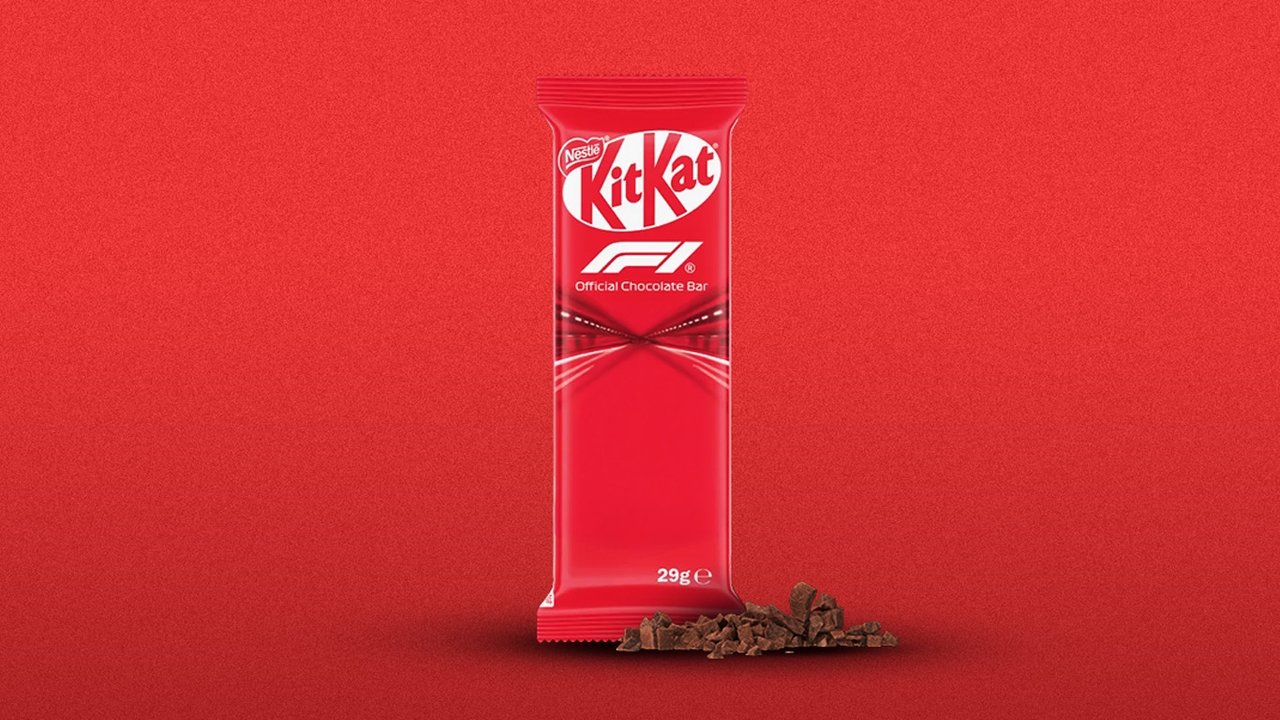
On 26 March, an unexpected event occurred when a truck carrying KitKat brand products was stolen in Italy during transportation. Inside were 413,793 limited edition Formula 1-shaped chocolates, totaling about 12 tons, which disappeared along with the entire truck.
This theft has been described as one of the most unusual incidents in Europe. It is believed the stolen goods will be resold on the black market at a premium. Interestingly, no transportation details were publicly disclosed, raising questions about why the thieves targeted such distinctive F1-shaped chocolates at this time.
According to Forbes, on 26 March, on a highway outside Turin, Italy, a truck fully loaded with KitKat F1 chocolates left a distribution center near Turin in the evening, destined for delivery in Poland.
En route, the truck was stopped by a group claiming to be law enforcement. After the driver was taken out of the vehicle, within minutes, the fully loaded truck was driven away and disappeared with all its cargo. Reports indicate the driver was unharmed.
This incident seems like a scene from a movie, but the valuable stolen goods were not gold, diamonds, or cash—they were over 12 tons of chocolate. At first glance, it appeared to be a straightforward opportunistic robbery, but several details suggest otherwise.
It was found that transportation details for this batch were not publicly disclosed. The timing coincided with a major marketing campaign linked to Formula 1, and the rapid, precise nature of the theft suggests the perpetrators may have had inside information beforehand.
In fact, food and beverage product thefts in Europe are not uncommon, as these items are easy to resell and difficult to trace. However, this case stands out. Produced by Nestlé, this was no ordinary chocolate but a limited edition KitKat shaped like a miniature Formula 1 race car, intricately molded with front and rear wings, racing-style wheels, and designed to appeal to motorsport fans ahead of the European Grand Prix season starting in June.
This limited-edition product is clearly branded, sold for a limited time, and instantly recognizable. The key question remains: why steal such an eye-catching item?
One possible answer is "scarcity" Special seasonal products, especially those collaborating with global brands, often command high prices on the black market.
The retail price of the KitKat F1 chocolates in Morrisons stores in the UK is about 1.75 euros (around 70 baht) per pack containing five pieces. Calculated at this selling price, the stolen goods on that truck would be worth over 724,138 euros, or more than 27 million baht.
With Formula 1's rising popularity—boosted by the "Drive to Survive" series and the "F1: The Movie" film—these products have a strong chance of becoming collectibles. If the theft delays sales, demand will rise, driving prices even higher, especially on the black market.
Another possible reason is "easy to sell and move quickly" Unlike technology or industrial parts, chocolate does not require specialized sales networks. It can be quickly distributed through small shops, pop-up markets, or online platforms before authorities can trace it. Much of the product may already have entered the market.
These chocolates were launched in January and sold across Europe, Australia, and Saudi Arabia, including online through platforms like Amazon UK, Snackje, and The Australian Food Shop. A recent search on Google Marketplace found KitKat F1 chocolates sold via websites shipping from India, priced over 400 baht per pack.
Italian police are focusing on the theft as an organized crime act involving coordinated operations. On a broader scale, this incident highlights new challenges for global supply chains, where not only goods but also "information" are highly valuable assets.
Logistics data—such as what is shipped, when, and where—has become as valuable as the goods themselves. In this KitKat case, such information may have been the real target.
While it remains unclear whether the stolen chocolates will be recovered or will disappear into Europe's underground economy, the most likely scenario is that the products have been split into smaller batches, loaded onto multiple vehicles, and distributed across the continent.
This is not Europe's first major chocolate theft. In 2023, Joby Pool, a British man, was sentenced to 18 months in prison after stealing over 200,000 Cadbury Creme Egg chocolates worth several billion US dollars, fleeing with a stolen truck.
The Cadbury Creme Egg is a special seasonal product available only at Easter, with a filling resembling real egg yolk and white, making it highly sought after during the holiday and commanding high prices.
Amid the confusion, KitKat turned this crisis into a valuable marketing moment. The company issued an official statement: "Twelve tons of KitKat products were stolen during transportation from our factory in central Italy to the destination in Poland."
"We are currently working closely with local authorities and supply chain partners to investigate the incident."
They concluded with, "The good news is there are no consumer safety concerns, and supply quantities remain unaffected."
This statement sparked widespread online reactions, including shares, comments, and humorous posts. For example, on Bluesky, someone calculated that "if a KitKat break takes 10 minutes each time, this theft equals a 13-year break." Some expressed concern about potential shortages during the important Easter season.
People sharing and making light of the story reflects their familiarity and connection with the brand. A 2020 University of Leeds study found that people are more likely to share content they find familiar.
Since KitKat has been a globally recognized brand for a long time, with the well-known slogan "Have a break, have a KitKat," this story naturally resonated more deeply and was more likely to be widely shared on social media.
Source:Forbes,CNN,Fast Company,BBC
Follow the Facebook page: Thairath Money at the link -https://www.facebook.com/ThairathMoney