

When mentioning “Hawker Center,” the clearest image among Thai tourists is likely the model food centers from Singapore, which have been recognized as a UNESCO cultural heritage site.
Their success is not only due to the taste of the food but also the creation of a “system” that allows street vendors to coexist hygienically and orderly within a modern city, becoming a culinary landmark that attracts visitors from other regions.

Today, the Bangkok Metropolitan Administration (BMA), led by Governor Chadchart Sittipunt, is trying to decode this success by applying it through the Soft Opening of the “Hawker Center Lumphini Park,” set to fully open in May.

The governor said this is not just relocating street stalls from the Sarasin intersection to Lumphini Park under one roof, but an experiment in establishing “urban economic infrastructure” to transform street food from an informal economy into one that is visible and measurable.

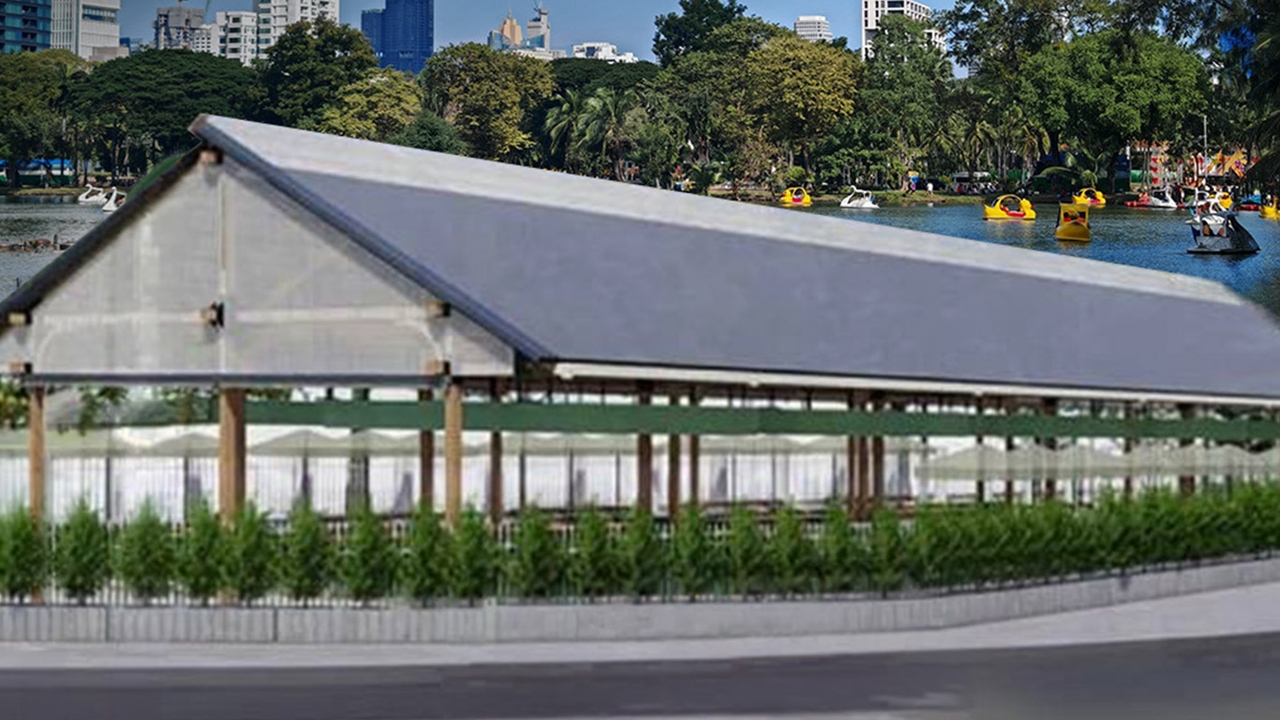
In the past, street food management often ended with “removal of tolerated zones,” a piecemeal solution. The Lumphini model involves investing in a new building structure on Rajadamri Road near Gate 5 (BTS Sala Daeng Exit 6 and MRT Lumphini Exit 1).
The building is designed for natural ventilation instead of air conditioning to reduce pollution, and the roofing material minimizes glare affecting the nearby Chulalongkorn Hospital. Inside, standardized 2x2 meter vendor stalls are provided, along with facilities never before available at street stalls, such as grease traps, communal dishwashing stations, and waste separation systems—turning complaints into proactive management that can truly control quality.

The governor added that a key element is “vendor rotation” to distribute opportunities among small traders in Pathumwan District, providing access to a prime location with affordable rent of only 60 baht per day.
The BMA emphasizes that this project is non-profit to allow vendors to sell affordable food, helping reduce living costs for residents in the area.

Notably, private sector partner LINE MAN Wongnai supports vendors with essential equipment such as plates, cutlery, trash bins, handwashing stations, dishwashing areas, shop decorations, and rider waiting points.
They also provide technological innovation through the “Pay Box” QR Code payment system, which will impact the ecosystem in the future.

Although the Hawker Center Lumphini Park is still in its early stage, it remains to be seen how scalable this model is. Currently, BMA plans to develop several Hawker Centers across Bangkok. Challenges include maintaining standards, and this project is not yet as perfect as Singapore’s, given different goals, such as bidding systems for space and vendor diversity.
Nonetheless, starting with “cleanliness – system – data” while preserving the charm of street food is an important milestone. It can elevate local street fare into internationally standard Soft Power, attracting quality tourists and driving a digital economy that truly "leaves no one behind."

Follow marketing news with Thairath Money at
Follow the Facebook page: Thairath Money at this linkhttps:// www.facebook.com/ThairathMoney