

The rarest form of wealth may not be assets that can be accumulated endlessly, but rather “time, health, and quality of life” that remain with us the longest.
This concept is becoming a new challenge for the high-end real estate market, where competing with large houses, prime locations, or expensive materials may no longer suffice for affluent buyers—especially in the 100 million baht and above segment, where the buyer pool is limited and their demands are increasingly specialized.
“Customers are becoming more fragmented; if we keep doing the same thing, it will be difficult.”
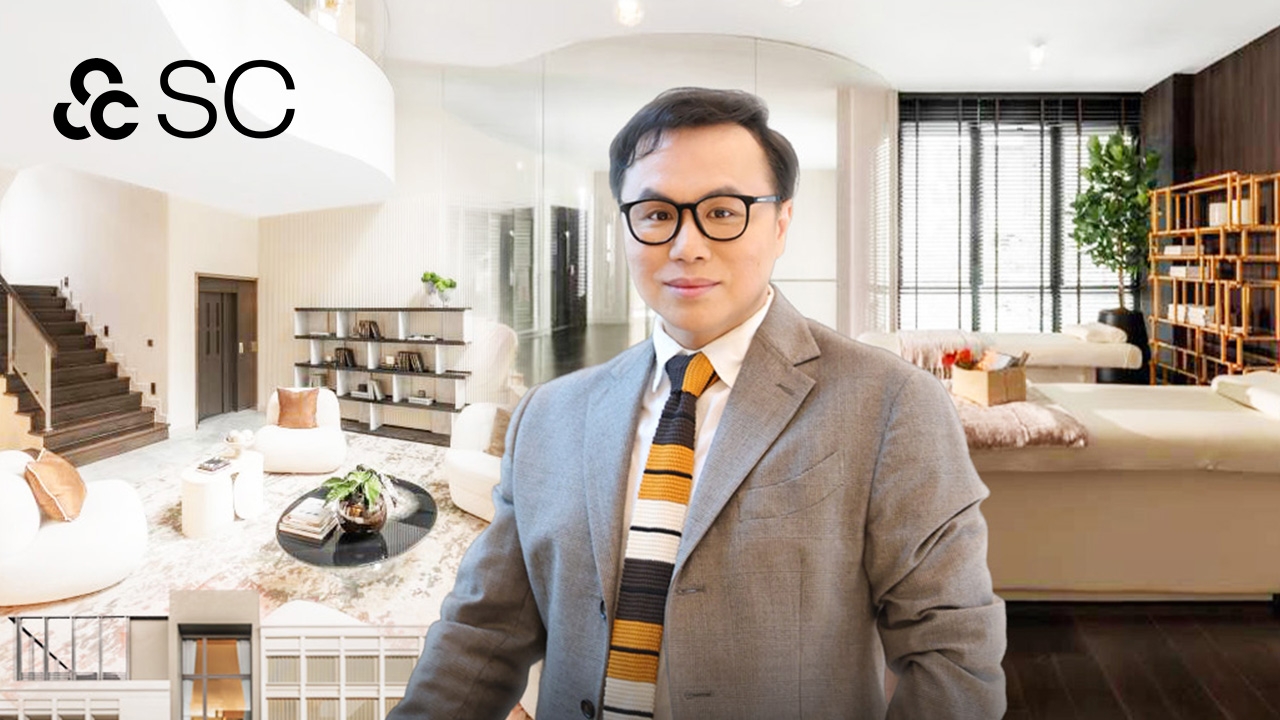
This is one perspective from Natthakit Sirirat, Vice President of Marketing and Innovation and Head of Low-rise Product Development at SC Asset Corporation Public Company Limited (SC), which clearly reflects today’s luxury home market.
Since affluent clients no longer want identical houses, the developer’s game must change—from increasing quantity to increasing choice and creating new reasons for customers to decide to buy.

Recently, SC has tested this approach with 95E1 x Boundary, The Longevity Residence, an ultra-luxury special unit priced at 180 million baht that combines wellness with craftsmanship and reinterprets “luxury home” through what wealthy people increasingly value: good health, privacy, and quality use of time.
This movement is more than just the launch of a 180 million baht home waiting for new wealthy owners; 95E1 also acts like a form of Wealth Architecture—designing living spaces that support how owners use their wealth.
Currently, SC positions its high-end homes under SC Master of Luxury across three projects, each with distinct character: CONNOISSEUR with Beaux Arts architecture priced at 90-180 million baht; 95E1 emphasizing exquisite craftsmanship at 100-180 million baht; and SONLE Residences featuring sophisticated modern tropical design at 260-400 million baht.
A deeper analysis shows that this portfolio is interesting not merely for the price range from 90 to 400 million baht, but because it segments the market by the tastes and lifestyles of target customers, since buyers at this level are not distinguished only by purchasing power.

SC’s discussions indicate that each project's customers have different profiles—from established wealthy individuals and families buying homes for their children to emerging successful entrepreneurs, who form the key clientele for 95E1.
The challenge returns to the product: as the market does not expand rapidly, producing more homes by the old formula may not increase sales. SC’s choice is to add types, increase sizes, adjust facades, or create unique characters for some homes, including party houses and now homes designed around wellness.
Natthakit sums up this thinking simply:
“We have to create rare items to increase choice.”
Luxury real estate is thus adopting thinking closer to luxury product design; from having only a few standard products per project, it is moving toward creating collections where each home has its own character and buying rationale.

95E1 consists of only 10 units located along the expressway; regular homes are around 160 million baht, while The Longevity Residence is a special unit priced at 180 million baht—about 15% higher—and is offered first to VIP clients.
Behind this premium increase lies a simple insight.
For those with sufficient wealth, “time” becomes a scarce resource.
The target customers for this home are small families who want to spend more time at home and desire wellness that can be realized through the time available each day.
SC and Boundary spent about 6-7 months developing the project to bring luxury hospitality-level wellness experiences into the home, from upgrading water and electrical systems to designing dedicated wellness spaces.
The 846-square-meter residence with four bedrooms, six bathrooms, a private elevator, and swimming pool has its second floor converted into a private wellness club connecting exercise, spa & massage, sauna, steam, and relaxation areas.
Instead of driving out to work out, go to a spa, or use a sauna, these experiences are just a few steps from the bedroom, redefining luxury in this context as time the homeowner regains.

Looking back at typical luxury homes in Thailand, lifestyle was often measured by amenities like home theaters, passenger elevators, libraries, wine rooms, or entertainment rooms. But as health becomes a priority for wealthy buyers, indoor spaces start to serve new functions.
Phanarin Manuyakorn, co-founder and executive at Boundary, explains that the concept of this home brings wellness experiences, which previously required travel, into daily home routines, emphasizing privacy and ease of use.
For example, the Effe Wellness System from Italy, including the Auki Sauna and Nuvola Smart Steam System, technologies also used at Cheval Blanc Paris, a luxury hotel under LVMH.
The exercise area uses NOHrD equipment from Germany, which combines engineering with natural wood design to integrate seamlessly into interiors, while the relaxation area features furniture designed for ergonomics and post-activity recovery.
This shifts the luxury home journey from entertainment to consumption and socializing, adding a new pathway:
Move → Recover → Rest → Live Better.

Another reason this connects with wealth is the concept of Longevity, which Dr. Kobkulya Jurasertsri, or “Doctor Puen,” explains should not be interpreted merely as lifespan extension but also healthspan—the period of life spent in good health.
The key lies in daily routines: movement, diet, sleep, recovery, stress management, mental well-being, and preventive healthcare, with the environment playing a role in facilitating or hindering these behaviors.
This idea aligns with the six pillars of lifestyle medicine: good nutrition, physical activity, quality sleep, stress management, avoidance of risk factors, and social connection.
This makes the home more than just a backdrop for life.
Because the home is where we sleep, eat, spend time with family, relieve stress, and spend much of our day, if lifestyle affects healthspan, then home design can become part of healthy living infrastructure.

The other half of 95E1’s concept is craftsmanship, because the longevity of the home is not only about the owner's health but also the longevity of design. SC and Boundary interpret this as selecting works that do not expire with trends. The curated furniture includes designer pieces, materials, craftsmanship, heritage, and stories—such as the Pumpkin Armchair by Pierre Paulin, designed in 1971 but still relevant after over 55 years with its organic form featured in this residence.
Some furniture pieces range from hundreds of thousands to millions of baht, like the Nacre Coffee Table, Lombard Street Sofa, and Colonnata Bookcase. Selection criteria include not just price but material, manufacturing technique, comfort, and the ability to endure over time.
This clearly reflects another luxury sales approach: while price may create status, rarity and story create value that allows the item to stay with the owner longer.

What makes 95E1 interesting from a business perspective is that SC did not convert every home in the project into a Longevity Residence but chose to make only one unit first, thus positioning it as a product experiment in a market with a small customer base but very high ticket size.
The goal is to answer which lifestyle premium wealthy buyers are willing to pay for.
If the market’s answer is wellness and longevity, it is possible that today’s special unit will evolve into a new product category of luxury homes in the future. This could be a key game for the 100-million-baht home market ahead, because ultimately, for those wealthy enough, wealth is not just measured by “what is in the home” but by how well the home helps them use their most limited resource: time and health.
Read business news, marketing strategies, and exclusive interviews with ThairathMoney to help you "Better Finances, Better Life" athttps://www.thairath.co.th/money/business_marketing
Follow the Facebook page: Thairath Money at this linkhttps://www.facebook.com/ThairathMoney